Author: Carla Doria

  • Book review: Eats, Shoots & Leaves

    As I closed the last page of my book, I softly muttered “interesting” without even noticing.  My mother happened to be near me at that moment. She asked me “What did you just read?” I waved the book cover to her and answered “A book about punctuation.” She winced.

    I would have probably winced too if I’d been my mother. She knows I’m a book worm, but sometimes  my eccentricities trouble her a bit.  Reading a complete book about punctuation just because you want to is kind of unheard off, no regular “reading for pleasure” material here. But I do read a couple of books like these ones once in a while. Mostly because, as a writer, I need to improve my craft. I need to know where to put the period.

    “Eats, Shoots & Leaves” is a clever and informational book where not only grammar rules are exposed, but also a wave of useful information strikes in. It’s not only about commas, semicolons, periods, dashes, etc., but also about their history, how they arrived to our world, what our crazy predecessors thought of them, how some tried to abolish their existence, and how punctuation marks strived successfully. I got attached to each punctuation mark as I would’ve gotten attached to a fiction character. Embarrassingly, I’m that quirky when it comes to books.

    41F-mm169GL

    Moreover, Lynne Truss leads us to a deeper level, to the analysis of the evolution of punctuation marks. We learn not only their history, but also how our modern times, influenced by technology and constant mobile messaging, are changing the world view towards punctuation. With good evidence, Truss foresees the punctuation world future, with upcoming years of punctuation invasion. We won’t get ridding of them any soon. Reading this book gives us an insightful perspective.  We’re not only being told about punctuation rules; we’re also acquiring enough criteria to understand their evolution.

    download

    But the aside note is that the book is clever and funny – British funny, humor that always makes me laugh for a reason. I enjoyed the book as much as I would have enjoyed a fiction novel.

    Was I the only lonely boring person reading books about punctuation? Nop, I lent the book to a work colleague. The guy loved it. He read it faster than me, just in a couple of days, again my excuse being I’m a slow reader. Would I recommend this book to everybody? Definitely.  Yes.

    Have you ever read any type of grammar/punctuation of what it could be thought as “boring” and find yourself enjoying it more than expected?
  • What good is to travel?

    When I first started writing this blog (2 years already! can’t believe it), my main objective was to build a traveling blog. I’d been following a couple of travel blogs (Barcelona Blonde, Nomadic Matt, and others) that had been fueling my desire for traveling the world and writing about it. But Money and other personal issues made me put a halt to these intentions, settle in one place, and start blogging about something else. I regret nothing. Thanks to this change in plans, I started writing fiction and blogging about it. What a memorable experience it has been.

    But I still travel. I may not be able to sail the world, visit all its continents, and be “on the move” constantly, but I’ve managed to travel quite a bit (18 countries, 44 cities, until now). My travel bucket list ranks high in my life priorities. And since there are some continents that I’ve never been too yet (Asia, Africa, and Oceania – Australia! why are you so far?), my eagerness remains intact. But I can’t complain. If I die tomorrow, I’ve done my fair share of traveling. I couldn’t be most thankful.

    drinkmicro com

    Traveling is a life-enriching experience, unmatchable to any other. And when you write, there’s nothing better to broaden your horizons. And though, I don’t travel as much as I did before, I still try to save as much as possible to do one nice trip per year.

    But what exactly have I learned from traveling?

    • People are the same everywhere. They all struggle; they all do their best. Nobody anywhere is better than somebody elsewhere.
    • There’s nothing better than learning other languages. Even if you don’t master them. It feels nice to say “hello” and “thanks” in many languages. It doesn’t matter if those are the only words you learn. People appreciate when you make an effort to learn at least tiny bits to communicate with them. Keep in mind that they’re in no obligation to know your language.
    • Society restrictions are just that “society restrictions.” Those awful closed-minded standards by which your society apparently rules, end there, in that small circle of your town. When you travel, you realized that nothing of that matters, that you’re limited only by your own convictions.
    • Globalization is here to stay. You can be whatever you want wherever you are.

    What other lessons do you think can be learned from traveling?

    b5d0995e8f80ec3365e1a284eec48308

  • Reading with writer’s eyes…

    Being a writer is not easy at all, being a reader who writes neither it is. Reading and Writing are my biggest passions. But as I try to merge them into one world, I realize the challenge increases.

    In order to write, you have to read. This is the most common advice you’ll receive from writers, books and courses about writing. And there is no bigger truth. Once you decide that writing is you want to do for the rest of your life, reading will come attached as a twin sister. I don’t believe in writers who don’t read. I just can’t. It won’t matter how many a good ideas you have, if you don’t know how the world of books work, and the only way to know is by getting up close to what’s out there.

    But one must read all types of books out there:

    Reading classics – They are classics for many reasons, but one of the main reasons is that they usually show great command of the language. They display high-quality narrative that has been awarded and well appraised by so many. What works in these books? What made them classics? You need to find out by for yourself.

    images (1)

    Reading Best Sellers – And it includes the highly criticized dystopian YA. But why are they so popular? Why are their writers the ones that can actually make a living of this? I usually hear many people chastising these books. Finding them with “my favorite books” tag in intellectual circles of writers would be almost impossible …. But guess what? They do sell! They have “the formula.” And yes, writing-wise they may not be the best example, but they can certainly grab readers.

    Now, you may say: “Well, it depends on the reader.” And usually not all teenagers are the most loyal parameter of quality reading, but they are a wide popular profitable target market. Despite these books might be cheesy and corny, we realize many adults do also enjoy them. The key, I believe, is to find a balance between what is good writing and what sells. Let’s face it, we all know that deep in our hearts, we would really love to make money of our writing. So reading this literature we must (my Yoda dysfunctional personality)

    www goodsheperd notts sch uk

    Reading all genres – I’ve heard tons of advice saying that you must read in your genre. True! But it doesn’t end there. I’ve learned to read in all sorts of genres. And I believe that it’s not fair to say you aren’t used to an X genre because you don’t read in it. All genres are writing; all of them teach us something. Romance teaches us how to create romantic tension between characters. Thrillers teach us how to insert adventure and movement in your plot. Mysteries teach us how to grab readers until the end of the book. Sci-fi teaches us through setting description how to create fantasy worlds. Memoirs teach us how not to lose the essence and spirit of your book… and so on…. All these elements usually coexist in a book.

    People read not only because the plot was so exciting that they couldn’t let the book go, but also because they cared about the protagonists; they found allies or inspiration in them. I’ve read a couple of action-packed thrillers that got me bored easily. I reached a point where I was just so bored about the extensive description of a fight scene; a slow motion punch described in pages. It reminded me of those movies where half of the movie is shootings and guns and no interesting plot. It also happens with books.

    roadtobabylon com

    If you’re like me, with preference for Thrillers for example, then you have at least to care about one of your characters. We want to know that the CIA spy of a book has a family with a sick child, that if he doesn’t do the job, his son will die. We want that CIA spy that when he’s about to die, we will keep reading and pray that he doesn’t. If he’s just a random handsome spy with great muscles, involved in a cat and mouse chase during the plot, it gets boring…Thriller writers need to read romance and memoirs too!

    As a writer, I try to read with a different eye. I try to see all elements in a book, how dialogue flows, how settings and actions are described, how writers show and don’t tell. I assess why the plot gets exciting, how chapters end, and what makes me go to the next chapter. I evaluate those setting descriptions that are just too long for me to care. I write down when I find words and expressions that work so well that I could use them in a further work (one of the advantages of kindle reading, that you can highlight words without actually damaging a book.)

    read44

    This is a new way of reading, different from what I was used to, but satisfying nonetheless. It’s not only about finding refuge in a book while resting on a reading corner, but also investing time in my long-time dreamed goals.

    If you’re a writer, do you find yourself with this different perspective of reading?

  • How being a non-native English speaker can actually help me when writing in English…

    As you may have noticed (Although, I hope it wasn’t that obvious) English is not my native language. I learned it at a Language institute in my home country. Then, I had the opportunity to make post-graduate studies in the UK. But although I lived in Glasgow, Scotland for one year, I didn’t have enough time to master the language, especially considering the Scottish accent. And no, I don’t speak English with a Scottish accent; even imitating it can be hard enough 🙂 .

    Luckily, I have the opportunity to practice the language every single day. My job is in English, and I’ve gotten used to it as my research, reading, and writing tool. But when I first started writing fiction in English, I thought it was only one of my crazy, impulsive episodes. I gave it a trial, just to see how it went, and I was surprised to find that I felt comfortable enough to start this blog in English. I believe that some of this comfort came from the fact that I read more books in English than in Spanish – my native language. Without noticing it, my list of favorite authors had been filled by English speaking authors.

    www cprw com

    So when I realized that writing fiction in English was not impossible, I knew that if I wanted to pull this off well, I had to work very hard on it. I had to be sure that not only what I wrote was correctly from the grammar point of view, but also that I didn’t sound like a five year-old. Deep work on building a better vocabulary began. And books about style, writing, grammar and others started to flood my bookshelves and e-reader. But believe it or not, I found I had the following advantages for being a non-native English speaker:

    • I’m not familiar with jargon and idioms (they don’t teach you that when you learn a language.) As a result, I don’t misuse or rely on them when writing in a formal approach.
    • The way I learned English is by hard grammar (the methodology they used at the language institute). Therefore, I haven’t picked up the wrong way from my upbringing, daily life, family, friends, etc.
    • Since my native language is Spanish, I find myself surprised by the many similar words between both languages, allowing me to have an extra set of vocabulary from words that have a Latin origin. The following list shows what I mean. The words on the right are very common for me since they’re widely used in Spanish. This doesn’t mean that when writing in English I use the ones on the right more, but I didn’t have to make an extra effort in order to learn them.
    Commonly used word My little help as Spanish speaker
    Increase Augment
    Strengthen Invigorate
    Refresh Rejuvenate
    Hoard Agglomerate
    Verify Corroborate
    Check up Scrutinize
    Hang onto Adhere
    Spill over, flood, swamp Inundate
    Run through, exhaust Dissipate
    Shorten Condense
    Temper Alleviate
    Stir up Infuriate
    Make up for Rectify
    Whip up Instigate
    Prompt Stimulate

    This is just a random list; there are many other words out there that could be added.

    So for anybody who’s learning the language and struggling tons with it, try to see the good side 😉 Nothing is impossible, it’s just a matter of perspective, how you face and tackle things.

    And you, do you think learning a language from scratch could have advantages over its native speakers?

  • Suicide Season

    A monologue everybody should read and take into account…

  • Reviewing Books is not as nice as you think

    Have you ever been asked to review/beta read or provide any kind of feedback for a manuscript or self published book?

    It’s harsh. Because not every book is for everybody and not everybody is for every book. (I’ve googled this phrase ’cause I think I might have heard it before, but I found nothing. So if you happen to know who said that, please let me know so I can give the proper credits and quotes where it corresponds.) And what does this means? It means that it doesn’t matter how much you love books or how many books you’ve read in your entire life, some books may not be just for you. It all depends on personal preferences.

    Through my life, I’ve read in most genres: thrillers, horror, mysteries, romance, young adult, political essays, biographies, memoirs, sci-fi, fantasy, etc., and I’m almost sure that at least I have one favorite in each genre. As some say, I read in a wide spectrum and it’s hard to define a favorite genre. It’s mostly how I connect with the book. For some readers, it’s about the characters and how they connect with them. I’m more a plot-driven person. I like things to happen, feel a flow in the narrative.

    But sometimes I have issues with “classic” English books.  Since most of them were written too long ago, I struggle to follow them; the writing style too different from I’m used to. And there’s the issue of my first language too, meaning that the compulsory reading I had in my school years was “way” different from traditional English literature.

    vqronline org

    Image source: vqronline.org

    So in this task of reading “the English classics” I found myself disappointed most of the time. I have a knack for spying the reviews before I start reading them. And since classics have a good reputation, you usually find good reviews about them. But when I read them, I find myself unable to connect with the reviews. It seems like I’ve been reading a different book. I get high expectations from the “best classics of all ages” to only find myself struggling to finish them.

    But the worst experience sometimes happens when you’re asked to review a book for somebody else. It could be a review for an already self-published book or a beta reading of a manuscript. It doesn’t matter how you advertise in beta read forums about enjoying thrillers and mysteries. because sometimes the sort of thriller you get is not really your cup-of-tea.

    teleread com

    Image source: teleread.com

    How do you tell these people? If certainly makes it harder when the book has already been published… making bad reviews in platforms such as Goodreads or Amazon could actually damage the selling chances of the book. It’s harsh.

    I wonder if there’s a way to explain your preferences in a reviewer profile that is not based on genre preference. I guess it’s part of the business. A risk you have to take as a reviewer.  A training you have to embrace to improve your tactics skills in dealing with not liked books.

    And you, do you think there is a good way to write a bad review for a self published book?

    www cprw com

    Image source: www.cprw.com

  • Reading corners for booklovers

    Most of us will grab our books from the bedside table at night and will probably fall asleep after a few quick minutes. But how could we not? Our bed is so comfortable and our day routines leave us generally so tired that our sheets, blankets and everything else lull us into the land of the dreams without even noticing. Unless of course you have insomnia or the book is so damn good that you’re afraid it’s going to be one of those nights where you won’t sleep… but that’s another topic. But let’s face it, unless you don’t feel tired, the bed is not always the best place for reading. And if you fall asleep while reading, how many times have you woken up to find the cover of your book bent, and twisted in between your sheets?

    Reading is a special experience and I believe it’s a good idea to have a reading corner besides the bed. And if you have the space (you really don’t need much, that’s why it’s called “corner”) investing into it is definitely worthy.

    We spend too much money in acquiring these magnificent couches to place them in front of the TV. Why shouldn’t we invest in a nice place for reading? A corner that drags you into this world of books and makes you want to spend Sunday afternoons or rainy days in it, with a cup of coffee on the other hand. And even if you don’t use it, they actually look awesome as decoration.

    A clever idea is to find a place in your house/apartment/flat where you wouldn’t jeopardize too much space. If you have stairs, then you’re done. The pictures below can give you good ideas.  Windows are also an incredible option. These images display some interesting ideas. I must confess I don’t have the proper credits for the pictures. They have resided in my computer for many years in a folder called “dreamed house” yeah, I know… but it’s good to dream (some day, maybe I’ll get to use all of them for real) Meanwhile, I continue feeding my inner interior decorator with the most tangible tool: Pinterest!

     reading1 read2

    You don’t need too much furniture to improvise corners like these ones. Take advantage of some cushions with vibrant colors and textures. (they say bright colors are better… I couldn’t agree more). If you don’t have the possibility to have a window in the chosen space, you could install some lights under the stairs. In fact you don’t need a complex electrical installation, there all sorts of LED lamps and LED candles out there. Be aware you might also need curtains if you’re near a window, sometimes the reflection or the lightening from thunders (yeah, I had to think of all possibilities) could interrupt your reading. Or maybe you just don’t have a nice view, and you don’t feel like staring at a brick wall or having the sensation that a neighbor is eavesdropping at you (again I had to think of all situations here… please feel free to add more in the comments if you come up with something I haven’t thought of). Overall, when you build/install these corners, take into account two factors: lighting and comfort; this will help you submerge into your reading without any distractions.

    read11read22

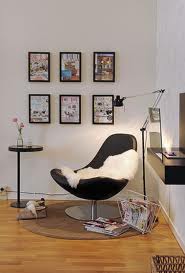
    Additionally, take into account that chair or couch you use is as comfortable as possible. You could take advantage of modern designs or retro chairs that could be as different as you want from the rest of the room, not only in design but in color as well. To enhance the place, you could use one of those standing lamps that not only look terrific in their design, but also help at the time of reading.

    Another brilliant idea is to adapt your wardrobe or wall spaces, and make them into hidden and comfortable reading spaces for you. You can use them to distance yourself from the rest of the world, grab a book, and spend hours in it. Add some shelves and cushions inside this space (I bet you’ve realized that I love cushions) A lamp installed in the wall will also be a perfect addition to this reading closet.

    And you, do you have any reading corners in your place? any other suggestions for these reading corners I have not taken into account? I’d love to hear from you. 

    read44 read33

  • The good experiences that come with writers conferences…

    Well, I’m back from one of the most thrilling experiences in my life. For those who don’t know, I had the opportunity to attend this year’s Writers Digest Conference in NYC. It was certainly an opportunity you don’t get to live very often and I’m glad I was able to take a part in it.

    What did I learn? 

    I think all can be summarized to the following points:

    • There’s still too much to learn – And it comes with time and experience. I haven’t read all the “must read” classic books or the “must read best sellers” yet, but I was relieved to find that at least I’ve read the most important/famous ones. A good fact to know is that not only it’s about reading the good old classics but also reading the latest best sellers; see what formula they’re using to be highly commercial in recent times. Old time formulas may not be suitable for these days anymore, i.e. you can’t write as Shakespeare anymore…
    • I seem to be not that lost – Yeah… this was kind of gratifying actually, because even though I was there to learn new things, it was good to know that I’ve been doing my share of work and that I’m not that lost in this world of books and publishing industry. Basics such as don’t put that your “family and mom loved your manuscript” or that “you’re sure you have the next best seller” in your query letter were already good known facts to me….It felt good to know that I was not swimming in the amateur waters anymore…

    writers digest conference

    • I still have a long way – I’ve just finished my first novel and I’m one hundred per cent sure that I can do it better. I feel confident that I can plot and write better stories. I know the writing process will be easier each time (hopefully the revision process as well, which is the most terrifying one for me) Nevertheless, I feel pretty confident about my first project. There were tons of conference attendees who were already in their fourth or fifth book and still learning a lot…
    • I learned I can totally rock Pitch Slams – I think this was the main reason why I thought the conference was awesome. From the seven agents I pitched, I got requests from the seven. It was unbelievable. I managed to control my nervousness, forget that English is not my native language, and speak with confidence. I loved the process.
    • I can manage rejection much better now – I’ve already sent my material to the seven agents yesterday. One has already replied this morning saying that “it may not be for him” (I wonder why he seemed so interested in the pitch slam. Was it because he thought it well and decided it was not for him? we’ll never know…) But even if I get these sort of replies from the other six agents, it will only be the encouragement to keep growing stronger, to keep fighting. I made a good decent start, and the sky is the limit. I’ll continue with much force. I’ll do more research. I’ll read more books. I’ll write more. I’ll try harder. I don’t plan to give up, not now when I feel so full of energy 🙂

    I read a couple of blog posts I wrote more than a year ago. In these posts I was still looking for my path. I didn’t know where I stood at that point, trying to find out my true passions, looking for courage to do what I really loved. I was trying to tell the people around me that maybe I was meant to do something different from my career; ashamed to share my longtime dreams. I felt unsure of any talents I had. Now, I feel on the right path. Even though it’ll take a while to reach my goals, I know for sure, that I’m on the right track this time. And I’m very thankful to God for that.

  • Synopses may be Evil if you don’t learn to tame them!

    I was so focused about writing my first book and then writing my query letter, that I never paid much attention to writing a synopsis. This requirement may appear in some agent’s submission guidelines, but not in all, other agents prefer to see a sample of your writing: first 10 pages, first chapter, etc.

    I’m pretty sure I love agents who don’t ask for a synopsis. I never thought that synopses would be so hard to do. When I realized I had no way to escape them, I did some research and started writing my first synopsis. After trying to be as general as possible and outlining the main events of my novel, I finished my extremely summarized synopsis with seven pages long.

    jenspenden wordpress com

    Image source: jenspenden.wordpress.com

    I wasn’t sure about synopses’ regular lengths. I read somewhere that it varied from agent to agent. So I researched the agents on my targeted list and found out they asked for 1-2 pages synopsis… WHAT???? You can’t do that! was my first thought. In the first draft of seven pages, the novel was as summarized as you could imagine. After hyperventilating and recovering from my almost panic attack, I decided to revise the seven pages with the most critical eye ever. I managed to reduce it to the incredible number of five pages, not close yet.

    At this point, I was about to discard the agents that asked for synopses. But I would let go many of the good ones. I had to do it. I had to be concise, straight to the point, and only mention the most important points in the story. I revised again and obtained a perfect 3.5 pages synopsis…sigh… I realized I preferred writing 100 query letters, 100 novels, than insisting on my synopsis. Why? Why? I was on the verge of knocking my head multiple times against my keyboard… but decided to try one more time, and I got 2.5 pages. The synopsis was extremely summarized.

    graemeshimmin com

    Image source: graemeshimmin.com

    Where else could I cut off more information? I slept on it. The next day I revised for the last time with my short-sentence police eyes. I think I never made my brain work that much. I revised word by word. I aimed to make 7 word sentences instead of 10 word sentences, 5 sentence paragraphs into 4 sentences. There was a point when I wondered if agents would have any problems with a massive one paragraph in the synopsis as a result of merging my paragraphs to save space… I’m so happy that under pressure, I don’t surrender to this madness 🙂

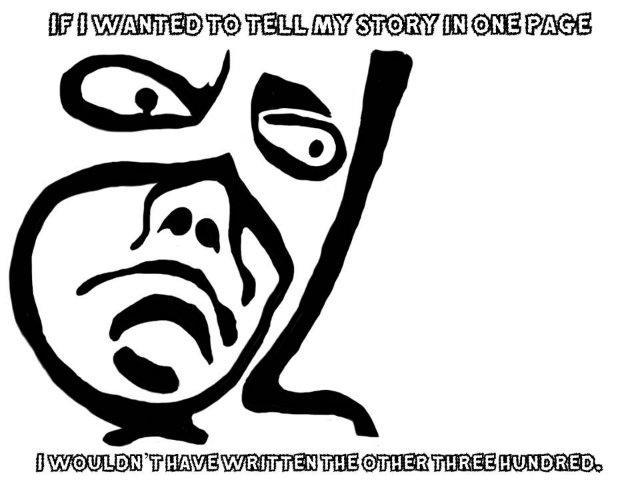
    After some hours, I finally did it. All sentences made an efficient use of the space and coherence. That was certainly a very rewarding achievement. When I read the finished product, it was all there, in 2 pages long, clearly identified and narrated. Why on earth would I want to add more? And I understood the concept of conciseness. There’s nothing better than short/straight and clear sentences. I’m so glad I did this one 🙂

    And you, did you ever find yourself in a similar situation? How important it to write concisely?

    writersrelief com

    Image source: writersrelief.com

  • Query letters and why they can drive you insane

    Since I started writing, I’ve been trying to be as proactive as possible and be involved with everything writing/editing/publishing existing in the online world. Unfortunately, I don’t have many chances to that in the real physical world, here, in my city. These are a couple of reasons:

    1. There are no writing groups/courses/workshops in English.

    2. The ones that exist in Spanish are not my cup of tea. Not many writers live in my location because people, unfortunately, are not much into reading (which is really sad!) But there are a couple of events if you dig really well and switch on your mafia sensors. However, it’s mostly about poetry or literary fiction. I’m not against it, but I prefer mainstream fiction; meaning thrillers, mysteries, horror, crime, espionage; exciting books that are page turners and make you lose your sleep. “Too wordy” is what comes to my mind when I attend to the spanish writing events.

    www fuelyourwriting com

    Image source: www.fuelyourwriting.com

    Well, to my luck, we’re not limited anymore to our locations in the world. We’re global citizens, meaning I can still write in English and access all the writing training/support online. Online webinars, workshops, writers groups in social media, blogs, etc. are only a few examples. There’s a lot out there to keep you entertained until the end of our times. So whenever, I look for feedback, I do it,  here, in the web.

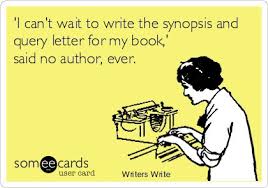
    So the word “query letter” came almost from the beginning. It was like the defining event that would separate published writers for the non-published ones (talking about traditional publishing here). The test that would define who gets to be somebody in the vast sea of the prole (bear this with me, I’m reading a book where the word “prole” comes out every 2 seconds). But I gave it no importance from the beginning. I first had to hone my craft and write my story. Query letters would come later. Unfortunately, I’ve reached that terrified “later.” And I must be honest, I would prefer to keep writing other novels, and short stories than trying to see if my work can be publishable. But I guess, there’s no point in writing stories to keep them hidden in your desk drawer (well, in the C: drive of my computer, in this case.)

    valeriekingbooks com

    Image source: valeriekingbooks.com

    So, time to query I said, and started to read as much as possible about it. I became fond of Query Shark (for those who don’t know, that is Literary Agent Janet Reid destroying writers dreams in her blog that critizices query letters) – Great source of learning by the way. Then, I produced my first query letter (first draft of the first attempt of the first time- oh! let’s faced it, I wrote a terrible first query letter). I posted it on writers support forums to receive the good vibes of others. (Spoiler alert: It isn’t like that, some people are rather straightforward and won’t emanate anything resembling good vibes.)

    But I’m not playing good-vibe fisher, I’m actually tempting masochist waters. I knew I would receive hard critiques and I still did it multiple times, i.e. in several forums. The good part? I also received very good feedback and interest for the story.

    www squareboxuk com

    Image source: www.squareboxuk.com

    How overwhelming is this? It’s terribly overwhelming (I love that I can use adverbs, here, in my blog freely.) You get lots of advice, lots of contradicting advice, lots of questions too! (but you can’t explain the whole story in your query letter). Most of it, is very good advice (almost 90%), but there are others you must be able to filter and scan them with critical eyes. After all, support groups are opened for everybody. However, on querying letters, you have to be careful. The concept of querying is very different from one person to another. You have to rely on your instincts. So,what did I end up doing?

    I left my querying critiques resting for 48 hours. Then, I got back to them with highly critical eyes. The objective: to rescue what I thought was important and accurate. I rewrote my query letter again, and then again, and then again. It’s not ready yet; it’s resting for 24 hours more before getting back to it. This works better. You can’t create the perfect query letter on the same day. You need to step away and then get back to it with critical,rested, renewed eyes. Hopefully, I’ll have it ready soon.

    Now on writing the synopsis… that’s for another post.

    What do you usually do when you receive too much feedback? Do you have a method to filter what works and what doesn’t? How can you tell which is good feedback and which is not?