Author: Carla Doria

  • The myths of daydreaming

    Looking back: The Daydreaming years

    On 2013, more than ten years ago, I wrote a post titled Why daydreaming with open eyes is actually good… Looking back, it serves as a good example of how people can change over the time. This change isn’t about core values, which should remain steady in a person, but rather about one’s approach to life.

    Back then in this post, I fully embraced the time that I spent daydreaming. I remember it very vividly when I used to daydream constantly. At that time, I had a job with a lot free time. My daily commute gave me plenty of moments to reflect. I had time to lie back, relax and just daydream.

    I imagined endless possibilities: what if I had chosen a different career? What if I had been born in a richer family? What if I had the looks of a model? What if I had been born in a different country? What if I had had blue eyes? Then came the future what ifs: If I win the lottery, I would by this and that. If I traveled around the world, I would visit these places. If I had kids, I’d raised them like this. If I become a famous writer, I would do this and that. You get the idea.

    An image depicting a woman sitting in a swing thinking, daydreaming

    I think most of us have gone through a phase like this at some point in our lives. I might indulge in daydreaming occasionally, but now it’s rare. I no longer see it as a good thing. I don’t need to reimagine the what ifs of the past because I understand I can’t change that past anymore. I don’t spend time imagining the what ifs of the future because I know that the only way to make those happen is to through action.

    The Shift: From dreaming to Doing

    I’ve changed a lot. I was a daydreamer but also a big procrastinator. Looking back, I would even call myself a lazy person back then. Those were the years in my life when I dreamed a lot but accomplished little. Now, I stay highly active. I no longer procrastinate and dedicate my time to multiple projects.

    I organize a local WordPress community and participate in a Toastmaster club where I give speeches. I run four blogs and I’m currently taking at least two courses on Coursera. At any given time, I’m learning at least one new software. I manage two YouTube channels where I produce and create my own content, I’m studying German. Beyond that, I have a goal of reading at least three books per month and I try to dedicate some time to learning how to draw and paint.

    scrabble blocks that say If not now, when

    Most importantly, I have one finished manuscript that I’m currently seeking for representation and I’m working on the translation of a previous one. It sounds like too many activities going on, but I feel happy because they lead me to where I want to be. I know I’m working on most of my goals.

    A new Mindset: Action over Daydreaming

    Do I have time to daydream? Barely. Do I think it is good? Not so much. Rather than aimless daydreaming, I think it is best to visualize your goals and dedicate time to do all the steps and tasks that you need to achieve them.

    People change. They do a lot. A decade ago, I often felt sad and unmotivated. Now, I have a completely approach to life. People can improve and it’s not related to the people and circumstances that surround you. It comes from maturity and the drive to improve.

  • Writing short stories – Felix: The Literal Llama

    I’ve never been much of reading short stories. I prefer the longer format of a novel. But there are a lot of people out there that prefer the short format because they know they can easy commit to readiing something short. To me personally, I associated that with people that don’t like to read that much. But I’ve changed my mind lately and I can see the appeal of reading short stories now. Therefore, I understand better the appeal of writing short stories.

    I decided to do a test with short story for children and publish it to Amazon here.

    The story is about a little llama that decides to travel to the big city to dream high. There’s some narrative about his journey but also about the issues that a llama has to go through. The end is a reflection of taking things literal and how sometimes people use metaphoras and forget the literal meaning of phrases.

    It’s a children’s book because it’s nice, sweat and simple. There is no complex prose or vocabulary and there are some llama facts included for learning.

    I hope you enjoy it .

  • The purpose of Beta Reading

    I had a couple of beta readers for my first book “The Last Families” and I regret that I didn’t get more. Not necessarily because the book needed a lot of feedback, but because they’re extremely valuable. And when you’re about to launch a book- especially if it’s self-published- you need a team of supporters behind you. Beta readers will be familiar with your book and will be often willing to help you by leaving reviews and spreading your book’s launch on their social media.

    But like me, I was afraid to have people reading my book- afraid of the feedback, afraid of having someone tell me “your work sucks” or something like that. This time though, I’m open to as much beta readers as possible, as I explain in this post for my newest manuscript. I’ve already received some feedback on the “When the World Disappears”, and it’s been extremely valuable. Thanks to it, I managed to correct and make significant improvements to the manuscript, the characters, and the story.

    During this process, I participated of a beta reading swap as well: you read mine and I read yours. In one particular case with a specific writer, I noticed how writers can sometimes be apprehensive to feedback. In this blog post, I’ll share with you what I observed and I’ll discuss what we must not do as writers when receiving feedback.

    A woman writing on a laptop
    Photo by Startup Stock Photos on Pexels.com

    My experience with a beta reading swap situation

    Beta reading feedback must be listened and considered. Do you have to change everything you’re told by the beta reader? No. But you should listen their feedback carefully and analyze it.

    In this particular situation, I had a beta reading swap that turned out one of the most uncomfortable situations ever. We had to finish/cancel the deal even when she hadn’t even started reading my manuscript (I had read almost a third of hers.)

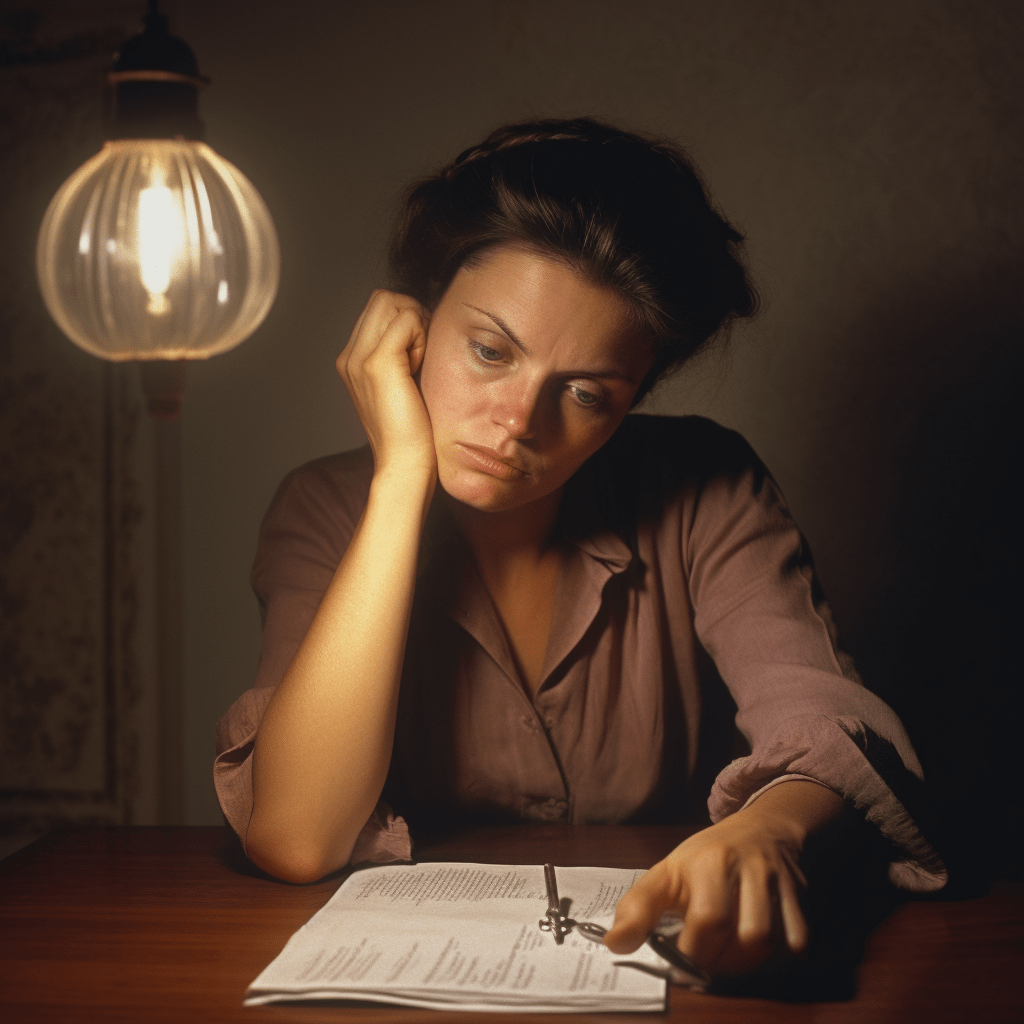
    AI generated image showing a woman worried over a document.
    AI generated image

    The feedback was given through a shared Google Doc, which meant that the writer and I could see the comments in real-time. From the moment I left my first comment in one paragraph, I got a counter-comment commenting on my feedback. It wasn’t that bad at the start, but then it got to a point where I could see the writer was unwilling to consider any of my suggestions. Though I don’t remember the specifics since that happened a few months ago, I’ve come up with some examples that are representative of that exchange:

    Comment from Carla:

    This is not clear. I suggest adding more details of why this character is reacting this way.

    Reply from the writer:

    Why is not clear? What details?

    Comment from Carla:

    It’s not clear why character is reacting this way. She’s a grown up person and her intents are not clear.

    Reply from writer:

    I don’t understand. Be more specific.

    Another example

    Comment from Carla:

    The description is too vague. I would suggest adding more information about this location so readers can immerse themselves.

    Reply from writer:

    What is vague? What do you mean adding information so readers can inmerse themselves?

    Last example

    Comment from Carla:

    Why does this character say that? It doesn’t sound like her.

    Reply from writer:

    It’s what she would say in this situation. Why wouldn’t it sound like her?

    I don’t know if you see the pattern here.

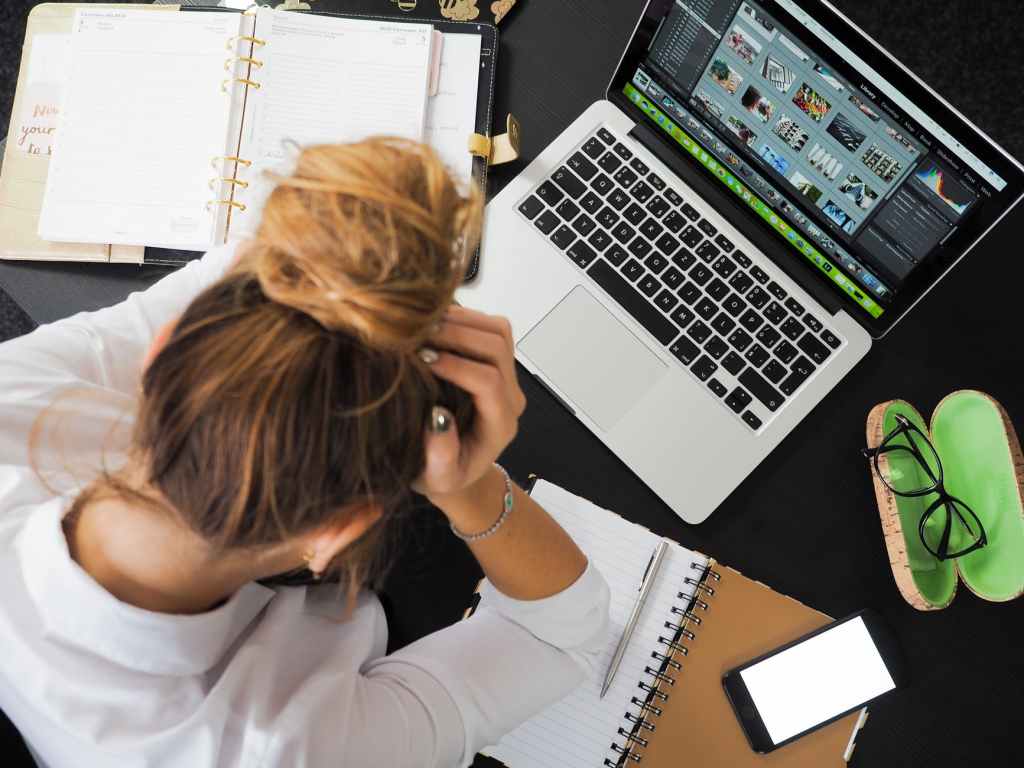
    An image showing from above a woman with a laptop and some notebooks.
    Photo by energepic.com on Pexels.com

    My advice on receiving feedback from beta readers

    I have to say that I learned giving feedback from others who gave me feedback before. My first beta readers would usually approach their feedback in two ways:

    • The more detailed ones would highlight paragraphs and give me comments and observations.
    • Other general beta readers would send me a document outlining their general thoughts and their observations of what was not working.

    As a beta reader myself, I decided to use the first approach, giving comments in a shared document. Until this specific writer, I had no issues. When I received feedback with inline comments on a shared document, I would assess them carefully. I didn’t agree with some of them, but if a comment pointed out that the reason of character X wasnt’t clear or that I needed to provide more context for situation B, I would go back to my text, analyze the issue, and try to improve where it was possible. If a comment told me that a piece of dialogue felt off, I would take into consideration and make adjustments where I could. There were a few times where I felt the dialogue couldn’t be changed, but I chose not to tell that to the person providing the feedback.

    I’m not saying that you shouldn’t reply back to the beta reader and refute their observations, but if someone is giving you advice, LISTEN to it. The beta reader has left that comment to help you improve and not to debate it until someone wins.

    This is how I see beta reading- what’s your take on it?

  • When the World Disappears

    I’m proud to announce that my manuscript for my latest fiction novel is ready. Now, I’m beginning the publishing process. First, I’m pitching it to literary agents, and if I get no results in around four months, I will reconsider self-publishing.

    Since, I’m not near the publishing date, I’m very open to beta readers in general. From my first publishing experience, I’ve learned that the more beta readers you get the better. So for anyone interested, the title is “When the World Disappears”. It’s a dystopian novel and here’s the blurb:

    A virus has struck the earth again with a 90% mortality rate. As the population of the world succumbs to the virus and to mayhem, a vaccine that seems to be the only beacon of hope emerges thanks to the Red Velvet organization in the small Bolivian town of Costa Toro. However, the cure brings unforeseen side effects that will change the lives of the survivors of this small town.

    Larissa has managed to hide from the virus and survive for almost 5 years with her younger brother Hugo. One day, she stumbles upon a mysterious message from someone claiming to have the solution to fix all things. In a world stripped of most of the internet as we know it and with few options to survive, Larissa can’t accept the new reality and wants a better future for Hugo. In her quest, she will meet other people her age and Adrian, who becomes more than just an ally.

    But a misstep exposes her to the twisted new-order authorities of Costa Toro, in particular to Deborah and Governor Fuentes. Both with sinister ties to the Red Velvet organization, which seems to want to keep the status quo. The new order has also brought Adrian to the mercy of an evil punishment. Amidst saving her friend and escaping Deborah, will Larissa find the means to change her world? Who is this Red Velvet organization, and what is their relationship with the government of Costa Toro?

    How does it sound? Would you read it?

    If you’re interested in beta reading, let me know. I can do swap beta reading as well: you read my manuscript, I read yours.

    I’ll be publishing some extracts and chapters as well in the next months.

  • Embracing AI for editing, not writing: A writer’s approach

    AI has become a controversial topic among the community of writers.

    We all know that chatGPT and similar tools that can pull up professionally written content. Chances are that most people working desktop jobs have used this tool at some extent. But what happens with writers?

    If you tell chatGPT to write a piece of fiction portraying characters X and Y with a given topic, it will write one that could be quite passable. For many unscrupulous bogus writers, it will be enough to be published. Hence the uprise of AI-created books published on platforms like Amazon and similar. If you’ve read one of these books, chances are you deemed it rubbish.

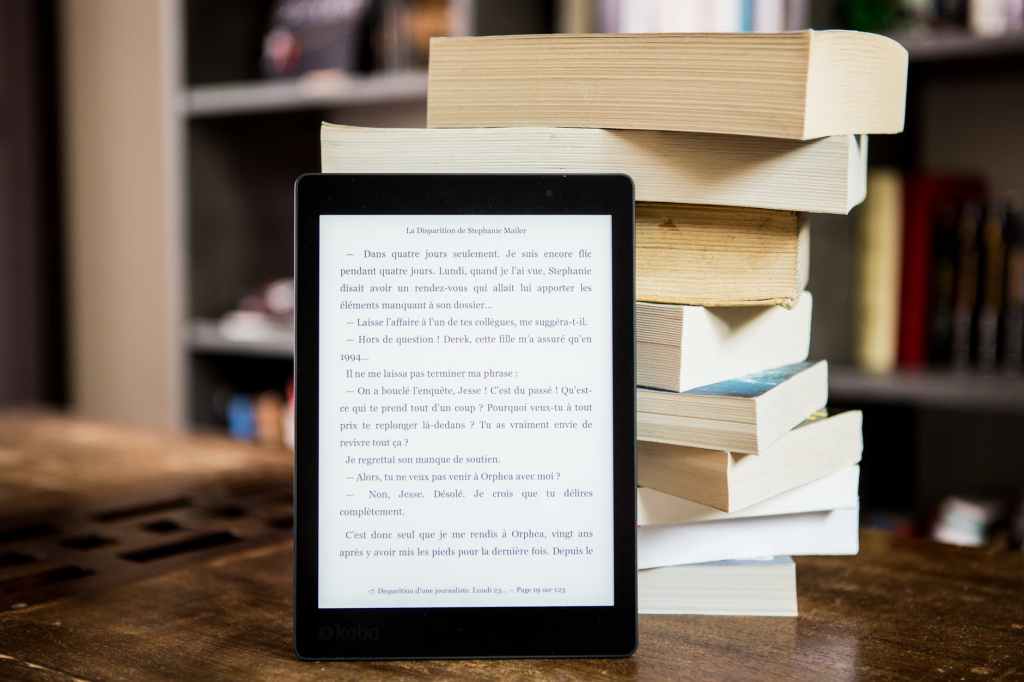
    image showing a kindle device
    Photo by Perfecto Capucine on Pexels.com

    My experience with reading AI fiction and AI non-fiction

    Personally, I haven’t read AI fiction, as I’m very careful with the books that I acquire through online platforms. But I’ve come across with one or two non-fiction books, likely purchased at an average of 0.99 cents, promising to be the holy grail to learn subject X. If these non-fiction books had been written by a real person, chances are that twenty pages of content could have been told in one page, the most. They are overly repetitive, mostly make no point, and/or are filled with irrelevant content. No wonder the community of writers looks at the use of AI with disdain.

    Using AI for editing

    But I don’t. I’m starting to use AI to help my writing. But wait, don’t leave the post now if you’re a fellow writer. Let me clarify: I don’t use it to write. I use it to overcome grammar and sentence structure issues. In other words, I don’t ask chatGPT to write something for me. I do the job—I write first, and when the round of review comes and I come across a sentence structure I’m not happy about, I ask chatGPT “suggest improvement of this text ….”.

    Image showing a woman writing on her laptop
    Photo by Vlada Karpovich on Pexels.com

    Do I replace my text with the AI suggestion? No, not at all. To be honest, I don’t use around 80% of the suggestions. ChatGPT is too repetitive and makes up information that is not relevant to my story at all. But in its suggestions, I find certain wordings and structures that are useful in around 20% of the times.

    Telling when a text is AI written

    If I were to ask chatGPT to do all the work and to write for me, only to review and adjust later to match my voice, it would be like rewriting it from scratch. I found out that whatever default style chatGPT uses, it has these characteristics:

    • It tells a lot instead of showing (tell vs. show)
    • It’s overly descriptive
    • It exaggerates and there’s too much wordiness.
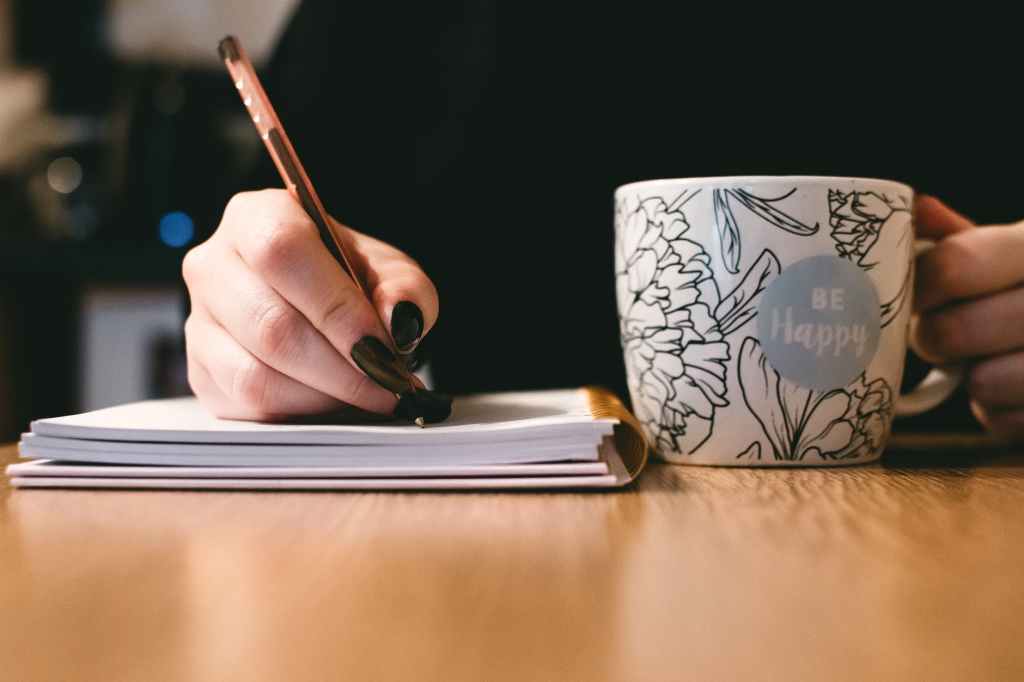
    Image showing a person writing over a notebook with a cup of coffee.
    Photo by Lisa Fotios on Pexels.com

    How to use AI in the editing process

    If my text says:

    Camila frowned hard as she stared at the dog,

    And I tell the AI tool to improve it, chatGPT suggests:

    Camila's brows knitted tightly, her frown deepening as she fixed her gaze on the dog. Her lips pressed into a thin line, and her eyes narrowed, reflecting a mix of confusion and unease. Something about the dog's behavior—or perhaps its presence—clearly unsettled her, and she couldn’t look away.

    Text I copied from ChaGPT.

    Clearly it’s not a bad piece of text, and sometimes writers who struggle with description might find the AI suggestions tempting. But can you imagine this type of prose in every single paragraph? It would be the most annoying reading ever.

    Let’s analyze it deeply, sentence by sentence:

    Camila's brows knitted tightly, her frown deepening as she fixed her gaze on the dog.

    First sentence is good.

    Her lips pressed into a thin line, and her eyes narrowed, reflecting a mix of confusion and unease.  

    The portion that says “reflecting a mix of confusion and unease” is a “telling” prose. There’s no need for these extra words. The description of the lips and the eyes are enough to reflect that she was feeling confusion and unease.

    Something about the dog's behavior—or perhaps its presence—clearly unsettled her, and she couldn’t look away.

    It’s an acceptable sentence. But how can AI tell this is actually happening in my story? Maybe Camila wants to look away. Maybe the dog broke a lamp and the staring is more related to scolding the dog rather than that “unsettling dog’s behavior”. This is where AI makes things up.

    In summary, if I was looking to improve my sentence, I would probably take into account some words suggested in the first sentence—and that’s all. I would have discarded the rest. Trust me, there will be many instances where I will reject all of the AI’s suggestion.

    Image showing a person writing on a laptop.
    Photo by Burst on Pexels.com

    But is it worthy then to use AI?

    I think it is. When we, writers, are in the second or third rounds of revision, sometimes we get stuck with some paragraphs that don’t sound right, even though they are grammatically correct. AI suggestions can help us get out of that situation and improve our work.

    Do I use AI when working on the first draft of a manuscript? No—short answer.

    For me, the first manuscript draft is your essence as a writer. Here’s where you tell your world about your characters, your story, and you’re writing style. At this stage, you explore your imagination and creativity. If AI does this for you, then you’re not a writer, in my opinion.

    Conclusion

    I hope this blog post is helpful to those writers who are VERY reluctant to using AI. Of course, this is a personal decision, but as a writer who struggles in the rounds of revision, I have to be honest and admit that I use chatGPT to help me unlock potential uses of the English language. I don’t feel shameful about that because I know that 100% of the characters, the story, and the writing voice are mine.

    What do you think about this?

  • Book Trailers for Writers

    When I self-published “The Last Families“, I immersed myself in this new world of book marketing. I have to be honest and tell you that I consulted a person about her marketing services, but I almost felt out of my chair when I heard the high fees. That’s when I knew it would all depend on my own efforts.

    I quickly turned to social media, now the most powerful tool for marketing anything, from products to books to even people. I’ve never been good with social media; in fact, I kind of despise it. But I had to come to terms with it.

    Promoting a book is hard. What are you supposed to say each time you post? Of course, you can come up with a thousand variations of promoting your book cover, as seen in some of my tweets and an abandoned Instagram account for The Last Families. But how else can you promote your book there?

    Photo by Vlada Karpovich on Pexels.com

    Just before publishing my book, I came across this service called “Book Trailers.” If you haven’t heard of it, book trailers are short promotional videos designed to create interest in a book. Similar to movie trailers, they provide a visual preview of the book’s content. They often include elements such as voiceovers, text overlays, music, and imagery to convey the story’s essence and entice viewers to read the book. Book trailers are used by authors and publishers as a marketing tool to reach a broader audience.

    Book trailers? Like movie trailers or teasers? That sounded fantastic. As writers, we always imagine our stories reaching the big screen and fantasize about how they will look. I thought having a book trailer for “The Last Families” would be fantastic. However, it was quite expensive, and I didn’t like the services that I saw online. Most of them were like PowerPoint presentations with random people and subtitles, using free stock media that didn’t accurately represent the book characters or world. Since it was too expensive and not like how I envisioned it, I decided to pass on the option.

    Now, as I try to establish myself in the freelancing world, creating courses, websites, and explainer videos, I couldn’t help wondering if I could create book trailers myself. Well, now there’s AI, and it’s here to stay. Since it’s advent, I’ve been nerding with tools like Midjourney and chatGPT to boost my creativity. AI tools have advanced significantly, and if you spend time mastering them, you can do fantastic stuff.

    So without further ado, this is the book trailer from “The Last Families”:

    This book trailer captured the scent of what I imagined, but more than anything, it conveyed the emotion and tone of my story.

    I also created two other book trailers from two classic novels. I hope Louisa May Alcott and Bram Stoker aren’t being pinged in their graves for having the nerve to create a book trailers for their books:

    Of course, there’s room for improvement. The animations aren’t perfect, and you probably noticed several areas that could be refined. But this is AI and it’s continuously improving.

    A professional video animator would charge hundreds or even thousands of dollars for a professionally animated video with all the precision that you need.

    But I’m a writer, and I understand that self-published authors have a limited budget for almost everything, from websites and social media promotion to book covers, trailers, and other marketing efforts. We can’t afford to pay so much when the success of our book is uncertain. Despite the writer’s talent, sometimes being self-published means being SELF-published, and it’s hard.

    I want to help other authors bring their stories to readers. Book trailers are a magnificent opportunity. While I’m not a professional designer, I have great expertise managing at least a dozen AI tools at professional level. I like to believe that I’m a good storyteller —all writers are. More than anything, I LOVE doing these trailers. You won’t find someone more passionate about bringing a book’s blurb into a short video portraying it.

    If you’re an author or know any authors, I’m offering this service through Fiverr at a very modest fee.

    I work with Fiverr as a platform for Orders and Delivers. By using this platform, you get a guaranteed service, reputable payment methods, delivery only after approval, and immediate access to public feedback. Fiverr ensures secure payments and holds funds until you are satisfied with the delivery.