Category: authors

  • Writing in a bad year

    2019 has definitely been a year to remember. Two dear aunts, sisters from my Mom, passed away. My beautiful dog, Dana, who was with me for more than 14 years, also passed away. There was a fire, caused by short circuit on the TV plug, that devoured my Mom’s room and almost killed her. My closest aunt had an accident with a huge wardrobe falling and splitting her head badly. My country went into political turmoil for almost 3 weeks, with almost a civil war in the making. Mobs of delinquents attacked people on the street, beating them to death, setting on fire everything they found, including houses. Three weeks I deeply wish nobody goes through anywhere in the world, days we lived in panic, enclosed in our homes or trying to battle attackers when there was still no police to defend us.

    Photo by Pixabay on Pexels.com

    The year is almost coming to an end and although there have been good times in this year, good trips in the middle of everything and other experiences, I cherish this year as the personal growth has been insurmountable.

    I’m heading at this moment to WordCamp Guayaquil where I will be speaking about “Wanting to be a blogger and finding time,” in other words about time organization. I would have never imagined a couple of years ago talking about time manage skills. Me, the person who used to procrastinate as nobody else and could never find time for anything. I wondered a couple of times if I’m the best person to talk about this, but I feel I’ve grown so much in the last years, specially in this year that I thought I would share my experience.
    Photo by Leo Cardelli on Pexels.com

    Writing and working full time has been a challenge. I must be honest I only commit an hour and perhaps an hour and a half, the most, to working on my current manuscript. I haven’t been the best at keeping this schedule every day. There are days when I don’t write, and even weeks. But I haven’t give up. It doesn’t matter how slowly I move forward. I’ve committed myself to keep doing it.

    At this point, my goal of finishing the review of my manuscript by the end of the year doesn’t look promising. Probably, I’ll end it by the end of January or even February of 2020. But it doesn’t matter, I’m still doing it, little by little, step by step. Besides, I don’t have an agent or a publishing contract that says I have to finish by a specific date. It is true I wish I could have it by the end of this year but nothing will happen if I don’t.

    Photo by Lisa Fotios on Pexels.com

    In a bad year, I could have just plainly written little. My attitude could have been different. Perhaps that would have been the case when I was younger. But my determination has gotten bigger this year. Without it, I would probably have never finished reviewing the first round. I would have never gotten great beta readers and the inspiration the keep writing. Somehow a bad year has make my desire to keep on writing stronger. It has kept me afloat amidst all issues, knowing that there is a greater goal out there for me and that I’m still moving towards it.

    Life is about going through problems and obstacles, otherwise it would be pretty boring and we would never grow. Writing on a bad year has actually been a positive experience and I wouldn’t change it for the world. Writing on a bad year has proved to be good.
    Photo by Bich Tran on Pexels.com
  • Writing in Bolivian Dictatorship

    I never been interested in politics, neither being active in it. Being Bolivian, I’m surrounded by latin-american literature influenced mostly by our turbulent political history. This is social literature that is marked mostly by conflicts and our disastrous governments. I didn’t understand well the impact of these events in literature until the last 3 weeks in my country. Social and political environment can definitely influence your writing soul.

    To be honest, I didn’t write/edit a single word in these weeks. For those who haven’t heard it, we were living under dictator Evo Morales’ regime. He has changed the constitution to perpetuate into power. A couple of years ago, he did a referendum to ask Bolivians if we wanted him to run again for presidency, we voted “NO”. We’d had enough of this government that sympathized too much with Venezuelan and Cuban counterparts. However, the tyrant didn’t accept the referendum results and he searched his illegal way to run for presidency for a fourth time.

    A bit more than three weeks ago, he blatantly committed fraud to forge his win in these elections. The people felt insulted and angered. We protested and took the streets, not knowing how else to protest. We suffered 3 weeks of attacks from delinquent groups that supported his regime of terror. These groups invaded our cities, burned whatever they saw, including houses. People were beaten to death with bats, sticks and stones. The police had instructions to not go out, leaving us to our own fate. They were complying with “orders” from above.

    Finally, after weeks, the police couldn’t take anymore our suffering and pleas for help and riots started to happen into their own units. When the OAS’s audits revealed the fraud, the tyrant called for “new elections”. But we were no dumb. That wasn’t enough. He was a criminal. He had to go. When the army didn’t support him, he finally resigned and ran away.

    Just when there was a brief air or relief, Morales’ groups attacked with more force. The police was now on our side but it wasn’t enough. People organized themselves to help defend neighborhoods. But we could still hear the dynamite explosions, people crying for help. The day following Evo Morales resignation was the darkest one of these weeks. I will never forget the days with warnings to turn the lights off, sirens with alarms to let you know that the hordes of delinquents were close to your home. Morales had ensured to feed these people with hate and anger all these years. They just wanted to destroy everything on their way, burn houses, business, and beat to hell whoever they found. When the police was surpassed by these hordes, we begged the army to step in. It wasn’t until they decided to step in that we had some relief.

    It still hurts to think that this man tried to take advantage of the poorest segment of the population, the indigenous, that because of their lack of access to information were brainwashed with ideas of racism and division. A corrupt network of leaders ensured the poorest ones joined these delinquents groups, threatening them to take away their lands and resources if they didn’t comply.

    When I see Tweets from people abroad, the international community, claiming this was a Coup, I get angered. Only Bolivians know what we went through. Through this week, we heard the tyrant’s speeches mocking us, telling us he would siege cities to see if we could withstand it, mocking from our protests and blockades, calling “his people” to defend him.

    Days are showing a bit better now. We still have a long way to fight and hordes will keep coming in protest for the tyrant’s exile. They will never accept that we, the people, won. The dictator is gone. And even though he threatens to come back, we’ve learned a lot. We learned that unity is strength. Our patriotism and faith has grown. We love our country more than ever and we embrace our multiculturality, our diversity across all races, colors, and beliefs.

    When I think why I didn’t write in this time, I just couldn’t. I couldn’t find the head to do it. I admire those writers that were able to write in moments of political convulsion where your own human rights are at risk.

    I started to write today. It felt weird to go back to my science fiction novel when my feelings are still boiling inside. But I have to go back. I won’t let this tyrant absorb more days of my life. And for the first time ever, I definitely understand the impulse to write social literature. The writer I was weeks ago will always be marked by this experience.

    Photo by Lisa Fotios on Pexels.com
  • People revising your manuscript

    My previous post was published more than 3 months ago. I remember telling myself: I won’t distract myself from any other kind of writing until I have my current first manuscript ready. I originally targeted to finish it by January and Look! we’re almost in the middle of the year. Sigh… It took longer than expected but it’s finally done.

    I initially had one friend volunteering to read it. She was an encouragement as I had told her it would be ready for January and having her asking about its status helped me push through the line and finish it. I soon found out I had two other volunteers to read it. That was exciting but it also made nervous. Extremely nervous. Why? Well, my mind was invaded by these thoughts:

    • What happens if the whole plot doesn’t make sense or is boring to death?
    • What happens if the whole idea of writing a book is not for me?
    Photo by Pixabay on Pexels.com

    I’m an amateur writer and always have self-doubts about my writing skills. I’m usually not that insecure about life in general but writing is important to me and therefore I tend to feel vulnerable to people revising my manuscript. But then I gather myself, I exhale loudly and I think that this comes with the process. I have to learn to listen to feedback and trust in my work. I’m starting; there is a lot to learn. I have to accept the challenge and keep my faith that hard work makes the master.

    And you how do you feel when people start revising your manuscript?

  • Reviewing, plotting and just writing

    Plotter or pantser

    When I started writing, I found the question about being a “plotter or a pantser”. Plotter would be the person that plans the story before they write and a pantser would be the person that only lets the inspiration guide and build the story as they write. Initially, I was sure I would fit the plotter role, I wanted to set up everything correctly before starting to write. It didn’t work that well. As soon as I started to write, characters acquired life and different scenarios/events invaded my mind. I remember thinking then that I was definitely a pantser and welcomed the idea of getting inspired as I wrote. I ended my first manuscript of my first project, ditching the plotting and welcoming the pantsing.

    The end result was not the best. After some rounds of feedback and self-revision, I found out that the story had many holes in it. The story was weak and it wasn’t working as I wanted. I started to re-shape the story, changing chapters, deleting scenes, adding new plot twists, etc. But after several rounds, I still was unhappy with it. Now that I look back, there wasn’t a time when I totally felt confident with how the plot evolved.

    people coffee meeting team
    Photo by Startup Stock Photos on Pexels.com

    Editing while writing

    Then comes editing. When I started to write, without any previous experience, I reviewed/edited my reading after a couple of paragraphs or even after a single paragraph – trying to get the perfect grammar and writing. That didn’t last. This method certainly cut my inspiration and it would take me ages to finish a single chapter. Then my first NaNoWriMo came and I thought that this was the opportunity I needed to be able to end my first manuscript. And I sort of did it. I didn’t finish it, but I learn how to sit and write without giving a look to previous paragraphs. Editing would come later.

    The result wasn’t the best either. There was terrible writing everywhere – not acceptable for requesting feedback. I had to go through a couple of rounds of editing before it was presentable. Those two/three rounds took me a lot of time, probably more than a month. And I really hated them.

    adult books business coffee
    Photo by Burst on Pexels.com

    What I found out this time

    It was trial an error. I still did a couple of mistakes when I started to write my second project. I initially tried to start as a pantser – my objective to write until the manuscript ended and already dreading the rounds of revision in advance. But I already got a feeling that the result would be a plot filled with holes and a writing so embarrassing that would only lead me to endless rounds of revisions. I stopped after a couple of chapters. Why would I need to be either a plotter or a pantser? Why I had to decide between editing while writing or editing everything at the end?

    analysis blackboard board bubble
    Photo by Pixabay on Pexels.com

    I took a break after a couple of chapters. Then I started reviewing everything I had written. I wrote a little bit more – with a better mindset of the story in mind and continued writing. Then I reviewed my last written words, changed them into a more decent writing and continued. The result:

    I write a couple of chapters. I go back to read them and do a general revision of the writing itself. I analyze the plot a little bit before continuing. I do a little bit of planning for the next chapters and continue. It’s a mix of all methods above. And I found that it works for me. There are no longer surprises, fears, or even apathy to future rounds of editing. There is no structured planned plot that cuts my inspiration but I also don’t write with no horizon in mind.

    I edit my writing as I go. I don’t do it immediately, I let it sit for a couple of chapters so that it doesn’t cut the flow or the feeling of writing freely.  I go back to review the writing of previous chapters to make sure that I have a decent writing over there, knowing that at the end it won’t be a terrible manuscript, that it will be readable and that might only need few editing before requesting feedback. I like my own method. And I’m not suggesting it to other people. I’m only saying that each writer has to find its own way to do things…

    woman wearing grey long sleeved top photography
    Photo by Artem Bali on Pexels.com

  • No rules for the writing process

    I struggled a lot with my first project. I read many books on the writing process and even attended some courses on it. I tried to be as systematic as possible and write by the rules.  I learned valuable lessons and this helped me get through the process and finish my manuscript. However, I didn’t like the end result.

    For this new second project, I started a couple of months ago, I tried to let it go and just be a pantser instead of a plotter. However as nice as it sounds to be a pantser, I also knew from my first experience, that there needed to be some infrastructure in the plot. Endless inspiration doesn’t take you to a perfect plot. And there are characters, my weakest point. The very reason why I let my first project remain dormant for the time being is that I ended not liking my characters at all. They needed and still need more development if I ever go back to that first project.

    images (1)

    In this second project, I had started writing as a pantser, letting the words and scenes come to my mind as I wrote, but then I reached a point (a couple of days ago) where I didn’t know where I was heading and if characters were being developed as I wanted. So I did something I avoided since I started writing. I stopped after more or less 35000 words and went back to the first page to review it slowly. I know the manuscript is not even in the middle and I have no clue yet where the story is heading yet, but I felt the need to go over what I have written so far to make sure the 35000 words made sense and that the characters didn’t suck. If you’ve gone through writing advice, classes, etc, you will hear that they don’t recommend this approach that much, that editing while still writing might not be the best. But I found out that it actually helps me. I’m in time to detect current plot failures and find opportunities for character development. Who knows, with this initial review, the plot might get a twist and a new rewrite. At this point, I wouldn’t mind the re-writing. I’m not that far in the story. Rewriting 35000 words doesn’t feel as bad as rewriting more than 100 000.

    download (3)

    This approach seems to work so far. Maybe it’s already suggested somewhere or maybe some other writers do something similar. I feel that it might the “thing” that works for me. I believe the purpose of getting experience with the writing process is to find your own path and your own method. My objective is that my first manuscript feels good. It doesn’t matter if I need to do a heavy editing after it. I just want to be able to feel that I’m telling a good story.


  • My new approach towards NaNoWriMo

    I participated in my first NaNoWriMo a couple of years ago. It was an attempt to get my first manuscript out. At that point I didn’t have much experience in writing, I had a topic in mind but no plot or idea where my manuscript was going. I remember being delighted with the idea of writing two thousand words per day. I would be together with a whole community of writers, in the same position as me. I wouldn’t feel alone in the process. However, as I look back, I think that I was so worried about the daily goal, that I was giving more importance to its achievement than to the development of my manuscript story. I won NaNoWriMo that time (winning means writing 2000 words per day in all the month – an equivalent of 50 000 words of manuscript).  But as I look back, I would have liked  more time to develop this story.  I sort of rushed the plot into a story that I found myself not liking very much later. Right now, this manuscript is in standby, it has room for improvement. Perhaps it would have been finished by now if I had given more thought to its plot at that time.

    crest-05e1a637392425b4d5225780797e5a76

    I didn’t participate in NaNoWriMo the next years. I don’t regret the first time either. It pushed me more into writing. I’ve passed from having the dream of one day wanting to write a novel to having a draft of a manuscript in a short time, something I thought it would never happened in my life.

    However, this year I’m participating. I have a new story in mind. But my approach this year is different. In this month, I want to give as much thought and work as possible to my new story but without the daily goal of 2000 words per day. My objective is to make of this month a key month for my new manuscript, and I also want to feel that I’m participating in something bigger, with a whole community in the process.

    ihnmtywqs7mt28n9pbyn

    I’m focusing on writing with inspiration – I like this state of mind. The characters and story so far are nice and are exciting me. I’m no longer worried about having the story finished as soon as possible. I’m loving the process of discovering the story as I write. The process of discovering my own characters as the story continues. There is no goal per day. I write in the mornings before I start my job. I found out that this works for me. When I was doing the opposite, writing at the end of day, I was so tired and didn’t want to seat on the computer any longer in the evening. Now doing this in the early morning gives me a sense of replenishment and fullness that lets me start the day accomplishing one of my main goals in my life.


  • Delivering Happiness

    Well, it took me some time to write this post. I was kind of busy preparing my exit at my current job and readying for my new job. I will start in November working as Happiness Engineer for Automattic (the company behind WordPress.com and many other web solutions that seek to make the web a better place). So of course, I’m thrilled. The title of the position is very accurate actually. Happiness engineers deliver customer support but also go beyond that; they make sure WordPress.com users (mostly) go through a smooth and happy experience as they build and manage their blogs or sites.

    automattic_wp

    Having the opportunity to help people with their sites’ issues and provide them advice, tips, and tools to make things better are exactly the tasks I enjoy the most. Anticipating their needs and contributing with their blogs’ journeys is fantastic. Of course, we can’t solve everything. And I really wish we could, but being there to support and empathize with them is what makes this a great job. We deliver a little bit of happiness in each of our tasks.

    So, how did I find this position? It was not that easy, and it was a long path. Basically, you need to prove you’re a good match for this company. And how do you do that? Well, Automattic looks for people who’re interested in learning every single day and growing each time more (I love that!). And what better way to know if you’re a good match for them than to “trying yourself”? Yes, you do that. You go through a paid trial so they can assess if you’re a good fit for the company’s culture or not. But this trial doesn’t only work for their assessment, you also get to taste the company’s culture and see if the role is made for you.

    What other characteristics are awesome about Automattic? The company is totally distributed. Meaning that Automatticians (people who work at Automattic) get to work from wherever they are in the world. Living and being from Bolivia, this is certainly a huge plus. (Although, I totally believe the future will be like this). They hire based on what you can bring into the company and not based on where you’re located or if it’s possible to relocate. And let’s be honest, as a passionate traveler, I’m excited about working remotely.

    giphy-4

    However, you can’t only assess a company based on the benefits and your position. You need to hunt for the “totally awesome” career factors. You need to hunt for a company that will push you to grow, learn endlessly, and contribute as much as possible. In the little time as a HE trial, I’ve learned more than what I did in all my career life. Period. I can only imagine how much I will be able to learn once I start working with them. My skills will grow exponentially 🙂 And although many companies push you towards continuous learning, some of them actually limit you without noticing (after all, they want you to make the job for which you were hired and not intervene too much with others’ work). At Automattic, I’m sure I won’t be limited. It doesn’t matter if you don’t have a technical background (like me), your opinion and your work is taken into account. You can even rotate and explore as many areas as you like. 🙂

    So why do I believe this is my dream job? For me working as HE will let me:

    • Help people every single day and at every single second
    • Grow and learn every single second
    • Have infinite possibilities to contribute
    • Have more flexibility to travel and get to know the world
    • Have really awesome perks (Did I mention you get to travel a couple of times a year to meet the team and the company, you get your home office set up – with the best laptop in the market, the chair of my dreams, a huge monitor, a great desk, endless WordPress swag – and so many other perks?)

    I’m super excited. I know the job is going to be challenging (which I look forward to), but at the same time I feel like I’ve received one of the greatest opportunities to have finally the life that I want. I’m also excited to continue writing my books. But the writing journey conditions will be a million times better with a great job supporting me and my family.

    giphy-5

  • The TED talk all women should see

    I try to start my workday with a TED talk. I wish I could say I do this daily, but sometimes I can’t. I usually do it when my work energy level is low or when I feel I need motivation to go with the work routine. Today I came across with “Why do ambitious women have flat heads?” by Dame Stephanie Shirley.  The title was enough to call my attention since sometimes when the talk’s title is too predictable, I might just pass it. But this one wasn’t and I’m glad I clicked it.

    Dame Stephanie Shirley had it rough. She was one of the Jewish kids saved by being sent to families in northern England during the Second World War . She grew up in an era where women’s only objective was to get married and have kids. There were scarce work opportunities for them. I work in the software industry. Women in the 60’s didn’t just pursuit that area at all. But one woman did it. And this terrific woman showed nothing is impossible. Yes, there was a programming market in that era, believe it or not. If you want to know exactly how it worked, then you have to check the video.

    Stephanie Shirley went through all the fights my generation didn’t have too. My generation won’t suffer that gender discrimination again. We have it easy. And what are we doing with our lives? We don’t aim high enough. We don’t dream big enough. We don’t do the fights for the next generations.

    I invite you to watch the following TED talk (only 13 minutes of your time but worth your life change).

    [ted id=2223]

  • Being good at metaphors

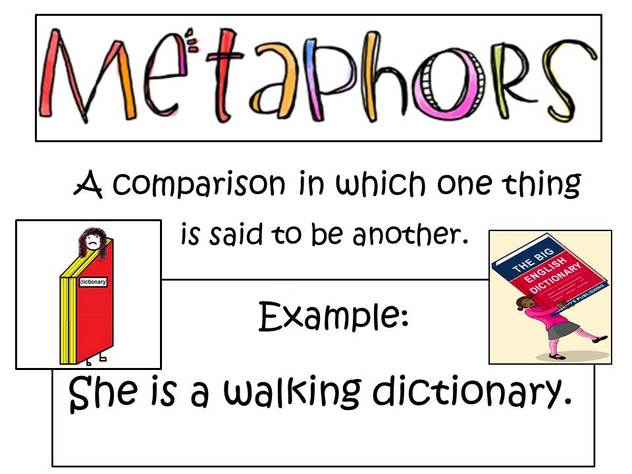
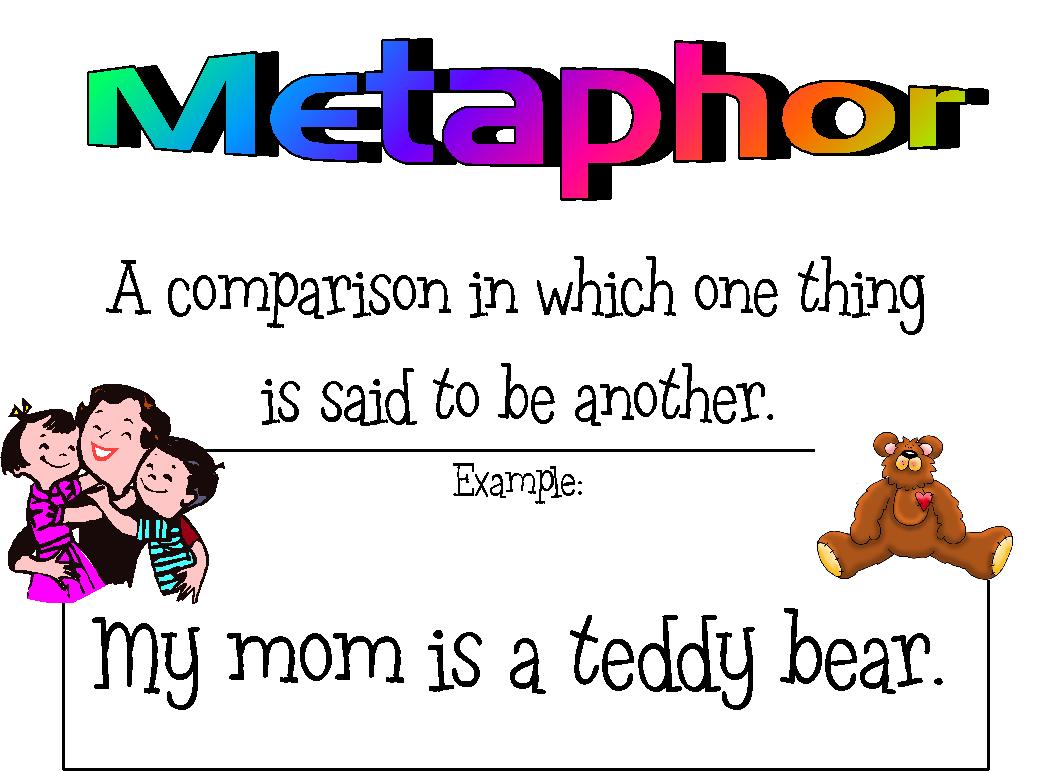
    According to Wikipedia, this is the definition of a metaphor:

    A metaphor is a figure of speech that identifies something as being the same as some unrelated thing for rhetorical effect, thus highlighting the similarities between the two. 

    There’s nothing more beautiful than reading good literature and finding genius metaphors and similes.  As a writer, I find myself wanting to produce my own ones. But reality hits and I realize I’m not good at them. I suck at them.

    met1

    Good metaphors are for the mind of extremely creative people. Imagination prevails in this realm.  And writers have no other choice than to develop this skill. Would that mean I’m not creative enough? or that I don’t have enough experience as a reader and writer to produce clever metaphors? Maybe, It all comes to how I interpret the world. I don’t tend to compare or establish similarities between situations. Would this mean that I’m not programmed to create metaphors? Regarding of the answer, skills can be improved. It’s all about a practice, experience, and finding your creative side. Writers are supposed to navigate towards those waters anyway, aren’t we?

    So what have I done to improve my chance of coming up with clever metaphors? Whenever I’m writing and I find myself describing situations or settings, I pause, close my eyes and try to imagine the situation in my head. What does it look like? Does the person or objects remind me of something? Is there another way to describe it in a more interesting way? Sometimes it works, sometimes it doesn’t. Sometimes I see the situation or setting for what it is and fail to produce a similarity that enables the figure of speech. But practice makes the master. I must persist.

    met2

    Interestingly enough, I found that our creative side comes easier whenever we find our writing voices. That is when we allow ourselves to show our feelings and inner paradigms through our characters. That’s when one gets to be more creative and hence more prone to bringing good metaphors. But our unique writing voice improves with time, practice, and nothing else. When I review my first drafts, I find almost no existing metaphors. In those first pages, my writing is not funny, is not filled with surprises, is not page turning, it is boring. But when I review the latter drafts, I tend to smile to myself more. Not because I’m nailing every sentence, paragraph, and chapter, but because I seem to like my writing each time better. I seem to enjoy my story even more. Metaphors and similes start to appear.

    I might not be “natural” at metaphors. But I got the tools to improve it. I only need practice and persistence. After all, everything in our lives is about endurance, isn’t it?

    And if you’re striving on  understanding metaphors, then you can check out this complete guide with very helpful examples from Grammarly.

    And you, do you have any good tips or methodologies for writing good metaphors?

    met3

  • Receiving feedback from your manuscript is not terrifying is confusing!

    You would think that receiving feedback from your manuscript can be scary, discouraging, etc. But I’ve concluded that in my case, it was only confusing.

    How do you filter the good advice from the bad one?

    From the four people I asked to read my manuscript, I got feedback from two. We´ll call them reviewer A and B.

    First of all, let me thank A and B for all their time and patience (in case they read this post). But their points of view were so different in some aspects, that it only got me confused. Now, reviewer A and B have experience writing, critiquing and even publishing.

    www celullartelephones net

    Image source: www.celullartelephones.net

    The following are only some of the many aspects they pointed out. They only agreed on the first one, but I happen to disagree with them in that one 🙂

    Background

    Too much background at the beginning of a story is not good. People will get bored, you need to go to the point, and start telling your story, etc. Have you heard this advice? I swear I’ve seen this advice on all books, writing manuals, guides, tutorials, webinars, I laid my hands on.

    Reviewer A would like to have more background from my main character at the beginning. Reviewer B agrees that it’s not a bad idea at all. But what about the advice I heard on other sources? I believe I’ve given my MC the main and necessary background, I don’t believe he needs more, but now I’m confused. What’s your take on this? 

    Adverbs

    I’ve been trying to omit them as much as possible. It´s not natural for me, I guess I´m used to them when speaking. They seem to flow in my writing very easily (ha! two adverbs there, one after each other, that wouldn’t happen in my manuscript, not ever.)

    But then I got very different stands on this:

    • Reviewer A said I should try to get rid of all adverbs (I must admit I left maybe around 20 adverbs in my whole manuscript. We´re talking about 20 words in 85000, is not bad, right? I felt those left were the ones that needed to exist or else the sentences would sound awkward.)
    • Reviewer B suggested some changes in sentences, most of his suggestions included newly introduced adverbs. I commented this situation to reviewer B. He said he didn’t see any point in getting rid of them.

    confused

    Use of was/were or any expression of the verb “To be”

    OK, I also got this one from writing texts, books, guides, blogs, etc. Avoid using the “be” verb, it only stops the narration, it slows it down, it makes it look lazy, etc. So I tried to use it as few as possible. It’s difficult, and I must admit my manuscript still has lots of them. But now, I’m confused on what to do with them, because I got this feedback:

    • Reviewer A emphasized to reduce the number of those sentences even more.
    • Reviewer B said “It’s not necessary. It doesn’t make sense.”

    My main confusion

    I want my writing to be the best as possible. The first advice you get if you want to be published is “master your craft.” (that means your writing.)

    Of course, I would love to be published someday, traditionally or self-publish, any of those. Now, I´ve been picking many best sellers, flipping through their pages, and most of them are riddled with adverbs, “to be” forms, etc. So how important is to get rid of them?

    Reviewer A said the story had potential and reviewer B found many plot holes. Do you think this should give me a hint that they’re very different readers/writers?

    ibgale2

    Image source www.ibgale.net

    My Conclusion

    I’m going to review my manuscript one more time, one more round. I know I can do it better. I know there are some parts of the plot that need to be improved. I know that characters could be better developed. I know that punctuation needs to be perfected. I know that I can still reformulate some sentences to avoid adverbs and the “to be” forms. But I don´t want to overwrite the whole thing.

    I have a queue of at least two dozen story ideas that I can´t wait to start writing about. Yesterday, I actually started writing a short story. I felt relieved to create other characters, other situations, and get away from my manuscript story for a while. I’ve invested many months in my current manuscript and I feel I need to move on to writing other stories. I’m willing to accept that if this one doesn’t get published, maybe the next one will be. Perhaps in the future, I will take my manuscript from a hidden box and review it again. Maybe I’ll make it better, with an improved perspective. (Of course, the manuscript won´t be in a box, since it only exists as digital, so it’ll probably be a hidden computer folder, but some writers like to believe that our manuscripts are physical tangible objects, bear with me in this one 😉

    Do you ever get this feeling? Tired of a particular story or characters and that you’d rather start writing another story?

    How do you relate to these editing aspects? What would be the best advice you can give me? I’m really looking forward to hear from you.

    www ibgale com

    Image source www.ibgale.net