Category: books

  • Reviewing, plotting and just writing

    Plotter or pantser

    When I started writing, I found the question about being a “plotter or a pantser”. Plotter would be the person that plans the story before they write and a pantser would be the person that only lets the inspiration guide and build the story as they write. Initially, I was sure I would fit the plotter role, I wanted to set up everything correctly before starting to write. It didn’t work that well. As soon as I started to write, characters acquired life and different scenarios/events invaded my mind. I remember thinking then that I was definitely a pantser and welcomed the idea of getting inspired as I wrote. I ended my first manuscript of my first project, ditching the plotting and welcoming the pantsing.

    The end result was not the best. After some rounds of feedback and self-revision, I found out that the story had many holes in it. The story was weak and it wasn’t working as I wanted. I started to re-shape the story, changing chapters, deleting scenes, adding new plot twists, etc. But after several rounds, I still was unhappy with it. Now that I look back, there wasn’t a time when I totally felt confident with how the plot evolved.

    people coffee meeting team
    Photo by Startup Stock Photos on Pexels.com

    Editing while writing

    Then comes editing. When I started to write, without any previous experience, I reviewed/edited my reading after a couple of paragraphs or even after a single paragraph – trying to get the perfect grammar and writing. That didn’t last. This method certainly cut my inspiration and it would take me ages to finish a single chapter. Then my first NaNoWriMo came and I thought that this was the opportunity I needed to be able to end my first manuscript. And I sort of did it. I didn’t finish it, but I learn how to sit and write without giving a look to previous paragraphs. Editing would come later.

    The result wasn’t the best either. There was terrible writing everywhere – not acceptable for requesting feedback. I had to go through a couple of rounds of editing before it was presentable. Those two/three rounds took me a lot of time, probably more than a month. And I really hated them.

    adult books business coffee
    Photo by Burst on Pexels.com

    What I found out this time

    It was trial an error. I still did a couple of mistakes when I started to write my second project. I initially tried to start as a pantser – my objective to write until the manuscript ended and already dreading the rounds of revision in advance. But I already got a feeling that the result would be a plot filled with holes and a writing so embarrassing that would only lead me to endless rounds of revisions. I stopped after a couple of chapters. Why would I need to be either a plotter or a pantser? Why I had to decide between editing while writing or editing everything at the end?

    analysis blackboard board bubble
    Photo by Pixabay on Pexels.com

    I took a break after a couple of chapters. Then I started reviewing everything I had written. I wrote a little bit more – with a better mindset of the story in mind and continued writing. Then I reviewed my last written words, changed them into a more decent writing and continued. The result:

    I write a couple of chapters. I go back to read them and do a general revision of the writing itself. I analyze the plot a little bit before continuing. I do a little bit of planning for the next chapters and continue. It’s a mix of all methods above. And I found that it works for me. There are no longer surprises, fears, or even apathy to future rounds of editing. There is no structured planned plot that cuts my inspiration but I also don’t write with no horizon in mind.

    I edit my writing as I go. I don’t do it immediately, I let it sit for a couple of chapters so that it doesn’t cut the flow or the feeling of writing freely.  I go back to review the writing of previous chapters to make sure that I have a decent writing over there, knowing that at the end it won’t be a terrible manuscript, that it will be readable and that might only need few editing before requesting feedback. I like my own method. And I’m not suggesting it to other people. I’m only saying that each writer has to find its own way to do things…


    woman wearing grey long sleeved top photography
    Photo by Artem Bali on Pexels.com
  • Book review: On Writing Well: The Classic Guide to Writing Nonfiction by William Zinsser

    I usually wouldn’t have selected this book if it weren’t for a reading club at my work. We wanted to improve our writing as part of improving our communication skills –  most of it is written. But why wouldn’t I pick this book if one of my main passions is writing? Because the book is directed towards nonfiction writing and when thinking of myself as a writer, I believe I’m mostly labeled as a fiction writer. But communication at work is written so it made sense to check how my writing was in the non-fictional world.

    woman using gray laptop computer on her lap
    Photo by rawpixel.com on Pexels.com

    What was different from this book?

    The author, William Zinsser, explains with examples (the only way to learn) how to find your own voice. He gives a huge importance in finding your true self, your true voice. He encourages you to find the passion and enjoyment in your daily writing tasks and to never forget your own principles and the ones of the story you want to talk about.

    But how is the sound of our writing voices?

    Your writing voice should be as you are, not how you talk, but how you perceive things in your head. Zinsser gives the following advice:

    “Don’t flight such a current if it feels right. Trust your material if it’s taking you into terrain you didn’t intend to enter but where the vibrations are good…”

    pen writing notes studying
    Photo by Tookapic on Pexels.com

    The importance of finding the right words

    The right words don’t necessarily mean the complex sounding ones. “Just because they’re writing fluently doesn’t mean they’re writing well,” Zinsser mentions. How many times we read a book with lots of interesting new words, and we find ourselves wishing we had more vocabulary. But sometimes we don’t need this, we only need to find the right words, the ones specific enough to show what we mean. There is no need for complexity, rather for specificity.

    When we write fictional books, we tend to overthink the writing process too much. As we write, we’re trying to sound good and to ensure our text looks not simple – not amateurish. We want others to notice we have a great vocabulary and in this effort, we sometimes lose our own voice. I have tried many times to edit my manuscripts in an effort to make the text sound smarter – not simple – but using words that weren’t true to my own rhythm and voice.

    woman writing on a notebook beside teacup and tablet computer
    Photo by Tirachard Kumtanom on Pexels.com

    And how about simplicity and clarity?

    Sometimes we take too much effort in describing a scene or a character that we lose our sense of direction. “Clutter is the disease of the American writing. We are a society strangling in unnecessary words…” Zinsser mentions.  And although this quote refers to American writing, it still applies to all the writing world and even to all languages. How many times I have found the same issue in my mother tongue Spanish.

    Part of this clarity is to question ourselves: Is our story,  the narrative, the description of scenes, and especially dialogue making sense?

    Enjoying the process

    We spent too much time thinking about the finished work. We tend to visualize or think too much about when the manuscript will be ready, when the book is going to be in a readable stage, and when a possible publishing time could come. We imagine the end line too often and we don’t find ourselves enjoying the process. We are writers, the process of writing should be “our thing” not going after editors and publishers. Let us enjoy the process for the time that is needed.

    As Zinsser mentions: “The writer, his eye on the finish line, never gave enough thought to how to run the race,” and “You won’t write well until you understand that writing is an evolving process, not a finished product.”

    pexels-photo-1043512.jpeg

    How much are we willing to defend our work and to dare to be ourselves?

    No matter how much editing we do ourselves, our manuscripts will suffer one day with other editors. We have to make sure that our writing and our voice are still there.  “What you write is yours and nobody else’s”

    I’ve struggled with this issue a lot. I want readers to recognize my voice. But sometimes, I’m so lost in having a decent product, in having precise sentences and paragraphs, good words, believable characters, believable setups, etc, that I lose my voice in it. Whatever comes out of our manuscript, it has to be ours, it has to show our own personality. As Zinsser puts it, “Writing well means believing in your writing and believing in yourself, taking risks, daring to be different, pushing yourself to excel”.  This mindset is key, how many times we suppress our thoughts and expressions while we write; an inner voice saying “no, that sounds ridiculous, people won’t understand it.” But we have to understand that there is a difference between readers not able to follow a story structure and not be able to follow the author’s sense of wit and voice. We shouldn’t worry about the latter, we should just go with our guts.

    We tend to forget so much of these tips. We’re scared what readers of our manuscript will say, how copywriters will find the text and how editors will see it. We’ve been told rules such as not repeating words, but sometimes they are needed for a reason, sometimes the repetition is there to provide emphasis and to give it a specific rhythm (like the double sometimes in this sentence). Many times when we change our words just to obey rules, we change the effect we are trying to give to our voice, to our characters, and to our story.

    notebook macbook pro designer technology
    Photo by Negative Space on Pexels.com

    What other advice was also very helpful about this book?

    Zinsser treats comedy as a good resource for writing, as a good way to show your personality. This doesn’t mean that you have to tell jokes, but it’s related to the wit with how you tell things. In most cases, this might be the best way to show the true you.

    In summary, I really enjoyed the book. Even if I don’t intend to write a non-fiction book, it still had plenty of useful advice, useful not only for non-fictional writers but also for fictional writers, so I definitely recommend it. You can get the book here. 

  • No rules for the writing process

    I struggled a lot with my first project. I read many books on the writing process and even attended some courses on it. I tried to be as systematic as possible and write by the rules.  I learned valuable lessons and this helped me get through the process and finish my manuscript. However, I didn’t like the end result.

    For this new second project, I started a couple of months ago, I tried to let it go and just be a pantser instead of a plotter. However as nice as it sounds to be a pantser, I also knew from my first experience, that there needed to be some infrastructure in the plot. Endless inspiration doesn’t take you to a perfect plot. And there are characters, my weakest point. The very reason why I let my first project remain dormant for the time being is that I ended not liking my characters at all. They needed and still need more development if I ever go back to that first project.

    images (1)

    In this second project, I had started writing as a pantser, letting the words and scenes come to my mind as I wrote, but then I reached a point (a couple of days ago) where I didn’t know where I was heading and if characters were being developed as I wanted. So I did something I avoided since I started writing. I stopped after more or less 35000 words and went back to the first page to review it slowly. I know the manuscript is not even in the middle and I have no clue yet where the story is heading yet, but I felt the need to go over what I have written so far to make sure the 35000 words made sense and that the characters didn’t suck. If you’ve gone through writing advice, classes, etc, you will hear that they don’t recommend this approach that much, that editing while still writing might not be the best. But I found out that it actually helps me. I’m in time to detect current plot failures and find opportunities for character development. Who knows, with this initial review, the plot might get a twist and a new rewrite. At this point, I wouldn’t mind the re-writing. I’m not that far in the story. Rewriting 35000 words doesn’t feel as bad as rewriting more than 100 000.

    download (3)

    This approach seems to work so far. Maybe it’s already suggested somewhere or maybe some other writers do something similar. I feel that it might the “thing” that works for me. I believe the purpose of getting experience with the writing process is to find your own path and your own method. My objective is that my first manuscript feels good. It doesn’t matter if I need to do a heavy editing after it. I just want to be able to feel that I’m telling a good story.


  • My new approach towards NaNoWriMo

    I participated in my first NaNoWriMo a couple of years ago. It was an attempt to get my first manuscript out. At that point I didn’t have much experience in writing, I had a topic in mind but no plot or idea where my manuscript was going. I remember being delighted with the idea of writing two thousand words per day. I would be together with a whole community of writers, in the same position as me. I wouldn’t feel alone in the process. However, as I look back, I think that I was so worried about the daily goal, that I was giving more importance to its achievement than to the development of my manuscript story. I won NaNoWriMo that time (winning means writing 2000 words per day in all the month – an equivalent of 50 000 words of manuscript).  But as I look back, I would have liked  more time to develop this story.  I sort of rushed the plot into a story that I found myself not liking very much later. Right now, this manuscript is in standby, it has room for improvement. Perhaps it would have been finished by now if I had given more thought to its plot at that time.

    crest-05e1a637392425b4d5225780797e5a76

    I didn’t participate in NaNoWriMo the next years. I don’t regret the first time either. It pushed me more into writing. I’ve passed from having the dream of one day wanting to write a novel to having a draft of a manuscript in a short time, something I thought it would never happened in my life.

    However, this year I’m participating. I have a new story in mind. But my approach this year is different. In this month, I want to give as much thought and work as possible to my new story but without the daily goal of 2000 words per day. My objective is to make of this month a key month for my new manuscript, and I also want to feel that I’m participating in something bigger, with a whole community in the process.

    ihnmtywqs7mt28n9pbyn

    I’m focusing on writing with inspiration – I like this state of mind. The characters and story so far are nice and are exciting me. I’m no longer worried about having the story finished as soon as possible. I’m loving the process of discovering the story as I write. The process of discovering my own characters as the story continues. There is no goal per day. I write in the mornings before I start my job. I found out that this works for me. When I was doing the opposite, writing at the end of day, I was so tired and didn’t want to seat on the computer any longer in the evening. Now doing this in the early morning gives me a sense of replenishment and fullness that lets me start the day accomplishing one of my main goals in my life.


  • When writing is only about writing

    To be honest, I’d been stuck with my manuscript for months already. Recently, I wrote how I planned to practically start over from scratch. At the end, I decided to take a similar approach, go over it but not with editing eyes (I’ve edited those sentences so many times that I didn’t know if I was actually improving them or making them worse) but read it critically, plotwise, characterwise. I felt that my biggest weakness was character development, I felt them flat. That is why I choose a very good advice from my blog friend Glynis in “Productive or Busy” (who also took it from her friend Shari) about writing separately several character pages (not necessarily related to the plot but their life story in general) to get a feeling of the characters. I loved the idea and started doing this on my current manuscript.

    As soon as I started just writing, I got those chills you have when inspiration hits you and you just start typing endlessly, feeling the flow of the words. I love this state. I know I don’t do my best writing from the grammatical/structure point of view, the writing is rather awful, but I get to release all the feelings and everything I feel should be put to paper.

    download (16)

    After this cool experience, I had to go for a fanfiction story. I know being a geek has led me to write fanfiction stories before. This is a weird path for writing since fanfiction involves writing about characters that have already been created, but it is still writing and I had to do it. It felt so liberating that I thought that I was finally rediscovering my writing spirit again. The fan fiction story only awoke my inner writing muse. This was a one time short story and it is already finished, and I don’t plan to revisit the world of fanfiction for a while, however this process has stirred the desire that I’ve been having for some time to start a new story, for leaving my manuscript resting for a while, and just start telling this new story that has been doing circles in my head.

    download (17)

    I realized that I might not be the first one. I’m pretty sure several writers have jumped to a different work and left others to rest for a while.  So I’ve started writing a new manuscript for a week already. I’ve been doing it daily (which wasn’t happening with my other writing) and I feel excited about it, ideas are flowing to my mind and I feel happy. I still plan to revisit my previous manuscript’s character pages since that aside process was been going well, but I feel like this new writing has strengthened and invigorated my new writing spirit.

    And you, has it ever happened to you that you started writing other projects without finishing others? Do you think it is a good idea?

    eq54w9myfn6xfd28p92g

  • Is it time to start the manuscript from scratch?

    It has been several months since I haven’t posted a blog post. And today was the day that I decided I would not go to bed until I finally did it. Work and travel are the excuses in general – and I won’t go to discuss them more since I want to jump into blogging pools as soon as possible without lamenting why I didn’t blog these months.

    My manuscript continues to be a manuscript. However, it seems it was for the best. After going through multiple reviews and editing rounds, I decided it needs a complete makeover. The story is nice, the theme topic is interesting, but it is not the book that I think it could be. I’ve struggled so much to keep the same characters and to bring to life all situations in the book, but I reached a point where I need to acknowledge that my characters might not strong enough, neither interesting enough and some situations feel awkward and forced into the plot. Maybe leaving the manuscript to rest for a long time was a good idea after all.

    download (2)

    At this point, I’m not completely sure how to target this. Should I work on revamping the book, adjusting situations, and changing the characters over the existing framework, or just start from scratch?

    maxresdefault (1)

    Starting from scratch sounds good, but if I were to start a new complete book, then why insist on this “theme topic”? I have a couple of other better theme topics to explore. However, I cannot simply give up almost two years invested on this manuscript. Somehow, deep inside, I still want to rescue it and rescue all the time invested in it.

    I guess I relate to this:

    Have you experienced something similar? Any Advice?

    start

  • 10 Things you should know when you first write a book

    When I started working on my first book, I had the following plan:

    • I would finish the draft in four of five months at most
    • I would make a thorough review of the first manuscript and in one single edition round I would correct everything that is wrong.
    • My beta readers will read it in a couple of weeks and I would rejoice in his/her wonderful comments
    • I would find a great Literary agent in a blink of an eye
    • I would have the book published in that same year
    • I would live from my writing and would travel the world.

    I was naïve. REALLY naive.


    download
    Enter a caption


    This is the second year I’m investing in my first book. I’m still editing it. So far I’ve come to understand the following:

    1. Doing the first draft is by far the easiest and quickest part of the process

    When I finished the first draft, I was so thrilled. I felt I have conquered the world and I could be called a writer. I was so proud of myself. I thought that finally I was making something good with my life, that I was looking towards the future, towards my goals, you get the point…The truth is that writing the first draft is the easiest part. You can even achieve it in one month (If you want to test the efficiency of NaNoWriMo). But rest assured the first draft will not be readable yet. Chances are it will still have lots of plot holes and huge amounts of rewrite to be done.

    images (1)

    2. Planning one round of revision is not realistic at all

    There will be many rounds of revision. It’s hard to rewrite scenes, plot holes, and work on character development while editing your grammar and punctuation at the same time. You’ll probably need another round, and perhaps a third one, etc. Additionally, after your beta readers come to you with feedback, chances are you’ll probably need to change and rewrite many sections of your book which will lead you to another round of sentence structure/grammar review, etc., again.

    images (2)

    3. Leaving your first manuscript to rest for a couple of weeks and even a month is not a bad idea

    I knew about this tip way before I finished my first manuscript. Nonetheless, I was in such a hurry of having everything done that as soon as I finished my first manuscript, I started to edit it on the very next day. I didn’t leave it to rest and breath. My head didn’t have time to clear enough to target my manuscript with a fresh point of view. The result was several pointless rounds of revision until I decided to finally give myself a break and leave the manuscript for a month. During this time, I wrote other short stories, I read more, etc. When I finally returned to my old good manuscript, my mind was fresh and I could detect more issues than in all those previous three rounds. I identified huge gaps where I could improve. If only I’ve done that before my first round of revision… I would’ve probably faced my manuscript with much better criteria from the first edition round.

    download

    4.  Your beta readers won’t give you feedback in a couple of weeks

    I had three good beta readers, but it took time to receive their feedback. You have to take into account that not all of them are available to read your manuscript as soon as you deliver it. Unless you’re paying for a beta reading service, most of these people will be doing you a favor. You’ll probably need to wait until they have time. Not all of them can read books in a couple of days; they might need more time. Not all of them have only your book to read; they might need to put it in their queue of “still to read books”.

    images (1)

    5. Good Beta Readers will say the truth and cause many changes in your book

    Let’s face it. This is your first book ever. You can’t expect to nail a best seller that soon. You’ll need a lot of time,experience, and good listening skills. You need to pay attention to your beta reader’s feedback. And I’m talking about good beta readers, not your mom, your husband, etc., but people who will be able to judge the manuscript and say what is in their minds without any fear of hurting your feelings. You have to acknowledge that as the author of your book, you know how the plot works, you know how characters look in your mind, but sometimes you fail to translate this knowledge into the written world. Chances are you’ll still need to change and rewrite after your beta reader’s feedback.

    download (6)

    6. Character development is not achieved at once

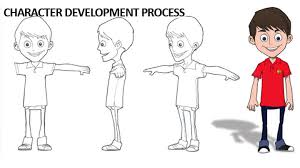
    If this is your first book, then you’ll probably struggle with nailing “character development”. Even if you outline characters before you start the book, they’ll probably develop and change as your plot changes. Their behaviors will change depending on how the direction of your books goes or how scenes are improved. Providing a three-dimensional character is harder than you think. It wasn’t until many revisions and feedback that I had enough tools to develop my characters as they should.

    images (3)

    7. Developing your voice doesn’t come so fast

    It doesn’t matter how many books about writing you read and how many writing courses you attend. Developing your voice only comes with practice. Sometimes, you want to obey all writing rules and make your sentences’ structure perfect, but then you find yourself with a boring flat manuscript. This doesn’t mean you don’t need to know the rules. To break the rules, you need to know them first. But you can’t expect to find your writing voice in the first round of writing. Perhaps you won’t even find it in your first book.

    images (4)

    8. Don’t hire any editing service until you’ve received plenty feedback

    I made the mistake of hiring an editing service (which was very good) before I got all the feedback. My third beta reader was able to send me his feedback after my manuscript was already edited by a professional editor. This feedback was very helpful and had lots of good advice plot-wise, which meant I had to do significant changes and rewrite many scenes and even chapters. The result, the professionally edited text was gone. It would’ve been certainly helpful to hire this service after all revisions and feedback.

    download (3)

    9. Consider your first book may not be publishable

    In my plans above, I clearly talk about getting a literary agent, publishing it, and having enough earnings to live from my writing. The reality is different. And the truth is your first book could not be published yet or could not be published at all. You need to accept this fact from the beginning. It’s a learning curve. My mind already has tons of topics to write other books; they even sound more interesting than the manuscript I’m working with right now. Perhaps book two or three will be published. Perhaps my first book will be revisited in a couple of years and later published. At this point, I only care about improving my writing.

    download (4)

    10. This is only your first experience

    Writing a first book is about gaining experience. It doesn’t matter how perfect your book idea is, how charming your characters are, or how beautifully you construct prose, the process is still tricky with the first book. You still need to learn how to handle feedback, how to detect plot holes, how to find your voice, how to make useful rounds of edition, etc. If you take this point of view, I guarantee you’ll find the experience more rewarding than the publishing result. You’ll be more excited about your next projects and you won’t suffer so much if the path of delivering your first book looks too hard. Best of all, you’ll encounter the true meaning of being a writer.

    images (5)

    Cheers!


  • Can you write comedy?

    The best moments when I read a book is when I find myself laughing due to the author’s wit and good sense of humor. As I hear my laugh echoing through the room where I read, without any apparent reason, I feel lucky to be enjoying something “secret” or “hidden” that people around me in public spaces won’t probably never get to know. I get to enjoy characters only to myself which (in a selfish manner) I don’t get to share with those around me. Those are the times when I mostly appreciate good humour in Literature, either intended or not.

    how-to-become-a-comedian-writers-block

    After enjoying these moments, I find myself wanting to write as these authors. I want people to enjoy my stories as I do when I read others. But then I ask myself, could I ever write a comedy? It’s hard enough to come up with one witty remark, never mind the entire length of a comedy-based novel. I’m pretty sure those who achieve writing in the “comedy” genre can be named genius. Maybe some writers are born to write in this genre. Maybe only people like comedians are the ones who should answer this call.

    2013-artwork-comedy-writing-sketch1

    No more than a week ago, I started my first “comedy genre” book. For those curious about the title, I’m reading Timur Vermes “Look who’s back” which had a book cover that promised to deliver “a comedy of all sorts”,”clever, funny,” book and so on. Please, don’t go into questioning my book selection. I know the book has become controversial, so I won’t go into discussing why I’m reading this book. Just let me tell you, that I’m reading it with an open mind and in the effort to understand more about this literature genre . But as far as I gotten into the book (one-third of its lenght ), I haven’t laughed much. Is it because I don’t understand the book’s sense of humour? Maybe the fun style has been lost in translation (the book has been translated from German) But if this is not the case, and if different people react different to diverse styles of comedy, then how can you write a fun, clever book that appeals to a vast majority? Is there a secret, hidden recipe somewhere to tackle all funny bones in the whole population?

    images

    If it weren’t possible , the comedy genre wouldn’t prevail. I don’t believe there’s a successful formula. But I might have detected one possible self-barrier. Whenever I come up with a funny remark while writing, I usually erase it almost immediately, afraid it will sound stupid or even insulting to some people. Without noticing, an internal judging voice makes me consider any funny statement. And I bet most writers face this challenge. Writing comedy is for the brave, for the ones that laugh at life, at oneself, and don’t care much about criticism . They don’t care if people don’t laugh; they are aware not all of them will do. But they still go out there.
    By not laughing at Vermes’ book, does it make me a different person to please? Does that make me a writer with more difficulties to write comedy?

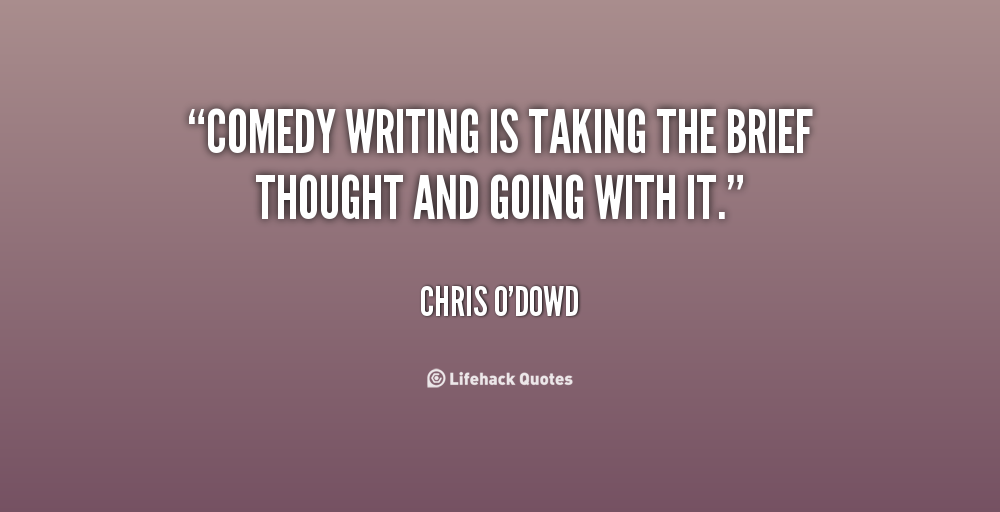
    Lastly, I would like to leave you with Chris O’Dowd’s quote:

    quote-Chris-ODowd-comedy-writing-is-taking-the-brief-thought-135708_2

    And you, how do you go about writing funny remarks or comedy?

  • Being good at metaphors

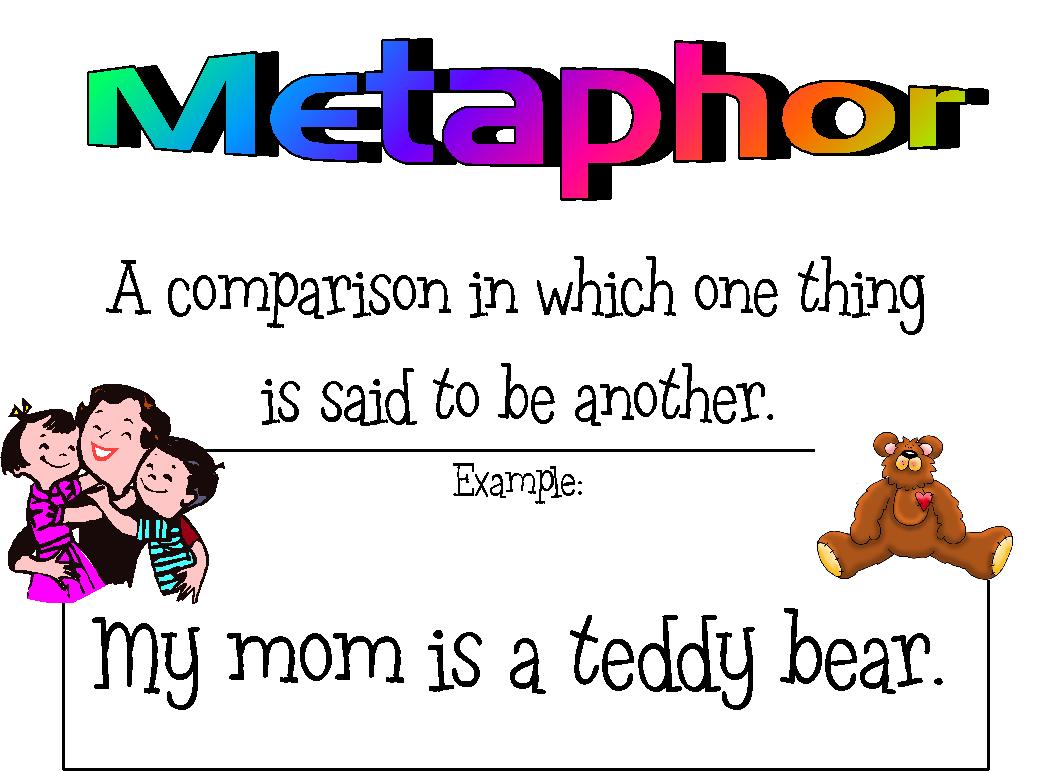
    According to Wikipedia, this is the definition of a metaphor:

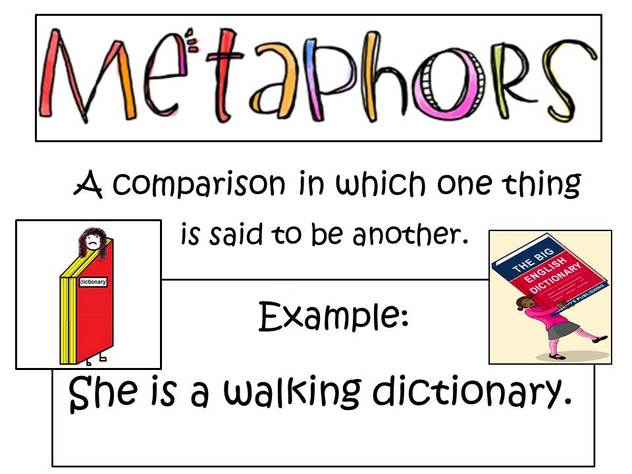
    A metaphor is a figure of speech that identifies something as being the same as some unrelated thing for rhetorical effect, thus highlighting the similarities between the two. 

    There’s nothing more beautiful than reading good literature and finding genius metaphors and similes.  As a writer, I find myself wanting to produce my own ones. But reality hits and I realize I’m not good at them. I suck at them.

    met1

    Good metaphors are for the mind of extremely creative people. Imagination prevails in this realm.  And writers have no other choice than to develop this skill. Would that mean I’m not creative enough? or that I don’t have enough experience as a reader and writer to produce clever metaphors? Maybe, It all comes to how I interpret the world. I don’t tend to compare or establish similarities between situations. Would this mean that I’m not programmed to create metaphors? Regarding of the answer, skills can be improved. It’s all about a practice, experience, and finding your creative side. Writers are supposed to navigate towards those waters anyway, aren’t we?

    So what have I done to improve my chance of coming up with clever metaphors? Whenever I’m writing and I find myself describing situations or settings, I pause, close my eyes and try to imagine the situation in my head. What does it look like? Does the person or objects remind me of something? Is there another way to describe it in a more interesting way? Sometimes it works, sometimes it doesn’t. Sometimes I see the situation or setting for what it is and fail to produce a similarity that enables the figure of speech. But practice makes the master. I must persist.

    met2

    Interestingly enough, I found that our creative side comes easier whenever we find our writing voices. That is when we allow ourselves to show our feelings and inner paradigms through our characters. That’s when one gets to be more creative and hence more prone to bringing good metaphors. But our unique writing voice improves with time, practice, and nothing else. When I review my first drafts, I find almost no existing metaphors. In those first pages, my writing is not funny, is not filled with surprises, is not page turning, it is boring. But when I review the latter drafts, I tend to smile to myself more. Not because I’m nailing every sentence, paragraph, and chapter, but because I seem to like my writing each time better. I seem to enjoy my story even more. Metaphors and similes start to appear.

    I might not be “natural” at metaphors. But I got the tools to improve it. I only need practice and persistence. After all, everything in our lives is about endurance, isn’t it?

    And if you’re striving on  understanding metaphors, then you can check out this complete guide with very helpful examples from Grammarly.

    And you, do you have any good tips or methodologies for writing good metaphors?

    met3

  • Getting rid of the multi-tasking habits

    Last post When old habits are hard to abandon… I’m looking at you procrastination was eye opening. For some reason, I always believed that being “multi-tasker” was engraved in my system. I even felt proud of it. I could face many tasks at work or while writing without any problems. I even used as one of my qualities (whenever I needed to talk about myself, my strengths,etc… case point: CVs). This happened until many days ago, when for some miracle, I landed on the Coursera course: Learning how to learn: Powerful mental tools to help you master tough subjects. If you ever have time to check this free online course (which you could also pay if you want a certification), then do it. The course suggestion came to my email inbox the same day I wrote about my procrastination/multi-tasker post. And surprise, surprise: It turns out being multi-tasker is not as good I as thought it was. In fact, it’s not good at all.

    multi1

    I’m not going to go into specifics in the course. Besides, I still have a couple of lessons that I still need to go through in this course. But so far, it’s been one of the best courses I’ve taken through this platform. Going straight to the point: multi-tasking only burns you out, it stresses you, it makes you slower, it lowers the quality of your work, and tires you faster. But it can be changed. And since I’ve started this new plan to reprogram my brain from its default multi-tasking mode or even close to some sort of attention deficit disorder, my capacity to focus and concentrate has grown exponentially. My writing tasks are back on track again and with good perspectives!

    multi2

    There are tons of courses, methodologies, articles online about this topic. Many great sources of information. If you’re looking to get rid of procrastination, improve the quality of time you spent on your important tasks (writing, I’m looking at you), then I suggest you get rid of any multi-tasking habits. I’m looking forward to polishing these skills, and maybe in some weeks time, to be able to say I finally left procrastination in the past.