Category: editing

  • When old habits are hard to abandon… I’m looking at you Procrastination!

    Procrastination has been affecting my life since I can remember. Fortunately, these last couple of years, I’ve been suffering less of it or else I would’ve never achieved a novel’s first draft (it should be treated as an illness!). But I haven’t gone over it yet. I might now put a daily effort on my writer goals, but it’s not enough yet.

    The one to blame, the Internet.

    I could use the computer and disconnect, but I depend heavily on thesaurus.com I could get a physical copy, but certainly working with the website allows me to easily navigate from word to word’s synonyms and definitions in a matter of seconds, without losing the inspiration or the sentence idea that troubles my mind at that point. I’ve tried using printed copies of dictionaries and thesaurus, but they’re not meant to be used on every single minute. And yes, I still use it a lot. Especially, since English is not my first language, many times I just want to make sure I got the correct definition and that the synonym I’m choosing to use is accurate.

    So if thesaurus.com wasn’t such a good tool and as dependent on internet connectivity as it is, I would probably disconnect from Wi-Fi. But if this website helps my writing, what is the real problem?

    My mind is used to multi-tasking. As a result, thoughts, ideas, and hyperactivity flood my brain almost 24/7 (If mental hyperactivity could be translated into physical hyperactivity… I would be the best athlete in the world… but that’s another topic). My mind doesn’t really switch off until I go to bed. And sometimes, I find trouble sleeping trying to unplug my mind from its endless ideas, worries, etc. So while writing, it’s normal for me to get distracted by other websites; afraid (maybe an excuse word) that I will forget later what I wanted to buy in Ebay, that I will miss what’s going on Facebook, and that there are still tips, blogs, and websites I should be looking at for my next trip (in 2 weeks – Tripadvisor, I’m looking at you!),  I open the browser and proceed to search, look, and verify other issues while in the middle of writing.

    The result: guilt invading me at around 10:00 pm when my eyes are starting to feel the burden of the day and I have to choose between:

    • Giving up and going to bed
    • Continue the writing until almost midnight or until my eyes are hyper red. The direct consequence: I cannot invest any more reading time in bed if I want to give my eyes a proper resting (after all, I spend the whole day in front of the computer)

    Maybe I’m too anxious for vacations these days, and I cannot move forward without taking out of my mind all the issues that should be arranged or known before traveling. Maybe after my holidays, my mind will be clear enough to continue working. But who am I kidding? There will always be a next trip, a next activity, or a next excuse. If I’m going to take the writing career for good, then I’d better eliminate the word Procrastination from my vocabulary. Any advice?



  • Writers do bend the rules!

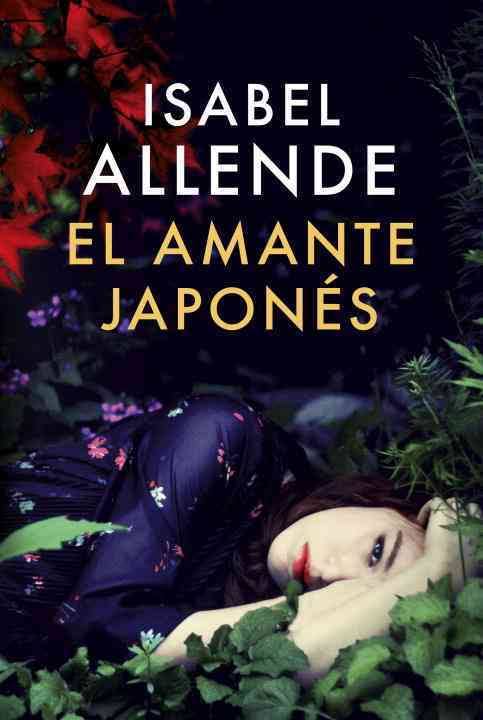
    I haven’t read Isabel Allende in a while. It’s my favorite Spanish speaking author. I remembered how I used to devour her books when I was a teenager. Her stories were so profound, her characters so alive. I haven’t read all of her books, and this reminds I might not be a proper author fan/follower. But I’ve always been into exploring new authors.

    download (6)

    Since she’s a Spanish speaking author, I read her books in their original language: Spanish. No translations. However, in my effort to improve my writing in English, I haven’t read books in Spanish for a while, probably for the last three years. It’s been hard to remain truthful to this objective. I could easily get Spanish translations from John Grisham, Stephen King, and other famous ones in the bookstores of my city, but my encounters with horrible translations have pushed me to insist in improving my English when possible. Now, I usually shop for books online or buy them whenever I travel. The effort has paid off. I used to read books in English with dictionaries searches every two minutes. Now, I don’t need need them anymore.

    download (7)

    Anyway, I was excited to read Allende again. The book I picked up was one of her latest ones: “El Amante Japonés” or “The Japanese Lover.”  I really enjoyed the book but it was a writing/learning experience more than anything. Unfortunately, I no longer remember enough to testify for other Allende’s books. But in this book, I found a couple of  writing style observations along the way that made me question the writing rules I’ve been learning lately. My reading perspective has changed significantly over these two years of reading books about writing, listening to webinars about writing, attending to writing online courses and even going to a writing conference in English. I would have never imagined these writing rules I’ve been following at heart could be non-existent in the authors I loved the most. It was an utter surprise.

    images

    But what exactly were these rules I found non existent in “The Japanese Lover”? In fiction, I’ve been taught to write scenes from a single point of view. If you want to use other character’s points of view, then it’s better to do it in another scene or even in another chapter. In “The Japanese Lover”, Isabel Allende mixes multiple points of view from one paragraph to the other. One paragraph you are inside one of the main character’s head and the next one you are in another, in a blink of an eye. At the beginning, I found this quite off-putting. I was mad that one of my favorite authors was writing like that. I began to question, Was it always like that in her previous books? (I still need to check this out of curiosity) Was this something it didn’t bother to me before? Was it because I didn’t know of these rules many years ago? But I learned a lesson quick. The rule about not mixing points of view exists because we don’t want to confuse readers. But we must never misjudge readers’ reading capabilities. After a couple of lines, it was easy to realize which character were being described. And after the first chapters I didn’t find this annoying anymore. Sometimes as writers, we struggle too much in trying to ensure our readers won’t get confused. We write with such detail (succumbing to exaggerated description and slow flow) to ensure readers follow the plot line easily that we sometimes forget our readers are perfectly able to grab implicit details without the need of us describing them word by word.

    download (8)

    After overcoming my own self blocking rule in the fist chapters of “The Japanese lover” and forgetting about any other writing rules, I began to submerge into the story. I found out that Isable Allende is still one of my favorite authors. It didn’t matter she changed POVs every second; I read her book hugely entertained and finished it in a couple of days. Of course, the book is not perfect, there are other issues that bothered me at some level, such as the excess of themes in one single book and the highly dramatic backgrounds in each character – too much to be believable at some point. But the book had alive characters. That is something you cannot always achieve by following the rules.

    As a result and as part of my writing improvement process. I’ve learned that bending the rules is not always bad. I still prefer to keep one POV for each scene, but now I feel myself free to break some rules and allow my writing to become alive.


  • Knowing how NOT to write doesn’t mean knowing how to do it

    Although, I know a lot of what not to do when writing fiction, it doesn’t necessarily mean I know how to do it. As odd as it sounds, it happens.

    Realization came on me these days. I don’t know if this is a normal stage writers arrive to as they spend more time writing, but it’s a hard to accept that the path may be longer that expected. It falls in the area of “the more you know the less you understand…” But how can this be possible? Let me explain it with examples and detail:

    So far, I’ve learned these rules for good fiction writing: (mostly grammar and style rules)

    • Avoid using the “be” verb, try using stronger verbs.
    • Avoid using adverbs or at least decrease their usage as much as possible.
    • Avoid using redundant expressions: “the fact that”, “he is a person who”, etc.
    • Show don’t tell. A hard one to understand but finally sinking into my neurons.
    • Preferred using the simple tag “said” rather than “opined, implored, wailed, etc”. There are times when you don’t even need the tag, you could just use the action performed by the character.
    • Avoid when possible using passive voice, give more strength by using active voice.
    • Vary the length of sentences in a paragraph. Combine short ones with long ones.
    • Vary the type of sentences in a paragraph. Use variety and mix different forms of sentences.
    • Don’t mix POVs in a single scene. It’s confusing.
    • Find the voice of each character. Characters should be sound different from the other. They should be dimensional, not flat.
    • And so many others rules to follow…

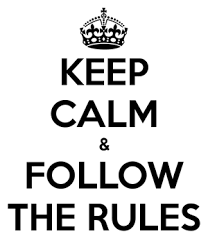
    Keep Calm and Follow the rules

    I’ve been reading many books on how to write, how to improve writing, how to create compelled characters, good plots, how to nail punctuation, etc. And in spite of this information, I find my writing is not yet where I would like it to be. My paragraphs don’t read as beautifully as Harper Lee’s or Alice Munro’s. They’re structured well, but I still find them simple, and far from being mesmerizing. I realize this is perhaps due to my scarce experience or the fact that I still need to improve my vocabulary. I realize the above rules are not enough to know how to write.

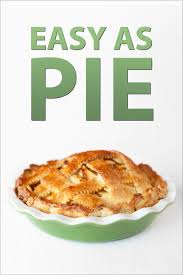
    I understand these are the natural consequences of trying to find your own voice and that the only solution rests in getting more experience, reading more, and writing more. It gets harder, but that is the point in life, isn’t it? It would be boring if everything would be easy as pie.

    easy as pie

    And you, have you ever reached this realization?


  • The new writing perspective

    It’s been almost two months since I didn’t work on my thriller novel. Some fellow blog readers may know that I’ve been working on it quite a while, since last year most specifically. After I finished it, I gave it to a couple of beta readers, and then passed it to my editor. I got the book ready. I pitched it at Writer’s Digest conference in New York and I got the attention of seven literary agents. I sent the requested material to them and got four rejection replies already. The three remaining never replied. But the harsh truth is the book wasn’t ready. It wasn’t yet.

    This is my first book, my first attempt, and you can tell I’ve been impulsive with it. I’ve fallen into the most frequent mistake most amateur writers do. I knew how important it was to make sure the manuscript was ready before pitching it. And here I was making the same mistake, trying to do it as fast as possible, not letting the book rest for a while before doing the last rounds of edition. Hurrying up too much.

    download

    When I pitched it, the book was quite acceptable from the writing point of view. I made sure the words were accurate, I tried not to tell but show, I triple-verified all grammar rules, and I hired an external editor. I also made sure the plot moved fast, had twists everywhere, and that the “theme” was cohesive and there were no plot holes. What went wrong?

    download (6)

    In October, I managed to contact a very good beta reader on Goodreads. He gave me great feedback from the technical point of view (the book is about hackers) but also gave me great advice from the literary point of view. My weakest point was clear as water: Character development. They felt flat. The main characters were completely unidimensional. And I started seeing the flaws I haven’t seen before. I realized the book was not ready. I wasn’t satisfied with it, I knew I could do it a million times better. I had pitched too soon. (And I’m still crossing my fingers that the reason the three literary agents never replied was because my manuscript got lost in their email folders. This way, I can still have them in my pitching list for when the book is finally ready.)

    download (5)

    I started to review my manuscript yesterday, from scratch, rewriting practically everything. As I did It, I understood also what was missing in my writing. My voice. Although, the story is action packed, it’s actually dull. There’s no magic in the words. There’s no humour, no irony. It’s not witty. I can do this better. I can make more complex characters, ones that make people surprise, gasp, hate, love, laugh. The book was never ready.

    November was a month of no writing. Since most of us writers have a full time job to maintain, I was involved in a work project that left me zero time to write. I’d never believed this time away from writing was actually what I needed, that No writing for some time would be more productive than a full month of continuous writing. I see the point now. Let the book rest.

    images (16)

    So I’m re writing the whole manuscript. But this time the story will come alive like a true story should do.

    I’m thankful I realized this before precipitating myself into insisting with more agents, or even considering self-publishing. Now I know the true. The book will be ready when it’s ready.

    Did you have any similar experiences? If you’re a writer how much can you relate to this? Any advice you would like to give me?


  • Book review: Eats, Shoots & Leaves

    As I closed the last page of my book, I softly muttered “interesting” without even noticing.  My mother happened to be near me at that moment. She asked me “What did you just read?” I waved the book cover to her and answered “A book about punctuation.” She winced.

    I would have probably winced too if I’d been my mother. She knows I’m a book worm, but sometimes  my eccentricities trouble her a bit.  Reading a complete book about punctuation just because you want to is kind of unheard off, no regular “reading for pleasure” material here. But I do read a couple of books like these ones once in a while. Mostly because, as a writer, I need to improve my craft. I need to know where to put the period.

    “Eats, Shoots & Leaves” is a clever and informational book where not only grammar rules are exposed, but also a wave of useful information strikes in. It’s not only about commas, semicolons, periods, dashes, etc., but also about their history, how they arrived to our world, what our crazy predecessors thought of them, how some tried to abolish their existence, and how punctuation marks strived successfully. I got attached to each punctuation mark as I would’ve gotten attached to a fiction character. Embarrassingly, I’m that quirky when it comes to books.

    41F-mm169GL

    Moreover, Lynne Truss leads us to a deeper level, to the analysis of the evolution of punctuation marks. We learn not only their history, but also how our modern times, influenced by technology and constant mobile messaging, are changing the world view towards punctuation. With good evidence, Truss foresees the punctuation world future, with upcoming years of punctuation invasion. We won’t get ridding of them any soon. Reading this book gives us an insightful perspective.  We’re not only being told about punctuation rules; we’re also acquiring enough criteria to understand their evolution.

    download

    But the aside note is that the book is clever and funny – British funny, humor that always makes me laugh for a reason. I enjoyed the book as much as I would have enjoyed a fiction novel.

    Was I the only lonely boring person reading books about punctuation? Nop, I lent the book to a work colleague. The guy loved it. He read it faster than me, just in a couple of days, again my excuse being I’m a slow reader. Would I recommend this book to everybody? Definitely.  Yes.

    Have you ever read any type of grammar/punctuation of what it could be thought as “boring” and find yourself enjoying it more than expected?

  • Reading with writer’s eyes…

    Being a writer is not easy at all, being a reader who writes neither it is. Reading and Writing are my biggest passions. But as I try to merge them into one world, I realize the challenge increases.

    In order to write, you have to read. This is the most common advice you’ll receive from writers, books and courses about writing. And there is no bigger truth. Once you decide that writing is you want to do for the rest of your life, reading will come attached as a twin sister. I don’t believe in writers who don’t read. I just can’t. It won’t matter how many a good ideas you have, if you don’t know how the world of books work, and the only way to know is by getting up close to what’s out there.

    But one must read all types of books out there:

    Reading classics – They are classics for many reasons, but one of the main reasons is that they usually show great command of the language. They display high-quality narrative that has been awarded and well appraised by so many. What works in these books? What made them classics? You need to find out by for yourself.

    images (1)

    Reading Best Sellers – And it includes the highly criticized dystopian YA. But why are they so popular? Why are their writers the ones that can actually make a living of this? I usually hear many people chastising these books. Finding them with “my favorite books” tag in intellectual circles of writers would be almost impossible …. But guess what? They do sell! They have “the formula.” And yes, writing-wise they may not be the best example, but they can certainly grab readers.

    Now, you may say: “Well, it depends on the reader.” And usually not all teenagers are the most loyal parameter of quality reading, but they are a wide popular profitable target market. Despite these books might be cheesy and corny, we realize many adults do also enjoy them. The key, I believe, is to find a balance between what is good writing and what sells. Let’s face it, we all know that deep in our hearts, we would really love to make money of our writing. So reading this literature we must (my Yoda dysfunctional personality)

    www goodsheperd notts sch uk

    Reading all genres – I’ve heard tons of advice saying that you must read in your genre. True! But it doesn’t end there. I’ve learned to read in all sorts of genres. And I believe that it’s not fair to say you aren’t used to an X genre because you don’t read in it. All genres are writing; all of them teach us something. Romance teaches us how to create romantic tension between characters. Thrillers teach us how to insert adventure and movement in your plot. Mysteries teach us how to grab readers until the end of the book. Sci-fi teaches us through setting description how to create fantasy worlds. Memoirs teach us how not to lose the essence and spirit of your book… and so on…. All these elements usually coexist in a book.

    People read not only because the plot was so exciting that they couldn’t let the book go, but also because they cared about the protagonists; they found allies or inspiration in them. I’ve read a couple of action-packed thrillers that got me bored easily. I reached a point where I was just so bored about the extensive description of a fight scene; a slow motion punch described in pages. It reminded me of those movies where half of the movie is shootings and guns and no interesting plot. It also happens with books.

    roadtobabylon com

    If you’re like me, with preference for Thrillers for example, then you have at least to care about one of your characters. We want to know that the CIA spy of a book has a family with a sick child, that if he doesn’t do the job, his son will die. We want that CIA spy that when he’s about to die, we will keep reading and pray that he doesn’t. If he’s just a random handsome spy with great muscles, involved in a cat and mouse chase during the plot, it gets boring…Thriller writers need to read romance and memoirs too!

    As a writer, I try to read with a different eye. I try to see all elements in a book, how dialogue flows, how settings and actions are described, how writers show and don’t tell. I assess why the plot gets exciting, how chapters end, and what makes me go to the next chapter. I evaluate those setting descriptions that are just too long for me to care. I write down when I find words and expressions that work so well that I could use them in a further work (one of the advantages of kindle reading, that you can highlight words without actually damaging a book.)

    read44

    This is a new way of reading, different from what I was used to, but satisfying nonetheless. It’s not only about finding refuge in a book while resting on a reading corner, but also investing time in my long-time dreamed goals.

    If you’re a writer, do you find yourself with this different perspective of reading?

  • How being a non-native English speaker can actually help me when writing in English…

    As you may have noticed (Although, I hope it wasn’t that obvious) English is not my native language. I learned it at a Language institute in my home country. Then, I had the opportunity to make post-graduate studies in the UK. But although I lived in Glasgow, Scotland for one year, I didn’t have enough time to master the language, especially considering the Scottish accent. And no, I don’t speak English with a Scottish accent; even imitating it can be hard enough 🙂 .

    Luckily, I have the opportunity to practice the language every single day. My job is in English, and I’ve gotten used to it as my research, reading, and writing tool. But when I first started writing fiction in English, I thought it was only one of my crazy, impulsive episodes. I gave it a trial, just to see how it went, and I was surprised to find that I felt comfortable enough to start this blog in English. I believe that some of this comfort came from the fact that I read more books in English than in Spanish – my native language. Without noticing it, my list of favorite authors had been filled by English speaking authors.

    www cprw com

    So when I realized that writing fiction in English was not impossible, I knew that if I wanted to pull this off well, I had to work very hard on it. I had to be sure that not only what I wrote was correctly from the grammar point of view, but also that I didn’t sound like a five year-old. Deep work on building a better vocabulary began. And books about style, writing, grammar and others started to flood my bookshelves and e-reader. But believe it or not, I found I had the following advantages for being a non-native English speaker:

    • I’m not familiar with jargon and idioms (they don’t teach you that when you learn a language.) As a result, I don’t misuse or rely on them when writing in a formal approach.
    • The way I learned English is by hard grammar (the methodology they used at the language institute). Therefore, I haven’t picked up the wrong way from my upbringing, daily life, family, friends, etc.
    • Since my native language is Spanish, I find myself surprised by the many similar words between both languages, allowing me to have an extra set of vocabulary from words that have a Latin origin. The following list shows what I mean. The words on the right are very common for me since they’re widely used in Spanish. This doesn’t mean that when writing in English I use the ones on the right more, but I didn’t have to make an extra effort in order to learn them.
    Commonly used word My little help as Spanish speaker
    Increase Augment
    Strengthen Invigorate
    Refresh Rejuvenate
    Hoard Agglomerate
    Verify Corroborate
    Check up Scrutinize
    Hang onto Adhere
    Spill over, flood, swamp Inundate
    Run through, exhaust Dissipate
    Shorten Condense
    Temper Alleviate
    Stir up Infuriate
    Make up for Rectify
    Whip up Instigate
    Prompt Stimulate

    This is just a random list; there are many other words out there that could be added.

    So for anybody who’s learning the language and struggling tons with it, try to see the good side 😉 Nothing is impossible, it’s just a matter of perspective, how you face and tackle things.

    And you, do you think learning a language from scratch could have advantages over its native speakers?

  • Synopses may be Evil if you don’t learn to tame them!

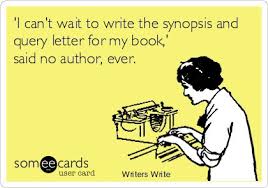
    I was so focused about writing my first book and then writing my query letter, that I never paid much attention to writing a synopsis. This requirement may appear in some agent’s submission guidelines, but not in all, other agents prefer to see a sample of your writing: first 10 pages, first chapter, etc.

    I’m pretty sure I love agents who don’t ask for a synopsis. I never thought that synopses would be so hard to do. When I realized I had no way to escape them, I did some research and started writing my first synopsis. After trying to be as general as possible and outlining the main events of my novel, I finished my extremely summarized synopsis with seven pages long.

    jenspenden wordpress com

    Image source: jenspenden.wordpress.com

    I wasn’t sure about synopses’ regular lengths. I read somewhere that it varied from agent to agent. So I researched the agents on my targeted list and found out they asked for 1-2 pages synopsis… WHAT???? You can’t do that! was my first thought. In the first draft of seven pages, the novel was as summarized as you could imagine. After hyperventilating and recovering from my almost panic attack, I decided to revise the seven pages with the most critical eye ever. I managed to reduce it to the incredible number of five pages, not close yet.

    At this point, I was about to discard the agents that asked for synopses. But I would let go many of the good ones. I had to do it. I had to be concise, straight to the point, and only mention the most important points in the story. I revised again and obtained a perfect 3.5 pages synopsis…sigh… I realized I preferred writing 100 query letters, 100 novels, than insisting on my synopsis. Why? Why? I was on the verge of knocking my head multiple times against my keyboard… but decided to try one more time, and I got 2.5 pages. The synopsis was extremely summarized.

    graemeshimmin com

    Image source: graemeshimmin.com

    Where else could I cut off more information? I slept on it. The next day I revised for the last time with my short-sentence police eyes. I think I never made my brain work that much. I revised word by word. I aimed to make 7 word sentences instead of 10 word sentences, 5 sentence paragraphs into 4 sentences. There was a point when I wondered if agents would have any problems with a massive one paragraph in the synopsis as a result of merging my paragraphs to save space… I’m so happy that under pressure, I don’t surrender to this madness 🙂

    After some hours, I finally did it. All sentences made an efficient use of the space and coherence. That was certainly a very rewarding achievement. When I read the finished product, it was all there, in 2 pages long, clearly identified and narrated. Why on earth would I want to add more? And I understood the concept of conciseness. There’s nothing better than short/straight and clear sentences. I’m so glad I did this one 🙂

    And you, did you ever find yourself in a similar situation? How important it to write concisely?

    writersrelief com

    Image source: writersrelief.com

  • Query letters and why they can drive you insane

    Since I started writing, I’ve been trying to be as proactive as possible and be involved with everything writing/editing/publishing existing in the online world. Unfortunately, I don’t have many chances to that in the real physical world, here, in my city. These are a couple of reasons:

    1. There are no writing groups/courses/workshops in English.

    2. The ones that exist in Spanish are not my cup of tea. Not many writers live in my location because people, unfortunately, are not much into reading (which is really sad!) But there are a couple of events if you dig really well and switch on your mafia sensors. However, it’s mostly about poetry or literary fiction. I’m not against it, but I prefer mainstream fiction; meaning thrillers, mysteries, horror, crime, espionage; exciting books that are page turners and make you lose your sleep. “Too wordy” is what comes to my mind when I attend to the spanish writing events.

    www fuelyourwriting com

    Image source: www.fuelyourwriting.com

    Well, to my luck, we’re not limited anymore to our locations in the world. We’re global citizens, meaning I can still write in English and access all the writing training/support online. Online webinars, workshops, writers groups in social media, blogs, etc. are only a few examples. There’s a lot out there to keep you entertained until the end of our times. So whenever, I look for feedback, I do it,  here, in the web.

    So the word “query letter” came almost from the beginning. It was like the defining event that would separate published writers for the non-published ones (talking about traditional publishing here). The test that would define who gets to be somebody in the vast sea of the prole (bear this with me, I’m reading a book where the word “prole” comes out every 2 seconds). But I gave it no importance from the beginning. I first had to hone my craft and write my story. Query letters would come later. Unfortunately, I’ve reached that terrified “later.” And I must be honest, I would prefer to keep writing other novels, and short stories than trying to see if my work can be publishable. But I guess, there’s no point in writing stories to keep them hidden in your desk drawer (well, in the C: drive of my computer, in this case.)

    valeriekingbooks com

    Image source: valeriekingbooks.com

    So, time to query I said, and started to read as much as possible about it. I became fond of Query Shark (for those who don’t know, that is Literary Agent Janet Reid destroying writers dreams in her blog that critizices query letters) – Great source of learning by the way. Then, I produced my first query letter (first draft of the first attempt of the first time- oh! let’s faced it, I wrote a terrible first query letter). I posted it on writers support forums to receive the good vibes of others. (Spoiler alert: It isn’t like that, some people are rather straightforward and won’t emanate anything resembling good vibes.)

    But I’m not playing good-vibe fisher, I’m actually tempting masochist waters. I knew I would receive hard critiques and I still did it multiple times, i.e. in several forums. The good part? I also received very good feedback and interest for the story.

    www squareboxuk com

    Image source: www.squareboxuk.com

    How overwhelming is this? It’s terribly overwhelming (I love that I can use adverbs, here, in my blog freely.) You get lots of advice, lots of contradicting advice, lots of questions too! (but you can’t explain the whole story in your query letter). Most of it, is very good advice (almost 90%), but there are others you must be able to filter and scan them with critical eyes. After all, support groups are opened for everybody. However, on querying letters, you have to be careful. The concept of querying is very different from one person to another. You have to rely on your instincts. So,what did I end up doing?

    I left my querying critiques resting for 48 hours. Then, I got back to them with highly critical eyes. The objective: to rescue what I thought was important and accurate. I rewrote my query letter again, and then again, and then again. It’s not ready yet; it’s resting for 24 hours more before getting back to it. This works better. You can’t create the perfect query letter on the same day. You need to step away and then get back to it with critical,rested, renewed eyes. Hopefully, I’ll have it ready soon.

    Now on writing the synopsis… that’s for another post.

    What do you usually do when you receive too much feedback? Do you have a method to filter what works and what doesn’t? How can you tell which is good feedback and which is not?

  • I’m doing because I’m a chicken

    Well, this time I’ve been lost like for ages, more than 2 or 3 weeks without blogging. Never have I missed blogging so much. But I have good reasons, but not new reasons (for those who’ve already read my posts), it was because of my manuscript (final revision, this time is the final one). It was taking me too much time and I want it to be over for once. The person who’s editing it is already working on the second part. So that means that yes, in a couple more of days, I will have to go back to it again to go through the revisions done by the editor. But I’m not worried, I’ve managed to review the changes of the first part in just one day, so the second part is not going to take me much (hope so). Well, enough talking about editing. I plan to do another post for that (some new lessons learned as always). I’m here to talk about exciting news. I’m attending Writer’s Digest Conference in NY this July 31st. Yayyyy!!!  (insert dancing icons here) download (5) No, I don’t live in the US. No, I don’t have loads of money to go everywhere I please. I just thought that it would be a good Life investment and of course good vacations. And here are some of the plans/goals/realizations I have in mind for this trip: – I’m not doing it because I consider myself a great writer. I’m doing it because I’m a new aspiring writer and this step will allow me to compromise myself with this career. No, It won’t be a hobby anymore. – I’m doing it because of the talks and workshops. I know this conference is also about getting to know agents, publishers, etc. But sometimes, I believe that maybe I’m not ready for that yet. So I don’t have great expectations on that side. I’m doing it because of the two full days of talks, sessions, workshops, etc. I’m eager to learn as much as possible and absorb everything sponge-like. www wisegeek com

    Image source: www.wisegeek.com

    – I’m doing because I’m a chicken. Yes, you read that, and not because I consider myself an animal (or I believe the chicken is my spirit animal), but because I’m a coward for these sort of public events. You see, I’m not the most extrovert person you’ve ever known. I’m shy and I feel akward at these gatherings. And there’s a session for pitching agents in this conference where you’re supposed to dazzle them with the magnificent plot of your book. Believe me, I actually considered skipping this part of the conference (which had an extra fee) because I knew I was going to be a complete disaster. I imagined myself trembling, sweating, stuttering, and even running away. And I’m also worried about my English speaking skills, which because of nervousness, seem to flee (that’s why I prefer to write ;)) I get nervous, stumble among words, and forget parts of the language. But I refuse to be a chicken forever, so this is going to be a challenge. I know I have to do it, I have to be brave!

    (more…)