I had a couple of beta readers for my first book “The Last Families” and I regret that I didn’t get more. Not necessarily because the book needed a lot of feedback, but because they’re extremely valuable. And when you’re about to launch a book- especially if it’s self-published- you need a team of supporters behind you. Beta readers will be familiar with your book and will be often willing to help you by leaving reviews and spreading your book’s launch on their social media.
But like me, I was afraid to have people reading my book- afraid of the feedback, afraid of having someone tell me “your work sucks” or something like that. This time though, I’m open to as much beta readers as possible, as I explain in this post for my newest manuscript. I’ve already received some feedback on the “When the World Disappears”, and it’s been extremely valuable. Thanks to it, I managed to correct and make significant improvements to the manuscript, the characters, and the story.
During this process, I participated of a beta reading swap as well: you read mine and I read yours. In one particular case with a specific writer, I noticed how writers can sometimes be apprehensive to feedback. In this blog post, I’ll share with you what I observed and I’ll discuss what we must not do as writers when receiving feedback.
Beta reading feedback must be listened and considered. Do you have to change everything you’re told by the beta reader? No. But you should listen their feedback carefully and analyze it.
In this particular situation, I had a beta reading swap that turned out one of the most uncomfortable situations ever. We had to finish/cancel the deal even when she hadn’t even started reading my manuscript (I had read almost a third of hers.)
AI generated image
The feedback was given through a shared Google Doc, which meant that the writer and I could see the comments in real-time. From the moment I left my first comment in one paragraph, I got a counter-comment commenting on my feedback. It wasn’t that bad at the start, but then it got to a point where I could see the writer was unwilling to consider any of my suggestions. Though I don’t remember the specifics since that happened a few months ago, I’ve come up with some examples that are representative of that exchange:
Comment from Carla:
This is not clear. I suggest adding more details of why this character is reacting this way.
Reply from the writer:
Why is not clear? What details?
Comment from Carla:
It’s not clear why character is reacting this way. She’s a grown up person and her intents are not clear.
Reply from writer:
I don’t understand. Be more specific.
Another example
Comment from Carla:
The description is too vague. I would suggest adding more information about this location so readers can immerse themselves.
Reply from writer:
What is vague? What do you mean adding information so readers can inmerse themselves?
Last example
Comment from Carla:
Why does this character say that? It doesn’t sound like her.
Reply from writer:
It’s what she would say in this situation. Why wouldn’t it sound like her?
I have to say that I learned giving feedback from others who gave me feedback before. My first beta readers would usually approach their feedback in two ways:
The more detailed ones would highlight paragraphs and give me comments and observations.
Other general beta readers would send me a document outlining their general thoughts and their observations of what was not working.
As a beta reader myself, I decided to use the first approach, giving comments in a shared document. Until this specific writer, I had no issues. When I received feedback with inline comments on a shared document, I would assess them carefully. I didn’t agree with some of them, but if a comment pointed out that the reason of character X wasnt’t clear or that I needed to provide more context for situation B, I would go back to my text, analyze the issue, and try to improve where it was possible. If a comment told me that a piece of dialogue felt off, I would take into consideration and make adjustments where I could. There were a few times where I felt the dialogue couldn’t be changed, but I chose not to tell that to the person providing the feedback.
I’m not saying that you shouldn’t reply back to the beta reader and refute their observations, but if someone is giving you advice, LISTEN to it. The beta reader has left that comment to help you improve and not to debate it until someone wins.
This is how I see beta reading- what’s your take on it?
I’m proud to announce that my manuscript for my latest fiction novel is ready. Now, I’m beginning the publishing process. First, I’m pitching it to literary agents, and if I get no results in around four months, I will reconsider self-publishing.
Since, I’m not near the publishing date, I’m very open to beta readers in general. From my first publishing experience, I’ve learned that the more beta readers you get the better. So for anyone interested, the title is “When the World Disappears”. It’s a dystopian novel and here’s the blurb:
A virus has struck the earth again with a 90% mortality rate. As the population of the world succumbs to the virus and to mayhem, a vaccine that seems to be the only beacon of hope emerges thanks to the Red Velvet organization in the small Bolivian town of Costa Toro. However, the cure brings unforeseen side effects that will change the lives of the survivors of this small town.
Larissa has managed to hide from the virus and survive for almost 5 years with her younger brother Hugo. One day, she stumbles upon a mysterious message from someone claiming to have the solution to fix all things. In a world stripped of most of the internet as we know it and with few options to survive, Larissa can’t accept the new reality and wants a better future for Hugo. In her quest, she will meet other people her age and Adrian, who becomes more than just an ally.
But a misstep exposes her to the twisted new-order authorities of Costa Toro, in particular to Deborah and Governor Fuentes. Both with sinister ties to the Red Velvet organization, which seems to want to keep the status quo. The new order has also brought Adrian to the mercy of an evil punishment. Amidst saving her friend and escaping Deborah, will Larissa find the means to change her world? Who is this Red Velvet organization, and what is their relationship with the government of Costa Toro?
How does it sound? Would you read it?
If you’re interested in beta reading, let me know. I can do swap beta reading as well: you read my manuscript, I read yours.
I’ll be publishing some extracts and chapters as well in the next months.
I can’t believe it’s been almost two years since my last post. My day job was intensive, but other than that, I just felt I didn’t have anything interesting to say from a writer’s perspective. My first novel was published, and I entered a sort of writing hiatus. Then, last year, I started to write again. It felt good, but I still didn’t have anything compelling to share on my writing blog. Now, my circumstances have changed.
AI image generated by Midjourney
I’m in the process of transitioning from a very demanding job to finally having more time for my personal projects, one of which is writing. Last year, I started another fiction novel—a dystopian story. Different from The Last Families, I didn’t want this new novel to have multiple points of view and to be so complex. I wanted a simpler story, but a good one. I’ve already picked a name for this novel, although I’m very far from publishing it. I’m currently in the first round of beta readers and receiving so much good feedback. I’m in no hurry to publish this time. This novel is called “When the World Disappears,” and it is a dystopian story set in Bolivia, in a world following the aftermath of a pandemic (yes, I couldn’t help but get inspiration from Covid 😄 ). It has quite interesting twists. I will soon give more details.
This writing cycle has been different. Although I’ve only published one book, I’ve learned a great deal from the process of writing and self-publishing The Last Families. These are some of the lessons:
Fantasy, and especially high fantasy, can be hard to achieve. If this is your genre, I recommend simplifying the characters and the plot because the world-building of high fantasy is very complex already. While some, like Tolkien, have achieved this art, he devoted most of his life to endless manuscripts that his son then had a hard time compiling. As someone without any descendants, I don’t have the luxury of relying on future generations for compilations. Next time I choose to write fantasy, I’ll aim for a simpler plot.
AI image generated by Midjourney
Multiple points of view are hard—very hard. The only way to achieve them is to analyze each character deeply and be crazy enough (in a good manner) to jump from one character’s head to the other. One of the best pieces of feedback that I got from The Last Families was that I’ve managed to achieve good character development in spite of the multiple points of view, but it was so difficult that I’m not looking to revisit this approach in at least a decade.
Get beta readers very soon, and as many as possible. As a first-time writer, I felt very protective of my first novel and very insecure about my writing. Therefore, I delayed sharing it until I had meticulously reviewed it at least a dozen times, thus the long time it took to publish it. When I got a few beta readers—only two to be precise—I was desperate to have my novel out in the world, so I changed very little based on their feedback and continued with the publication process. Now, with my latest manuscript, I’m already in my fifth beta reader at an earlier stage. I’m now very open to change and feedback. With more beta readers, I’m also assembling a team of people who will be able to support me during the book launch.
Your plot doesn’t need an abundance of twists or complexity. This new novel is a shorter, nicer story with some surprising twists, but not so complex that I can’t describe it. When I pitched The Last Families to publishing agents, it was so hard to articulate a pitch letter. I couldn’t summarize the multiple points of view and the plot in 2-3 paragraphs. It was simply too hard. When the concept is so confusing, it’s hard to sell the idea. I didn’t like it when people asked me what my novel was about because it was too difficult to explain. Now with “When the World Disappears,” I can easily describe it, and I feel it’s easier to sell it not only to agents but also to readers. It’s far simpler to promote a work when the purpose and vision are clear.
AI image generated by Midjourney
These are just a handful of the lessons I learned with The Last Families. I don’t regret the process in this book, though. I still love my first fantasy book, and I’m planning to get a second edition and a Spanish translation later this year. But I’m determined to approach things differently this time, and I’m overly excited.
My fantasy book “The Last Families” is a dystopian story that has characters with supernatural powers. But is Fantasy the right genre?
Almost after 6 months of its release, I have come to this question. Shouldn’t I have properly defined the genre before releasing the book? I supposed I should’ve.
From the single instant, I began imagining and writing this fantastic world where these characters with talents/superpowers existed, I knew it had to be fantasy. Nothing of that exists or will exist in this world.
But as I got reviews, most of them quoted “The Last Families” as a dystopian post-apocalyptical story. It got me wondering.
According to Merriam-webster, a dystopia is:
an imagined world or society in which people lead wretched, dehumanized, fearful lives
The Last Families has something of that. It makes sense. It is dystopian because it talks about a future world with less than utopic circumstances. The characters are the last survivors of their world. They are looking for refuge and arrive at a place that is everything but hospitable. Of course, they are fearful as in the definition.
Is it post-apocalyptic? The definition of post-apocalyptic says:
existing or occurring after a catastrophically destructive disaster or apocalypse In a postapocalyptic world where nature has become just as violent as humanity
So yes, The Last Families definitely complies with this too. The story takes place after their land has been destroyed. We came to assume that these people are somehow future descendants of humans but with certain particularities. Therefore, we could say that this is a future that could somehow exist in the future? I would say overly farfetched.
Therefore it is a dystopia and a post-apocalyptic story. And it turns out that these two are subgenres of Science Fiction, and not of Fantasy. That is where I was surprised. Being a big reader of Science Fiction, I never thought of The Last Families as belonging to this genre, but somehow it has been categorized under it.
Now, there is “Science Fantasy”. A new genre. Thank god for new inventions. The definition is familiar:
Science fantasy is a hybrid genre within speculative fiction that simultaneously draws upon or combines tropes and elements from both science fiction and fantasy.
I think that is where my book fits better.
Unfortunately, like many new genres, you won’t find them listed anywhere. If you look for categories with a Print On Demand service, Listing sites, Literary Agents, and Book Reviewers, you will find Romance, Science Fiction, Mystery, Fantasy, Young Adult, and other “general” categories. New genres and Sub-genres are not included.
So, does this screw things for how I’ve been listing my book? I don’t think so. In fact, I’ll see it as a new opportunity. Until yesterday, the book was mainly targetting Fantasy categories and keywords. Now I’m targetting dystopian, post-apocalyptic, and science fantasy. Maybe a new refreshing audience to target.
What do you think? Should I still call it Fantasy?
You haven’t gotten your copy of The Last Families yet?
I decided to give it a go to professional editing of my manuscript. After getting a good hunch on a video from this editor, I paid for it and waited an external/unknown person to finally take a look at my manuscript. I wasn’t expecting much as I knew I had picked a considerable affordable service. I thought it would be mostly about grammar, spelling, punctuation, verb tenses, sentence structure, word choices etc. The type of editing that I worried most about since English is not my first language. But I was surprised to get a very detailed feedback about the story itself.
The feedback included very good points about plot holes that I hadn’t thought about. Twists in the story that didn’t make much sense or that could be better explained. I absolutely loved that part. My fantasy story has many characters in it, so having someone deeply connecting all characters’ reasons and subplots was great. She was able to find small details of parts of the story I had completely forgot or contradicted. I loved this copywriting part more than the editing one. I came to understand that this is actually called developmental editing which involves checking story inconsistencies, discrepancies, factual errors, etc.
I got great feedback from character development which actually surprised me. In a previous attempt with a first manuscript of a different story, my weakest point was character development. That story is on standby as it needs lots of rewriting. But most of the feedback that I got from the few beta readers, back in those days, was that characters didn’t feel multidimensional and there was no evolvement in their personalities, no growth. That really caught my attention, and when I started writing this new manuscript, I focused on writing good characters. It paid off, and I’m truly happy for it. It made the whole process feel that it had potential.
I still have to work fixing some parts of the story but it doesn’t feel like an impossible job right now. It feels very tangible and I’m already in one-fourth of the total manuscript length of this new round of revision, and it is only been a week since I started. I feel encouraged but mostly proud of my fictional characters.
My previous post was published more than 3 months ago. I remember telling myself: I won’t distract myself from any other kind of writing until I have my current first manuscript ready. I originally targeted to finish it by January and Look! we’re almost in the middle of the year. Sigh… It took longer than expected but it’s finally done.
I initially had one friend volunteering to read it. She was an encouragement as I had told her it would be ready for January and having her asking about its status helped me push through the line and finish it. I soon found out I had two other volunteers to read it. That was exciting but it also made nervous. Extremely nervous. Why? Well, my mind was invaded by these thoughts:
What happens if the whole plot doesn’t make sense or is boring to death?
What happens if the whole idea of writing a book is not for me?
I’m an amateur writer and always have self-doubts about my writing skills. I’m usually not that insecure about life in general but writing is important to me and therefore I tend to feel vulnerable to people revising my manuscript. But then I gather myself, I exhale loudly and I think that this comes with the process. I have to learn to listen to feedback and trust in my work. I’m starting; there is a lot to learn. I have to accept the challenge and keep my faith that hard work makes the master.
And you how do you feel when people start revising your manuscript?
I finally finished my first manuscript of a fantasy novel I’ve been working for almost a year. I learned many lessons the last time I worked with a manuscript, one is that finishing the first manuscript is only a small step in achieving a readable book. Numerous rounds of editing and revision come after this, and they can become endless. They are not the nicest part of writing a book, at least not for me.
Last time I learned that before going into heavy editing, it is better to have a manuscript that you like, one where you feel satisfied with the story, the plot makes sense, you like the characters and they are likable. I learned that you have to be happy with what you wrote. You will need people who read your work, people who will criticize the plot, the characters and tell you how does the story feel. You will probably get lots of suggestions and you might need to rewrite chapters a couple of times more. Last time I understood there was no need to get into heavy editing if you were still working on the story development.
But for the first round of people who will read your work, you have to have a manuscript that is readable. This is the reason I felt I needed one round of revision for plot consistency, character check, setting description, and at least decent writing – a writing that will still be workable and can , of course, be improved.
I’m not going for restructuring sentences, changing verbs, or more in depth editing, but it is still taking time. A lot of it. Somehow my first manuscript has managed to end with around 110 000 words or around 410 pages, and even though I’m doing a “quick revision” it still takes time. I still have a full time job and other activities, but I’m trying to find at least one hour a day to work on this. In an hour I usually deal with 5 or 8 pages, which means it is taking a lot of time. I told a friend I would be giving her the book for her critique around February, but it is already March and I haven’t reached the middle of the book with this “quick editing.”
However, the writing process works this way, there is no easy path. Each day I’m a couple of pages done. A couple of pages more than yesterday, one paragraph more than before. I feel like doing tiny steps, but at least the steps are being given. And If I’m a couple of paragraphs done each day, then I guess it will come a time when I will finish the manuscript. One paragraph at a time. After all, writing is about the process itself.
When I started working on my first book, I had the following plan:
I would finish the draft in four of five months at most
I would make a thorough review of the first manuscript and in one single edition round I would correct everything that is wrong.
My beta readers will read it in a couple of weeks and I would rejoice in his/her wonderful comments
I would find a great Literary agent in a blink of an eye
I would have the book published in that same year
I would live from my writing and would travel the world.
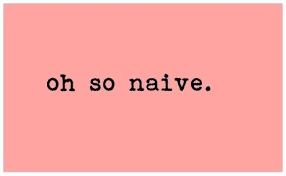
I was naïve. REALLY naive.
Enter a caption
This is the second year I’m investing in my first book. I’m still editing it. So far I’ve come to understand the following:
Doing the first draft is by far the easiest and quickest part of the process
When I finished the first draft, I was so thrilled. I felt I have conquered the world and I could be called a writer. I was so proud of myself. I thought that finally I was making something good with my life, that I was looking towards the future, towards my goals, you get the point…The truth is that writing the first draft is the easiest part. You can even achieve it in one month (If you want to test the efficiency of NaNoWriMo). But rest assured the first draft will not be readable yet. Chances are it will still have lots of plot holes and huge amounts of rewrite to be done.
2. Planning one round of revision is not realistic at all
There will be many rounds of revision. It’s hard to rewrite scenes, plot holes, and work on character development while editing your grammar and punctuation at the same time. You’ll probably need another round, and perhaps a third one, etc. Additionally, after your beta readers come to you with feedback, chances are you’ll probably need to change and rewrite many sections of your book which will lead you to another round of sentence structure/grammar review, etc., again.
3. Leaving your first manuscript to rest for a couple of weeks and even a month is not a bad idea
I knew about this tip way before I finished my first manuscript. Nonetheless, I was in such a hurry of having everything done that as soon as I finished my first manuscript, I started to edit it on the very next day. I didn’t leave it to rest and breath. My head didn’t have time to clear enough to target my manuscript with a fresh point of view. The result was several pointless rounds of revision until I decided to finally give myself a break and leave the manuscript for a month. During this time, I wrote other short stories, I read more, etc. When I finally returned to my old good manuscript, my mind was fresh and I could detect more issues than in all those previous three rounds. I identified huge gaps where I could improve. If only I’ve done that before my first round of revision… I would’ve probably faced my manuscript with much better criteria from the first edition round.
4. Your beta readers won’t give you feedback in a couple of weeks
I had three good beta readers, but it took time to receive their feedback. You have to take into account that not all of them are available to read your manuscript as soon as you deliver it. Unless you’re paying for a beta reading service, most of these people will be doing you a favor. You’ll probably need to wait until they have time. Not all of them can read books in a couple of days; they might need more time. Not all of them have only your book to read; they might need to put it in their queue of “still to read books”.
5. Good Beta Readers will say the truth and cause many changes in your book
Let’s face it. This is your first book ever. You can’t expect to nail a best seller that soon. You’ll need a lot of time,experience, and good listening skills. You need to pay attention to your beta reader’s feedback. And I’m talking about good beta readers, not your mom, your husband, etc., but people who will be able to judge the manuscript and say what is in their minds without any fear of hurting your feelings. You have to acknowledge that as the author of your book, you know how the plot works, you know how characters look in your mind, but sometimes you fail to translate this knowledge into the written world. Chances are you’ll still need to change and rewrite after your beta reader’s feedback.
6. Character development is not achieved at once
If this is your first book, then you’ll probably struggle with nailing “character development”. Even if you outline characters before you start the book, they’ll probably develop and change as your plot changes. Their behaviors will change depending on how the direction of your books goes or how scenes are improved. Providing a three-dimensional character is harder than you think. It wasn’t until many revisions and feedback that I had enough tools to develop my characters as they should.
7. Developing your voice doesn’t come so fast
It doesn’t matter how many books about writing you read and how many writing courses you attend. Developing your voice only comes with practice. Sometimes, you want to obey all writing rules and make your sentences’ structure perfect, but then you find yourself with a boring flat manuscript. This doesn’t mean you don’t need to know the rules. To break the rules, you need to know them first. But you can’t expect to find your writing voice in the first round of writing. Perhaps you won’t even find it in your first book.
8. Don’t hire any editing service until you’ve received plenty feedback
I made the mistake of hiring an editing service (which was very good) before I got all the feedback. My third beta reader was able to send me his feedback after my manuscript was already edited by a professional editor. This feedback was very helpful and had lots of good advice plot-wise, which meant I had to do significant changes and rewrite many scenes and even chapters. The result, the professionally edited text was gone. It would’ve been certainly helpful to hire this service after all revisions and feedback.
9. Consider your first book may not be publishable
In my plans above, I clearly talk about getting a literary agent, publishing it, and having enough earnings to live from my writing. The reality is different. And the truth is your first book could not be published yet or could not be published at all. You need to accept this fact from the beginning. It’s a learning curve. My mind already has tons of topics to write other books; they even sound more interesting than the manuscript I’m working with right now. Perhaps book two or three will be published. Perhaps my first book will be revisited in a couple of years and later published. At this point, I only care about improving my writing.
10. This is only your first experience
Writing a first book is about gaining experience. It doesn’t matter how perfect your book idea is, how charming your characters are, or how beautifully you construct prose, the process is still tricky with the first book. You still need to learn how to handle feedback, how to detect plot holes, how to find your voice, how to make useful rounds of edition, etc. If you take this point of view, I guarantee you’ll find the experience more rewarding than the publishing result. You’ll be more excited about your next projects and you won’t suffer so much if the path of delivering your first book looks too hard. Best of all, you’ll encounter the true meaning of being a writer.
Last post When old habits are hard to abandon… I’m looking at you procrastination was eye opening. For some reason, I always believed that being “multi-tasker” was engraved in my system. I even felt proud of it. I could face many tasks at work or while writing without any problems. I even used as one of my qualities (whenever I needed to talk about myself, my strengths,etc… case point: CVs). This happened until many days ago, when for some miracle, I landed on the Coursera course: Learning how to learn: Powerful mental tools to help you master tough subjects. If you ever have time to check this free online course (which you could also pay if you want a certification), then do it. The course suggestion came to my email inbox the same day I wrote about my procrastination/multi-tasker post. And surprise, surprise: It turns out being multi-tasker is not as good I as thought it was. In fact, it’s not good at all.
I’m not going to go into specifics in the course. Besides, I still have a couple of lessons that I still need to go through in this course. But so far, it’s been one of the best courses I’ve taken through this platform. Going straight to the point: multi-tasking only burns you out, it stresses you, it makes you slower, it lowers the quality of your work, and tires you faster. But it can be changed. And since I’ve started this new plan to reprogram my brain from its default multi-tasking mode or even close to some sort of attention deficit disorder, my capacity to focus and concentrate has grown exponentially. My writing tasks are back on track again and with good perspectives!
There are tons of courses, methodologies, articles online about this topic. Many great sources of information. If you’re looking to get rid of procrastination, improve the quality of time you spent on your important tasks (writing, I’m looking at you), then I suggest you get rid of any multi-tasking habits. I’m looking forward to polishing these skills, and maybe in some weeks time, to be able to say I finally left procrastination in the past.
Procrastination has been affecting my life since I can remember. Fortunately, these last couple of years, I’ve been suffering less of it or else I would’ve never achieved a novel’s first draft (it should be treated as an illness!). But I haven’t gone over it yet. I might now put a daily effort on my writer goals, but it’s not enough yet.
The one to blame, the Internet.
I could use the computer and disconnect, but I depend heavily on thesaurus.com I could get a physical copy, but certainly working with the website allows me to easily navigate from word to word’s synonyms and definitions in a matter of seconds, without losing the inspiration or the sentence idea that troubles my mind at that point. I’ve tried using printed copies of dictionaries and thesaurus, but they’re not meant to be used on every single minute. And yes, I still use it a lot. Especially, since English is not my first language, many times I just want to make sure I got the correct definition and that the synonym I’m choosing to use is accurate.
So if thesaurus.com wasn’t such a good tool and as dependent on internet connectivity as it is, I would probably disconnect from Wi-Fi. But if this website helps my writing, what is the real problem?
My mind is used to multi-tasking. As a result, thoughts, ideas, and hyperactivity flood my brain almost 24/7 (If mental hyperactivity could be translated into physical hyperactivity… I would be the best athlete in the world… but that’s another topic). My mind doesn’t really switch off until I go to bed. And sometimes, I find trouble sleeping trying to unplug my mind from its endless ideas, worries, etc. So while writing, it’s normal for me to get distracted by other websites; afraid (maybe an excuse word) that I will forget later what I wanted to buy in Ebay, that I will miss what’s going on Facebook, and that there are still tips, blogs, and websites I should be looking at for my next trip (in 2 weeks – Tripadvisor, I’m looking at you!), I open the browser and proceed to search, look, and verify other issues while in the middle of writing.
The result: guilt invading me at around 10:00 pm when my eyes are starting to feel the burden of the day and I have to choose between:
Giving up and going to bed
Continue the writing until almost midnight or until my eyes are hyper red. The direct consequence: I cannot invest any more reading time in bed if I want to give my eyes a proper resting (after all, I spend the whole day in front of the computer)
Maybe I’m too anxious for vacations these days, and I cannot move forward without taking out of my mind all the issues that should be arranged or known before traveling. Maybe after my holidays, my mind will be clear enough to continue working. But who am I kidding? There will always be a next trip, a next activity, or a next excuse. If I’m going to take the writing career for good, then I’d better eliminate the word Procrastination from my vocabulary. Any advice?