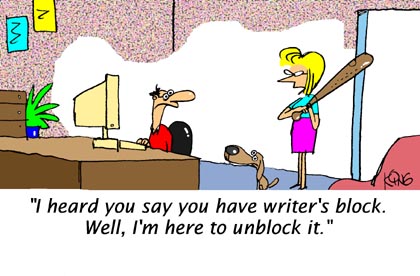
Category: feedback

  • Writers do bend the rules!

    I haven’t read Isabel Allende in a while. It’s my favorite Spanish speaking author. I remembered how I used to devour her books when I was a teenager. Her stories were so profound, her characters so alive. I haven’t read all of her books, and this reminds I might not be a proper author fan/follower. But I’ve always been into exploring new authors.

    download (6)

    Since she’s a Spanish speaking author, I read her books in their original language: Spanish. No translations. However, in my effort to improve my writing in English, I haven’t read books in Spanish for a while, probably for the last three years. It’s been hard to remain truthful to this objective. I could easily get Spanish translations from John Grisham, Stephen King, and other famous ones in the bookstores of my city, but my encounters with horrible translations have pushed me to insist in improving my English when possible. Now, I usually shop for books online or buy them whenever I travel. The effort has paid off. I used to read books in English with dictionaries searches every two minutes. Now, I don’t need need them anymore.
    download (7)

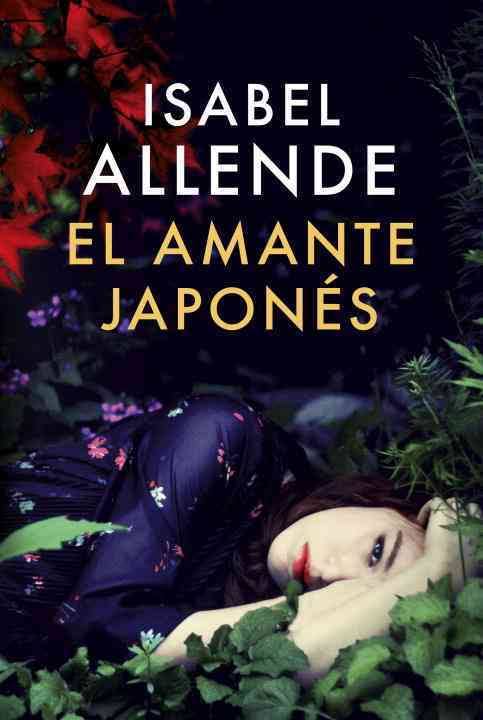
    Anyway, I was excited to read Allende again. The book I picked up was one of her latest ones: “El Amante Japonés” or “The Japanese Lover.”  I really enjoyed the book but it was a writing/learning experience more than anything. Unfortunately, I no longer remember enough to testify for other Allende’s books. But in this book, I found a couple of  writing style observations along the way that made me question the writing rules I’ve been learning lately. My reading perspective has changed significantly over these two years of reading books about writing, listening to webinars about writing, attending to writing online courses and even going to a writing conference in English. I would have never imagined these writing rules I’ve been following at heart could be non-existent in the authors I loved the most. It was an utter surprise.
    images

    But what exactly were these rules I found non existent in “The Japanese Lover”? In fiction, I’ve been taught to write scenes from a single point of view. If you want to use other character’s points of view, then it’s better to do it in another scene or even in another chapter. In “The Japanese Lover”, Isabel Allende mixes multiple points of view from one paragraph to the other. One paragraph you are inside one of the main character’s head and the next one you are in another, in a blink of an eye. At the beginning, I found this quite off-putting. I was mad that one of my favorite authors was writing like that. I began to question, Was it always like that in her previous books? (I still need to check this out of curiosity) Was this something it didn’t bother to me before? Was it because I didn’t know of these rules many years ago? But I learned a lesson quick. The rule about not mixing points of view exists because we don’t want to confuse readers. But we must never misjudge readers’ reading capabilities. After a couple of lines, it was easy to realize which character were being described. And after the first chapters I didn’t find this annoying anymore. Sometimes as writers, we struggle too much in trying to ensure our readers won’t get confused. We write with such detail (succumbing to exaggerated description and slow flow) to ensure readers follow the plot line easily that we sometimes forget our readers are perfectly able to grab implicit details without the need of us describing them word by word.
    download (8)

    After overcoming my own self blocking rule in the fist chapters of “The Japanese lover” and forgetting about any other writing rules, I began to submerge into the story. I found out that Isable Allende is still one of my favorite authors. It didn’t matter she changed POVs every second; I read her book hugely entertained and finished it in a couple of days. Of course, the book is not perfect, there are other issues that bothered me at some level, such as the excess of themes in one single book and the highly dramatic backgrounds in each character – too much to be believable at some point. But the book had alive characters. That is something you cannot always achieve by following the rules.

    As a result and as part of my writing improvement process. I’ve learned that bending the rules is not always bad. I still prefer to keep one POV for each scene, but now I feel myself free to break some rules and allow my writing to become alive.


  • The new writing perspective

    It’s been almost two months since I didn’t work on my thriller novel. Some fellow blog readers may know that I’ve been working on it quite a while, since last year most specifically. After I finished it, I gave it to a couple of beta readers, and then passed it to my editor. I got the book ready. I pitched it at Writer’s Digest conference in New York and I got the attention of seven literary agents. I sent the requested material to them and got four rejection replies already. The three remaining never replied. But the harsh truth is the book wasn’t ready. It wasn’t yet.

    This is my first book, my first attempt, and you can tell I’ve been impulsive with it. I’ve fallen into the most frequent mistake most amateur writers do. I knew how important it was to make sure the manuscript was ready before pitching it. And here I was making the same mistake, trying to do it as fast as possible, not letting the book rest for a while before doing the last rounds of edition. Hurrying up too much.

    download

    When I pitched it, the book was quite acceptable from the writing point of view. I made sure the words were accurate, I tried not to tell but show, I triple-verified all grammar rules, and I hired an external editor. I also made sure the plot moved fast, had twists everywhere, and that the “theme” was cohesive and there were no plot holes. What went wrong?

    download (6)

    In October, I managed to contact a very good beta reader on Goodreads. He gave me great feedback from the technical point of view (the book is about hackers) but also gave me great advice from the literary point of view. My weakest point was clear as water: Character development. They felt flat. The main characters were completely unidimensional. And I started seeing the flaws I haven’t seen before. I realized the book was not ready. I wasn’t satisfied with it, I knew I could do it a million times better. I had pitched too soon. (And I’m still crossing my fingers that the reason the three literary agents never replied was because my manuscript got lost in their email folders. This way, I can still have them in my pitching list for when the book is finally ready.)

    download (5)

    I started to review my manuscript yesterday, from scratch, rewriting practically everything. As I did It, I understood also what was missing in my writing. My voice. Although, the story is action packed, it’s actually dull. There’s no magic in the words. There’s no humour, no irony. It’s not witty. I can do this better. I can make more complex characters, ones that make people surprise, gasp, hate, love, laugh. The book was never ready.

    November was a month of no writing. Since most of us writers have a full time job to maintain, I was involved in a work project that left me zero time to write. I’d never believed this time away from writing was actually what I needed, that No writing for some time would be more productive than a full month of continuous writing. I see the point now. Let the book rest.

    images (16)

    So I’m re writing the whole manuscript. But this time the story will come alive like a true story should do.

    I’m thankful I realized this before precipitating myself into insisting with more agents, or even considering self-publishing. Now I know the true. The book will be ready when it’s ready.

    Did you have any similar experiences? If you’re a writer how much can you relate to this? Any advice you would like to give me?


  • The good experiences that come with writers conferences…

    Well, I’m back from one of the most thrilling experiences in my life. For those who don’t know, I had the opportunity to attend this year’s Writers Digest Conference in NYC. It was certainly an opportunity you don’t get to live very often and I’m glad I was able to take a part in it.

    What did I learn? 

    I think all can be summarized to the following points:

    • There’s still too much to learn – And it comes with time and experience. I haven’t read all the “must read” classic books or the “must read best sellers” yet, but I was relieved to find that at least I’ve read the most important/famous ones. A good fact to know is that not only it’s about reading the good old classics but also reading the latest best sellers; see what formula they’re using to be highly commercial in recent times. Old time formulas may not be suitable for these days anymore, i.e. you can’t write as Shakespeare anymore…
    • I seem to be not that lost – Yeah… this was kind of gratifying actually, because even though I was there to learn new things, it was good to know that I’ve been doing my share of work and that I’m not that lost in this world of books and publishing industry. Basics such as don’t put that your “family and mom loved your manuscript” or that “you’re sure you have the next best seller” in your query letter were already good known facts to me….It felt good to know that I was not swimming in the amateur waters anymore…

    writers digest conference

    • I still have a long way – I’ve just finished my first novel and I’m one hundred per cent sure that I can do it better. I feel confident that I can plot and write better stories. I know the writing process will be easier each time (hopefully the revision process as well, which is the most terrifying one for me) Nevertheless, I feel pretty confident about my first project. There were tons of conference attendees who were already in their fourth or fifth book and still learning a lot…
    • I learned I can totally rock Pitch Slams – I think this was the main reason why I thought the conference was awesome. From the seven agents I pitched, I got requests from the seven. It was unbelievable. I managed to control my nervousness, forget that English is not my native language, and speak with confidence. I loved the process.
    • I can manage rejection much better now – I’ve already sent my material to the seven agents yesterday. One has already replied this morning saying that “it may not be for him” (I wonder why he seemed so interested in the pitch slam. Was it because he thought it well and decided it was not for him? we’ll never know…) But even if I get these sort of replies from the other six agents, it will only be the encouragement to keep growing stronger, to keep fighting. I made a good decent start, and the sky is the limit. I’ll continue with much force. I’ll do more research. I’ll read more books. I’ll write more. I’ll try harder. I don’t plan to give up, not now when I feel so full of energy 🙂

    I read a couple of blog posts I wrote more than a year ago. In these posts I was still looking for my path. I didn’t know where I stood at that point, trying to find out my true passions, looking for courage to do what I really loved. I was trying to tell the people around me that maybe I was meant to do something different from my career; ashamed to share my longtime dreams. I felt unsure of any talents I had. Now, I feel on the right path. Even though it’ll take a while to reach my goals, I know for sure, that I’m on the right track this time. And I’m very thankful to God for that.

  • Query letters and why they can drive you insane

    Since I started writing, I’ve been trying to be as proactive as possible and be involved with everything writing/editing/publishing existing in the online world. Unfortunately, I don’t have many chances to that in the real physical world, here, in my city. These are a couple of reasons:

    1. There are no writing groups/courses/workshops in English.

    2. The ones that exist in Spanish are not my cup of tea. Not many writers live in my location because people, unfortunately, are not much into reading (which is really sad!) But there are a couple of events if you dig really well and switch on your mafia sensors. However, it’s mostly about poetry or literary fiction. I’m not against it, but I prefer mainstream fiction; meaning thrillers, mysteries, horror, crime, espionage; exciting books that are page turners and make you lose your sleep. “Too wordy” is what comes to my mind when I attend to the spanish writing events.

    www fuelyourwriting com

    Image source: www.fuelyourwriting.com

    Well, to my luck, we’re not limited anymore to our locations in the world. We’re global citizens, meaning I can still write in English and access all the writing training/support online. Online webinars, workshops, writers groups in social media, blogs, etc. are only a few examples. There’s a lot out there to keep you entertained until the end of our times. So whenever, I look for feedback, I do it,  here, in the web.

    So the word “query letter” came almost from the beginning. It was like the defining event that would separate published writers for the non-published ones (talking about traditional publishing here). The test that would define who gets to be somebody in the vast sea of the prole (bear this with me, I’m reading a book where the word “prole” comes out every 2 seconds). But I gave it no importance from the beginning. I first had to hone my craft and write my story. Query letters would come later. Unfortunately, I’ve reached that terrified “later.” And I must be honest, I would prefer to keep writing other novels, and short stories than trying to see if my work can be publishable. But I guess, there’s no point in writing stories to keep them hidden in your desk drawer (well, in the C: drive of my computer, in this case.)

    valeriekingbooks com

    Image source: valeriekingbooks.com

    So, time to query I said, and started to read as much as possible about it. I became fond of Query Shark (for those who don’t know, that is Literary Agent Janet Reid destroying writers dreams in her blog that critizices query letters) – Great source of learning by the way. Then, I produced my first query letter (first draft of the first attempt of the first time- oh! let’s faced it, I wrote a terrible first query letter). I posted it on writers support forums to receive the good vibes of others. (Spoiler alert: It isn’t like that, some people are rather straightforward and won’t emanate anything resembling good vibes.)

    But I’m not playing good-vibe fisher, I’m actually tempting masochist waters. I knew I would receive hard critiques and I still did it multiple times, i.e. in several forums. The good part? I also received very good feedback and interest for the story.

    www squareboxuk com

    Image source: www.squareboxuk.com

    How overwhelming is this? It’s terribly overwhelming (I love that I can use adverbs, here, in my blog freely.) You get lots of advice, lots of contradicting advice, lots of questions too! (but you can’t explain the whole story in your query letter). Most of it, is very good advice (almost 90%), but there are others you must be able to filter and scan them with critical eyes. After all, support groups are opened for everybody. However, on querying letters, you have to be careful. The concept of querying is very different from one person to another. You have to rely on your instincts. So,what did I end up doing?

    I left my querying critiques resting for 48 hours. Then, I got back to them with highly critical eyes. The objective: to rescue what I thought was important and accurate. I rewrote my query letter again, and then again, and then again. It’s not ready yet; it’s resting for 24 hours more before getting back to it. This works better. You can’t create the perfect query letter on the same day. You need to step away and then get back to it with critical,rested, renewed eyes. Hopefully, I’ll have it ready soon.

    Now on writing the synopsis… that’s for another post.

    What do you usually do when you receive too much feedback? Do you have a method to filter what works and what doesn’t? How can you tell which is good feedback and which is not?

  • Editing services, why you need to love them! and the theory of the Leprechaun that lives in our heads.

    Writers are strange creatures, stranger than you think. And the wannabe ones, like me, are even worst (For example, I just passed some work colleagues in the corridor and forgot to say “hello” why? ’cause I was thinking about some feedback I received from a query letter) They know I’m weird, but I didn’t intend to be impolite… sigh… I guess I must learn to detach from the fiction world and improve my social skills. (now you have a hint of why I have “loner” in the name of my blog)
    But anyway, no more self analysis, and let’s go straight to the objective of this post: why you have to love editing services.

    – Because writers are strange creatures (and back again to the first paragraph). We believe that when we write and we review like a thousand times, there’s no way we’re going to let a typo/grammar mistake slip away. After all, we’ve reviewed like ten times, we read it aloud, we passed the spell checker, we reviewed it again, and we read it again. And we think, the sentence is perfect. But wrong, the editor returns it with red everywhere and a typo that makes you just want to cringe under the bed. And you believe, Oh my god, this is embarrassing. I’m supposed to know the basics of writing. The editor must think I’m five years old.

    images (10)

    But, yes, the dreaded “but” This is completely normal. I’ve learned to embrace Editing. We really need that set of extra eyes, you know why? because there’s a leprechaun that inhabits our brains and tells us our writing is perfect. (see? I told you, we’re strange creatures). That leprechaun is the result of writing our own world, our story, our characters and revising them continuously. We know our story too much. (more…)

  • There seems to be light in all futures…

    I believe all writers are filled with doubts; from am I really good for this? will I ever publish something? will people like what I wrote? should I insist on this path? Do I have what it takes to be a good writer? etc. I think almost all writers have gone through this stage at some point in their lifes, even the accomplished ones, if not, then I’d love to know of a writer who never doubted about his/her skills, and how did he/she manage to keep confidence at all times…

    However, there seems to be light in all futures. I believe that light is for the ones who never surrender and work hard to achieve their dreams. More than a year ago, I started working on this lifetime goal of being a writer. I’m still working on the editing on my first novel; but last week, I felt the impulse to put it aside for some days and let myself get involve with another project, a short story. I got this idea of a shocking ending for a story, but haven’t thought of a plot or characters yet. I was eager to see how much I had improved in my writing skills. I wanted to see if my first draft of anything else would be much better than the first draft of my novel; if I had improved in creating a plot and characters, in describing the settings, if I finally understood showing vs. telling, if the dialogue would come easier now after the experience of my first novel. So I sat and wrote an almost 3300 words short story.

    shantellemaryh blogspot com

    Image source: shantellemaryh.blogspot.com

    I dug into the Goodreads beta reading groups to see if somebody wanted to give me feedback. In the end, three people revised my story and I got really good, amazing, unbelievable feedback! It felt so good. Never ever, did I expect to receive such good feedback on my writing. I finished editing it this morning and used NaturalReader (a software that I really recommend for having your writing read to you by the computer) and I was surprised. My writing had improved a lot and the pacing and everything else was quite decent.

    writingnorthidahowblospot

    Image source: writingnorthidahow.blospot.com

    I learned that writing is about practice and hard work. But also, I understood, that any goal in life is achievable; that it is only about perseverance and faith. I had reached a point in my novel, where I seriously doubted my writing skills. But now, I feel more empowered and more encouraged to continue writing.

    And you, have you ever been in a situation where you’d almost given up but found encouragement when you less expected?

  • Finally understanding Twitter – a short post on connecting with quality followers

    A couple of months ago, I wrote a post about twitter: Struggling with a place where people don’t use Twitter. In this post, I talked about how I had decided to start using Twitter as a way to build up my Author platform and how I was struggling with it.  I was using the guide: Build your Author Platform: The New Rules: A Literary Agent’s guide to growing your audience in 14 steps, which I completely recommend. The book suggested that I start following friends and coaxing them into following me. But being in a country where Twitter is actually not popular, didn’t help much.

    I must confess I considered buying Twitter followers. But I was scared of two issues:

    • I would pay for a scam
    • I would buy fake followers that would disappear later (which I heard happens a lot, one day you got 10000 followers and a couple of days later you don’t have them)

    In the end, I desisted from the buying idea, and I’m proud to say that I’m about very close to get 700 REAL followers with just hard work.

    www seoclerk com

    Image source: www.seoclerk.com

    Why am I so proud of this followers?

    Because I know they are:

    • Nice people who tweet nice things
    • Active twitter users – not just accounts that were opened once and then their owners just forgot about them

    I’ve managed to engage with many of them. I know most of them are bookworms like me or are struggling writers as me. So when I review my Home feed, I always get very interesting tweets. And I know that when I tweet, I get interesting replies or retweets.

    Of course, Twitter is not only about getting followers. Mostly, in order to get followers, you also have to follow. That’s why I’m very careful who I choose to follow. I really want to get good decent Twitter users to interact with. I don’t want to be guided by just numbers. I want to get quality followers.

    www steamfeed com

    Image source: www.steamfeed.com

    Why am I so interested in the quality followers?

    I’m into social networking because: I truly believe you can network and build contacts than later can turn into good advisors, supporters, and even friends.

    Through this blog, for example, I’ve managed to get in contact with many nice bloggers. I have managed to find people who have the same struggles as me and who are also looking for support and encouragement.

    So if anybody of you is highly worried about getting numbers, just try to forget that side, and concentrate on the quality of connections you get. You’ll see how those numbers will just grow little by little.

    And you, do you ever question yourself how to grow your numbers in your platform? Do you even care about this? Feel free to post your opinions.

    P.S. Just in case, my twitter handle is: @carlisdm, leave yours to connect!

  • How to get your hand not to agree with you

    My whole life, or since I can remember, I’ve been invaded by Ganglion cysts in my wrists. Those are small liquid balls that appear in your wrists for no apparent reason but to disturb your life. They usually come and go, but some of them like to stick around causing pain. I’ve already got them surgically removed twice, leaving “good looking” scars.

    The thought about scars is that they always leave space for good stories, like the one on my right wrist that led this weird guy in a club approach and tell me that He used to do that but not anymore… it took me time to realize that he thought it was some sort drug mark or maybe suicide attempt (which would be dumb since veins are on the other side of the wrist), and when I told him No dude is not what you think, he told me something like Yeah I used to deny it too… anyway…

    www canstockphoto com

    Image source: www.canstockphoto.com

    The problem now is that the “thing” as I call it, won’t go until my hand stops making “efforts”, the good doctor has advised me to use the wrist the least possible, type the least, which me having a full time job as a Technical Writer and having the long-time dream of becoming a Fiction writer, maybe be outputting… but I guess life is not always easy…

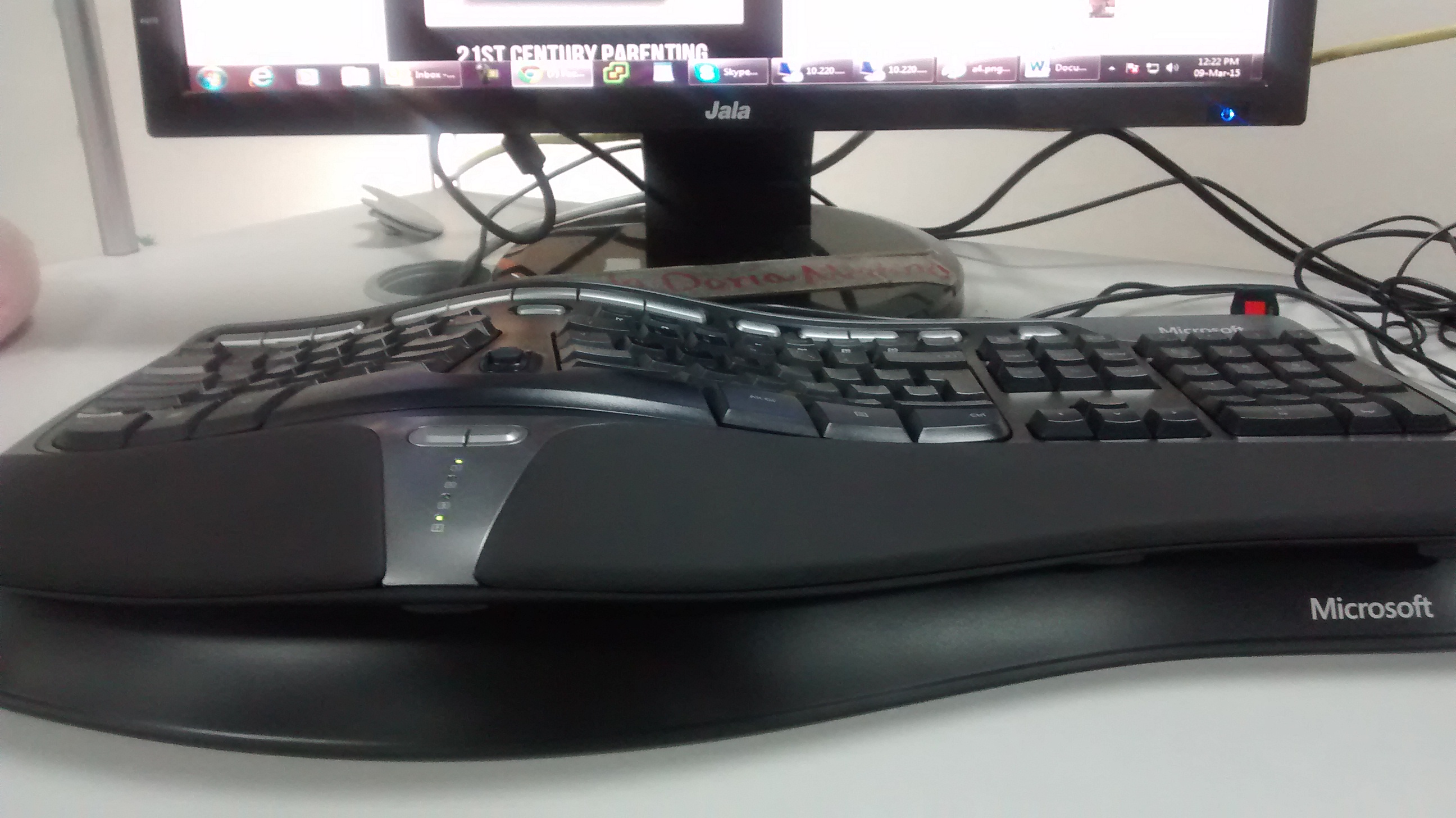
    Luckily, there are always ways, and I’m happy that I found them. I’ve reduced my manuscript edition workload to the use of pen and paper, right hand is the good one this time (lucky me!), and I’ll see if I can find somebody later who can do all the computer typing. Also, typing at work has improved thanks to a recently acquired Ergonomic keyboard which is magnificent!  And since I had to be careful with the type of exercise I chose (one where I don’t use hands), I bought myself an AirClimber (my first Teleshopping – equivalent to QVC – purchase ever!) and I love it!.

    IMG_20150309_122206315

    And although my hand may not agree with my writing duties and lifestyle, I still have found ways to overcome this situation. And you, have you ever found yourself in a similar situation? (it doesn’t have to involve ganglion cysts) 

  • I started to kill my darlings and it feels so liberating…

    I started to kill my darlings and it feels so liberating…

    For those who have been following my blog, you know I’ve been writing my first novel during these months, and now I’m totally trying to finish my first manuscript by the hand of NaNoWriMo (National Novel Writing Month). But being my first time experience as a writer, I’ve discovered so many writing tips during these months, that I would lie if I say I knew all of them existed, like the infamous darlings for example.

    But could you imagine if I were oblivious to these writer’s tips, notes, methods, etc.? For a first time novelist, the most possible outcome would be a dreadful first draft.  Of course, I’m perfectly aware that my fist draft will not be the best, neither the second, or not even the first novel; it could take me years (hopefully not decades) to learn to write properly; but I believe that with practice and huge receptivity for criticism (read my previous post), I can actually improve a lot.

    lilliemcferrin blogspot com

    Image source: lilliemcferrin.blogspot.com

    But enough of rambling about all this writing learning-curve-process, I wanted to talk you about my darlings, yes you read well, my darlings, and I’m not talking about my beloved ones, or my several stacked virtual boyfriends (who happen to exist  in a quantity equivalent to zero), but I’m talking about William Faulkner’ famous darlings.  For those who are not into writing, a quick definition will help you not close this blog post immediately.

    What is a darling in writing? A darling, according to the Urban Dictionary, is a literary advice that refers to the dangers of an author using personal favorite elements. In other words, I interpret the darlings as those phrases that look so cute or so wording abundant and excessive vocabulary that although, they make writers feel proud, they can actually cause readers to roll their eyes.

    www rubescloset com

    Image source: www.rubescloset.com

    I’ve been struggling with darlings for months, in my excuse to find my unique voice (which for some reasons started to come with darlings) until recently, when I realized that I only needed to stop worrying about them. That all I needed was to start writing a story with truthful characters and strong emotions, and that was it.

    Darlings have started to disappear, and whenever I read my first chapters (which of course I will have to revisit later when I finish my first draft), I will be ready to push my magic Delete button on the keyboard, and kill all the darlings mercilessly, for they are only barriers that stop us telling a truthful story (no need of decoration).

    And you have you ever heard about these darlings? If you haven’t, well now you know that writers are not crazy murderers whenever they talk about killing their darlings.

    And if you’ve heard about them, how do you cope with them? Do they usually chase you in your writing?

    P.S. I tried to google images related to “kill your darlings” but it seems that there’s a movie with Harry Potter in it (I mean the actor).

    blog2

  • Why we all need feedback and why we should embrace it…

    Why we all need feedback and why we should embrace it…

    I love feedback and with the time I´ve gotten more receptive of it. Many years ago, it would have been different. I would have taken it too harsh and felt discouraged. I think that´s sign of growing up and I embrace this idea.

    Since I began writing this year, I’ve felt insecure about my writing.  The plot, the characters, the stories, have always been abundant in my head, but my problem was translating them into paper.  Having never had writing classes and having a different native language than English, there were  times where I questioned myself “What am I getting myself into?”

    crossfict ampmabry com

    Image source: crossfictampmabry.com

    Due to all in these insecurities, I’ve always looked forward for feedback, and expected the worst. However, some people have given me excellent feedback and I thank them deeply for that (even though I still feel they were condescending with me). You see, I’m actually my toughest reviewer, but isn’t´that the idea? If I were to believe that I write very well and that my writing doesn’t need improve, it would be a tragedy, I would be a mediocre writer.

    linkedin com

    Image source: linkedin.com

     Being able to realize that there´s always room for improvement is awesome; I mean the “realization” part. The fact that you´re not that blinded and that you can find your own mistakes, it’s rewarding. And believe me, there must be a bunch of people out there who still get sensitive with feedback, BS! This is not a career for being sensitive, it´s a career for those who accept all sorts of criticism, absorb them, and continue forward! The more you detect your mistakes, the more you’ll be able to improve and learn.

     blog synergita com

    Image source: blog-synergita.com

    Thanks for all the harsh reviewers out there. That´s what writers really need and I´m hoping to get as many as possible. That´s the only way up!

    And you, how do you handle feedback? Do you let it get to you when it´s too harsh? I would love to hear what you think! Come on express yourselves in the comments section, if you want to complain against harsh reviewers do it! this is your chance  🙂