Category: resolutions

  • 10 Things you should know when you first write a book

    When I started working on my first book, I had the following plan:

    • I would finish the draft in four of five months at most
    • I would make a thorough review of the first manuscript and in one single edition round I would correct everything that is wrong.
    • My beta readers will read it in a couple of weeks and I would rejoice in his/her wonderful comments
    • I would find a great Literary agent in a blink of an eye
    • I would have the book published in that same year
    • I would live from my writing and would travel the world.

    I was naïve. REALLY naive.
     

    download
    Enter a caption


    This is the second year I’m investing in my first book. I’m still editing it. So far I’ve come to understand the following:

    1. Doing the first draft is by far the easiest and quickest part of the process

    When I finished the first draft, I was so thrilled. I felt I have conquered the world and I could be called a writer. I was so proud of myself. I thought that finally I was making something good with my life, that I was looking towards the future, towards my goals, you get the point…The truth is that writing the first draft is the easiest part. You can even achieve it in one month (If you want to test the efficiency of NaNoWriMo). But rest assured the first draft will not be readable yet. Chances are it will still have lots of plot holes and huge amounts of rewrite to be done.

    images (1)

    2. Planning one round of revision is not realistic at all

    There will be many rounds of revision. It’s hard to rewrite scenes, plot holes, and work on character development while editing your grammar and punctuation at the same time. You’ll probably need another round, and perhaps a third one, etc. Additionally, after your beta readers come to you with feedback, chances are you’ll probably need to change and rewrite many sections of your book which will lead you to another round of sentence structure/grammar review, etc., again.
    images (2)

    3. Leaving your first manuscript to rest for a couple of weeks and even a month is not a bad idea

    I knew about this tip way before I finished my first manuscript. Nonetheless, I was in such a hurry of having everything done that as soon as I finished my first manuscript, I started to edit it on the very next day. I didn’t leave it to rest and breath. My head didn’t have time to clear enough to target my manuscript with a fresh point of view. The result was several pointless rounds of revision until I decided to finally give myself a break and leave the manuscript for a month. During this time, I wrote other short stories, I read more, etc. When I finally returned to my old good manuscript, my mind was fresh and I could detect more issues than in all those previous three rounds. I identified huge gaps where I could improve. If only I’ve done that before my first round of revision… I would’ve probably faced my manuscript with much better criteria from the first edition round.

    download

    4.  Your beta readers won’t give you feedback in a couple of weeks

    I had three good beta readers, but it took time to receive their feedback. You have to take into account that not all of them are available to read your manuscript as soon as you deliver it. Unless you’re paying for a beta reading service, most of these people will be doing you a favor. You’ll probably need to wait until they have time. Not all of them can read books in a couple of days; they might need more time. Not all of them have only your book to read; they might need to put it in their queue of “still to read books”.
    images (1)

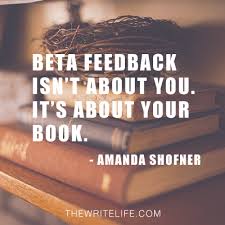
    5. Good Beta Readers will say the truth and cause many changes in your book

    Let’s face it. This is your first book ever. You can’t expect to nail a best seller that soon. You’ll need a lot of time,experience, and good listening skills. You need to pay attention to your beta reader’s feedback. And I’m talking about good beta readers, not your mom, your husband, etc., but people who will be able to judge the manuscript and say what is in their minds without any fear of hurting your feelings. You have to acknowledge that as the author of your book, you know how the plot works, you know how characters look in your mind, but sometimes you fail to translate this knowledge into the written world. Chances are you’ll still need to change and rewrite after your beta reader’s feedback.
    download (6)

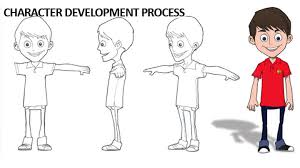
    6. Character development is not achieved at once

    If this is your first book, then you’ll probably struggle with nailing “character development”. Even if you outline characters before you start the book, they’ll probably develop and change as your plot changes. Their behaviors will change depending on how the direction of your books goes or how scenes are improved. Providing a three-dimensional character is harder than you think. It wasn’t until many revisions and feedback that I had enough tools to develop my characters as they should.
    images (3)

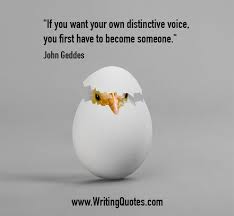
    7. Developing your voice doesn’t come so fast

    It doesn’t matter how many books about writing you read and how many writing courses you attend. Developing your voice only comes with practice. Sometimes, you want to obey all writing rules and make your sentences’ structure perfect, but then you find yourself with a boring flat manuscript. This doesn’t mean you don’t need to know the rules. To break the rules, you need to know them first. But you can’t expect to find your writing voice in the first round of writing. Perhaps you won’t even find it in your first book.
    images (4)

    8. Don’t hire any editing service until you’ve received plenty feedback

    I made the mistake of hiring an editing service (which was very good) before I got all the feedback. My third beta reader was able to send me his feedback after my manuscript was already edited by a professional editor. This feedback was very helpful and had lots of good advice plot-wise, which meant I had to do significant changes and rewrite many scenes and even chapters. The result, the professionally edited text was gone. It would’ve been certainly helpful to hire this service after all revisions and feedback.
    download (3)

    9. Consider your first book may not be publishable

    In my plans above, I clearly talk about getting a literary agent, publishing it, and having enough earnings to live from my writing. The reality is different. And the truth is your first book could not be published yet or could not be published at all. You need to accept this fact from the beginning. It’s a learning curve. My mind already has tons of topics to write other books; they even sound more interesting than the manuscript I’m working with right now. Perhaps book two or three will be published. Perhaps my first book will be revisited in a couple of years and later published. At this point, I only care about improving my writing.
    download (4)

    10. This is only your first experience

    Writing a first book is about gaining experience. It doesn’t matter how perfect your book idea is, how charming your characters are, or how beautifully you construct prose, the process is still tricky with the first book. You still need to learn how to handle feedback, how to detect plot holes, how to find your voice, how to make useful rounds of edition, etc. If you take this point of view, I guarantee you’ll find the experience more rewarding than the publishing result. You’ll be more excited about your next projects and you won’t suffer so much if the path of delivering your first book looks too hard. Best of all, you’ll encounter the true meaning of being a writer.
    images (5)

    Cheers!


  • The TED talk all women should see

    I try to start my workday with a TED talk. I wish I could say I do this daily, but sometimes I can’t. I usually do it when my work energy level is low or when I feel I need motivation to go with the work routine. Today I came across with “Why do ambitious women have flat heads?” by Dame Stephanie Shirley.  The title was enough to call my attention since sometimes when the talk’s title is too predictable, I might just pass it. But this one wasn’t and I’m glad I clicked it.

    Dame Stephanie Shirley had it rough. She was one of the Jewish kids saved by being sent to families in northern England during the Second World War . She grew up in an era where women’s only objective was to get married and have kids. There were scarce work opportunities for them. I work in the software industry. Women in the 60’s didn’t just pursuit that area at all. But one woman did it. And this terrific woman showed nothing is impossible. Yes, there was a programming market in that era, believe it or not. If you want to know exactly how it worked, then you have to check the video.

    Stephanie Shirley went through all the fights my generation didn’t have too. My generation won’t suffer that gender discrimination again. We have it easy. And what are we doing with our lives? We don’t aim high enough. We don’t dream big enough. We don’t do the fights for the next generations.

    I invite you to watch the following TED talk (only 13 minutes of your time but worth your life change).

    [ted id=2223]

  • Getting rid of the multi-tasking habits

    Last post When old habits are hard to abandon… I’m looking at you procrastination was eye opening. For some reason, I always believed that being “multi-tasker” was engraved in my system. I even felt proud of it. I could face many tasks at work or while writing without any problems. I even used as one of my qualities (whenever I needed to talk about myself, my strengths,etc… case point: CVs). This happened until many days ago, when for some miracle, I landed on the Coursera course: Learning how to learn: Powerful mental tools to help you master tough subjects. If you ever have time to check this free online course (which you could also pay if you want a certification), then do it. The course suggestion came to my email inbox the same day I wrote about my procrastination/multi-tasker post. And surprise, surprise: It turns out being multi-tasker is not as good I as thought it was. In fact, it’s not good at all.

    multi1

    I’m not going to go into specifics in the course. Besides, I still have a couple of lessons that I still need to go through in this course. But so far, it’s been one of the best courses I’ve taken through this platform. Going straight to the point: multi-tasking only burns you out, it stresses you, it makes you slower, it lowers the quality of your work, and tires you faster. But it can be changed. And since I’ve started this new plan to reprogram my brain from its default multi-tasking mode or even close to some sort of attention deficit disorder, my capacity to focus and concentrate has grown exponentially. My writing tasks are back on track again and with good perspectives!

    multi2

    There are tons of courses, methodologies, articles online about this topic. Many great sources of information. If you’re looking to get rid of procrastination, improve the quality of time you spent on your important tasks (writing, I’m looking at you), then I suggest you get rid of any multi-tasking habits. I’m looking forward to polishing these skills, and maybe in some weeks time, to be able to say I finally left procrastination in the past.

  • When old habits are hard to abandon… I’m looking at you Procrastination!

    Procrastination has been affecting my life since I can remember. Fortunately, these last couple of years, I’ve been suffering less of it or else I would’ve never achieved a novel’s first draft (it should be treated as an illness!). But I haven’t gone over it yet. I might now put a daily effort on my writer goals, but it’s not enough yet.

    The one to blame, the Internet.

    I could use the computer and disconnect, but I depend heavily on thesaurus.com I could get a physical copy, but certainly working with the website allows me to easily navigate from word to word’s synonyms and definitions in a matter of seconds, without losing the inspiration or the sentence idea that troubles my mind at that point. I’ve tried using printed copies of dictionaries and thesaurus, but they’re not meant to be used on every single minute. And yes, I still use it a lot. Especially, since English is not my first language, many times I just want to make sure I got the correct definition and that the synonym I’m choosing to use is accurate.

    So if thesaurus.com wasn’t such a good tool and as dependent on internet connectivity as it is, I would probably disconnect from Wi-Fi. But if this website helps my writing, what is the real problem?

    My mind is used to multi-tasking. As a result, thoughts, ideas, and hyperactivity flood my brain almost 24/7 (If mental hyperactivity could be translated into physical hyperactivity… I would be the best athlete in the world… but that’s another topic). My mind doesn’t really switch off until I go to bed. And sometimes, I find trouble sleeping trying to unplug my mind from its endless ideas, worries, etc. So while writing, it’s normal for me to get distracted by other websites; afraid (maybe an excuse word) that I will forget later what I wanted to buy in Ebay, that I will miss what’s going on Facebook, and that there are still tips, blogs, and websites I should be looking at for my next trip (in 2 weeks – Tripadvisor, I’m looking at you!),  I open the browser and proceed to search, look, and verify other issues while in the middle of writing.

    The result: guilt invading me at around 10:00 pm when my eyes are starting to feel the burden of the day and I have to choose between:

    • Giving up and going to bed
    • Continue the writing until almost midnight or until my eyes are hyper red. The direct consequence: I cannot invest any more reading time in bed if I want to give my eyes a proper resting (after all, I spend the whole day in front of the computer)

    Maybe I’m too anxious for vacations these days, and I cannot move forward without taking out of my mind all the issues that should be arranged or known before traveling. Maybe after my holidays, my mind will be clear enough to continue working. But who am I kidding? There will always be a next trip, a next activity, or a next excuse. If I’m going to take the writing career for good, then I’d better eliminate the word Procrastination from my vocabulary. Any advice?


  • Crazy starts of year

    The first post of this year! 🙂 I couldn’t be happier. Isn’t it funny how some numbers in the date can affect your life perspective goal wise? If we think of this well enough, years, months, dates, etc. are only numbers. We really don’t need the first of january of each year to assess our life objectives, but we’re human influenced by numbers, and our nature, and society partly, makes us reset every beginning of each year, restart our goals, focus, and start fresh.

    download

    The last days of the year have been surreal, with some (not serious) health problems, a minor surgery, and medical rest, but enough for me to assess how much I take care of  myself physically.

    2015 has been all about my book and writing as priority number one, and this year it will continue to be. But I’ll have to work this year on a forgotten goal: exercise and good eating habits. I have been telling myself that the latter were not priorities at all. That exercise would only take me time away from my writing objectives. That life was too short to not eat what I like. But I confess that a lot of lazy writeless time has gone through 2015 that could have been used for physical activity. And that not eating well has its consequences no matter the age…

    download (2)

    In addition, I’ve been assessing other aspects as well. I’m not for vanity and long is the time that I indulged myself in taking care of my looks. In the name of saving for my trips, I’ve left many self-care aspects forgotten. I don’t mean to spend now tons of money on hairdressers and related stuff, but once in a while won’t do bad. So 2016 has to bring a little bit more of pampering, exercise, and good eating habits in my life.  I won’t have another life to look fresh and radiant, will I?

    download (1)

    download (3)

    I hope to find better balance this year. I hope to strive through writing even more. But more than anything, I hope to seize each day! Carpe Diem!

    download


  • That strange feeling at the end of they year

    As the holidays are about to arrive and people start getting ready for the long holiday vacations, 2016 also strikes in. And of course, new year’s resolutions can be a common topic around this time. Many people here at my work are counting the days for the holidays to start. I’m not. Although, a rest is always well received, I still don’t want 2015 to be over.  I feel like time is going too fast. I still want to make the most of what is left of 2015, even if it’s only a couple of days.

    images (11)

    I know that age and time are just numbers, but in certain ways, they always tick and remind me of my goals in life. This year was intensive, and I did many things during it. I really wanted to have my novel done in 2015. But I’m not there, and I will probably work on it for a couple of months more. In some way, I haven’t met this year’s resolutions and I can’t avoid feeling a little bit sad about this. Moreover, I’m finding it difficult to go back to my book. As you know from previous posts, I stopped writing for more than a month, and now, I find it hard to get back into the writing routine again. If it were me, I would try to finish the novel in these days. But I’m aware it’s not possible.

    Do you usually have this feeling when it’s nearing the end of the year?

    download (16)


  • I don’t give up

    And I’m back. I’ve missed my blog so much. All this time I haven’t been able to write it because of an extra job. It finished and I’m ready to continue. I must confess it was hard, hard to stay ok these weeks because I was at the point of exhaustion and burnout. And many things in my life were left in a standby.

    CIMG6347

    When you put so much hope into something, into a new career chance, it’s very hard to accept that at the end you didn’t get your chance. But life is like this.  And I’m so grateful I had this opportunity because I’ve learnt I’m stronger that I think. I’ve learnt I can achieve everything, even if it doesn’t turn out like I always want. I’ve learnt that I can be as strong as steel and hardworking as million people together, and the most important thing I’ve learnt is that “I don’t give up”. I’m willing to accept those words are no longer part of my vocabulary.

    I’ve learnt life is better when you learn things the hard way. It makes you tougher and ready for the next challenges. But mostly, I’ve learnt that this blog should never be left aside. I’m thankful for all the people I shared this blog with. I’m thankful that I have a way to connect to them. I’m thankful that my words are read.

  • What good is to travel?

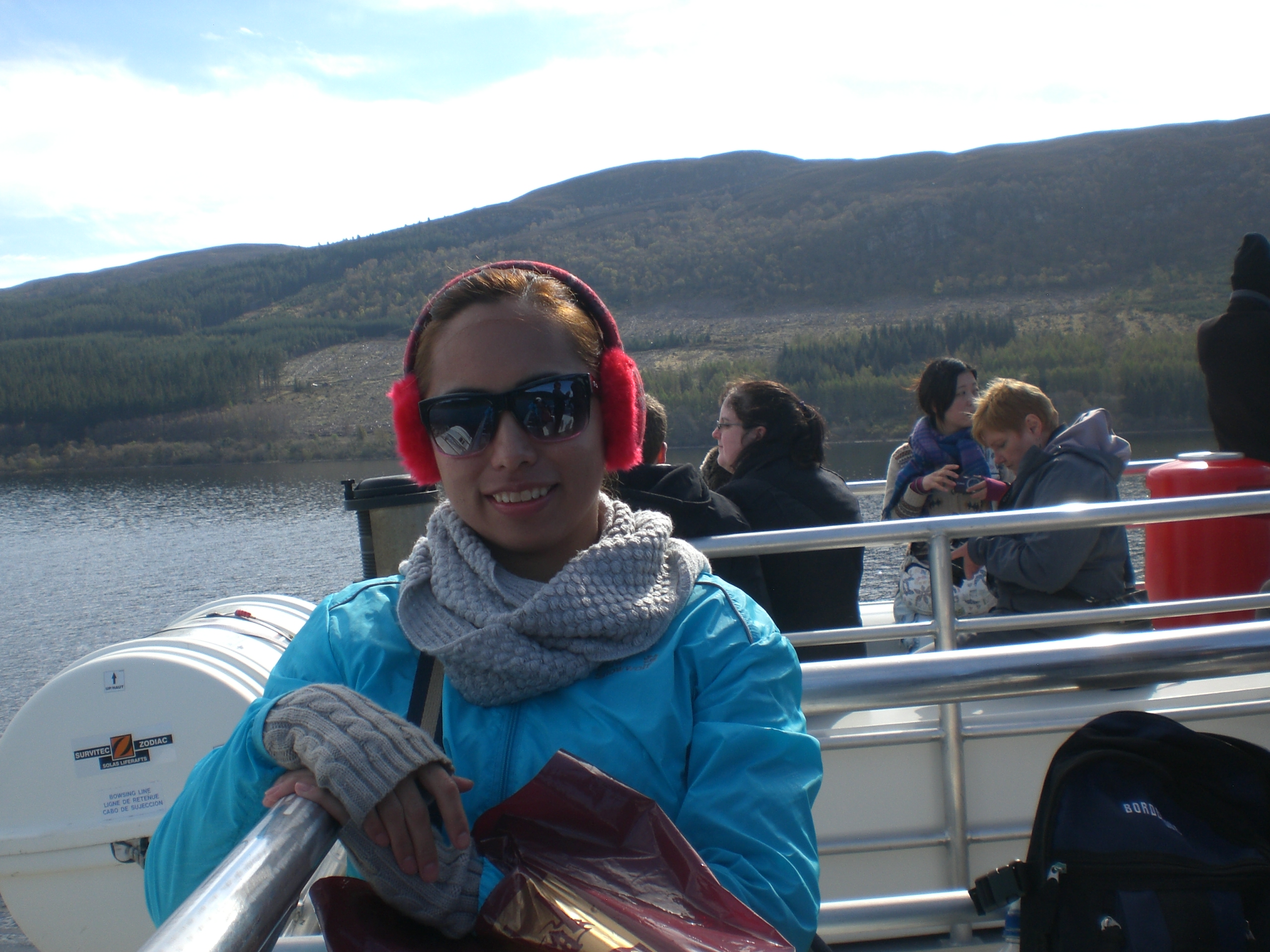
    When I first started writing this blog (2 years already! can’t believe it), my main objective was to build a traveling blog. I’d been following a couple of travel blogs (Barcelona Blonde, Nomadic Matt, and others) that had been fueling my desire for traveling the world and writing about it. But Money and other personal issues made me put a halt to these intentions, settle in one place, and start blogging about something else. I regret nothing. Thanks to this change in plans, I started writing fiction and blogging about it. What a memorable experience it has been.

    But I still travel. I may not be able to sail the world, visit all its continents, and be “on the move” constantly, but I’ve managed to travel quite a bit (18 countries, 44 cities, until now). My travel bucket list ranks high in my life priorities. And since there are some continents that I’ve never been too yet (Asia, Africa, and Oceania – Australia! why are you so far?), my eagerness remains intact. But I can’t complain. If I die tomorrow, I’ve done my fair share of traveling. I couldn’t be most thankful.

    drinkmicro com

    Traveling is a life-enriching experience, unmatchable to any other. And when you write, there’s nothing better to broaden your horizons. And though, I don’t travel as much as I did before, I still try to save as much as possible to do one nice trip per year.

    But what exactly have I learned from traveling?

    • People are the same everywhere. They all struggle; they all do their best. Nobody anywhere is better than somebody elsewhere.
    • There’s nothing better than learning other languages. Even if you don’t master them. It feels nice to say “hello” and “thanks” in many languages. It doesn’t matter if those are the only words you learn. People appreciate when you make an effort to learn at least tiny bits to communicate with them. Keep in mind that they’re in no obligation to know your language.
    • Society restrictions are just that “society restrictions.” Those awful closed-minded standards by which your society apparently rules, end there, in that small circle of your town. When you travel, you realized that nothing of that matters, that you’re limited only by your own convictions.
    • Globalization is here to stay. You can be whatever you want wherever you are.

    What other lessons do you think can be learned from traveling?

    b5d0995e8f80ec3365e1a284eec48308

  • The good experiences that come with writers conferences…

    Well, I’m back from one of the most thrilling experiences in my life. For those who don’t know, I had the opportunity to attend this year’s Writers Digest Conference in NYC. It was certainly an opportunity you don’t get to live very often and I’m glad I was able to take a part in it.

    What did I learn? 

    I think all can be summarized to the following points:

    • There’s still too much to learn – And it comes with time and experience. I haven’t read all the “must read” classic books or the “must read best sellers” yet, but I was relieved to find that at least I’ve read the most important/famous ones. A good fact to know is that not only it’s about reading the good old classics but also reading the latest best sellers; see what formula they’re using to be highly commercial in recent times. Old time formulas may not be suitable for these days anymore, i.e. you can’t write as Shakespeare anymore…
    • I seem to be not that lost – Yeah… this was kind of gratifying actually, because even though I was there to learn new things, it was good to know that I’ve been doing my share of work and that I’m not that lost in this world of books and publishing industry. Basics such as don’t put that your “family and mom loved your manuscript” or that “you’re sure you have the next best seller” in your query letter were already good known facts to me….It felt good to know that I was not swimming in the amateur waters anymore…

    writers digest conference

    • I still have a long way – I’ve just finished my first novel and I’m one hundred per cent sure that I can do it better. I feel confident that I can plot and write better stories. I know the writing process will be easier each time (hopefully the revision process as well, which is the most terrifying one for me) Nevertheless, I feel pretty confident about my first project. There were tons of conference attendees who were already in their fourth or fifth book and still learning a lot…
    • I learned I can totally rock Pitch Slams – I think this was the main reason why I thought the conference was awesome. From the seven agents I pitched, I got requests from the seven. It was unbelievable. I managed to control my nervousness, forget that English is not my native language, and speak with confidence. I loved the process.
    • I can manage rejection much better now – I’ve already sent my material to the seven agents yesterday. One has already replied this morning saying that “it may not be for him” (I wonder why he seemed so interested in the pitch slam. Was it because he thought it well and decided it was not for him? we’ll never know…) But even if I get these sort of replies from the other six agents, it will only be the encouragement to keep growing stronger, to keep fighting. I made a good decent start, and the sky is the limit. I’ll continue with much force. I’ll do more research. I’ll read more books. I’ll write more. I’ll try harder. I don’t plan to give up, not now when I feel so full of energy 🙂

    I read a couple of blog posts I wrote more than a year ago. In these posts I was still looking for my path. I didn’t know where I stood at that point, trying to find out my true passions, looking for courage to do what I really loved. I was trying to tell the people around me that maybe I was meant to do something different from my career; ashamed to share my longtime dreams. I felt unsure of any talents I had. Now, I feel on the right path. Even though it’ll take a while to reach my goals, I know for sure, that I’m on the right track this time. And I’m very thankful to God for that.

  • How to get your hand not to agree with you

    My whole life, or since I can remember, I’ve been invaded by Ganglion cysts in my wrists. Those are small liquid balls that appear in your wrists for no apparent reason but to disturb your life. They usually come and go, but some of them like to stick around causing pain. I’ve already got them surgically removed twice, leaving “good looking” scars.

    The thought about scars is that they always leave space for good stories, like the one on my right wrist that led this weird guy in a club approach and tell me that He used to do that but not anymore… it took me time to realize that he thought it was some sort drug mark or maybe suicide attempt (which would be dumb since veins are on the other side of the wrist), and when I told him No dude is not what you think, he told me something like Yeah I used to deny it too… anyway…

    www canstockphoto com

    Image source: www.canstockphoto.com

    The problem now is that the “thing” as I call it, won’t go until my hand stops making “efforts”, the good doctor has advised me to use the wrist the least possible, type the least, which me having a full time job as a Technical Writer and having the long-time dream of becoming a Fiction writer, maybe be outputting… but I guess life is not always easy…

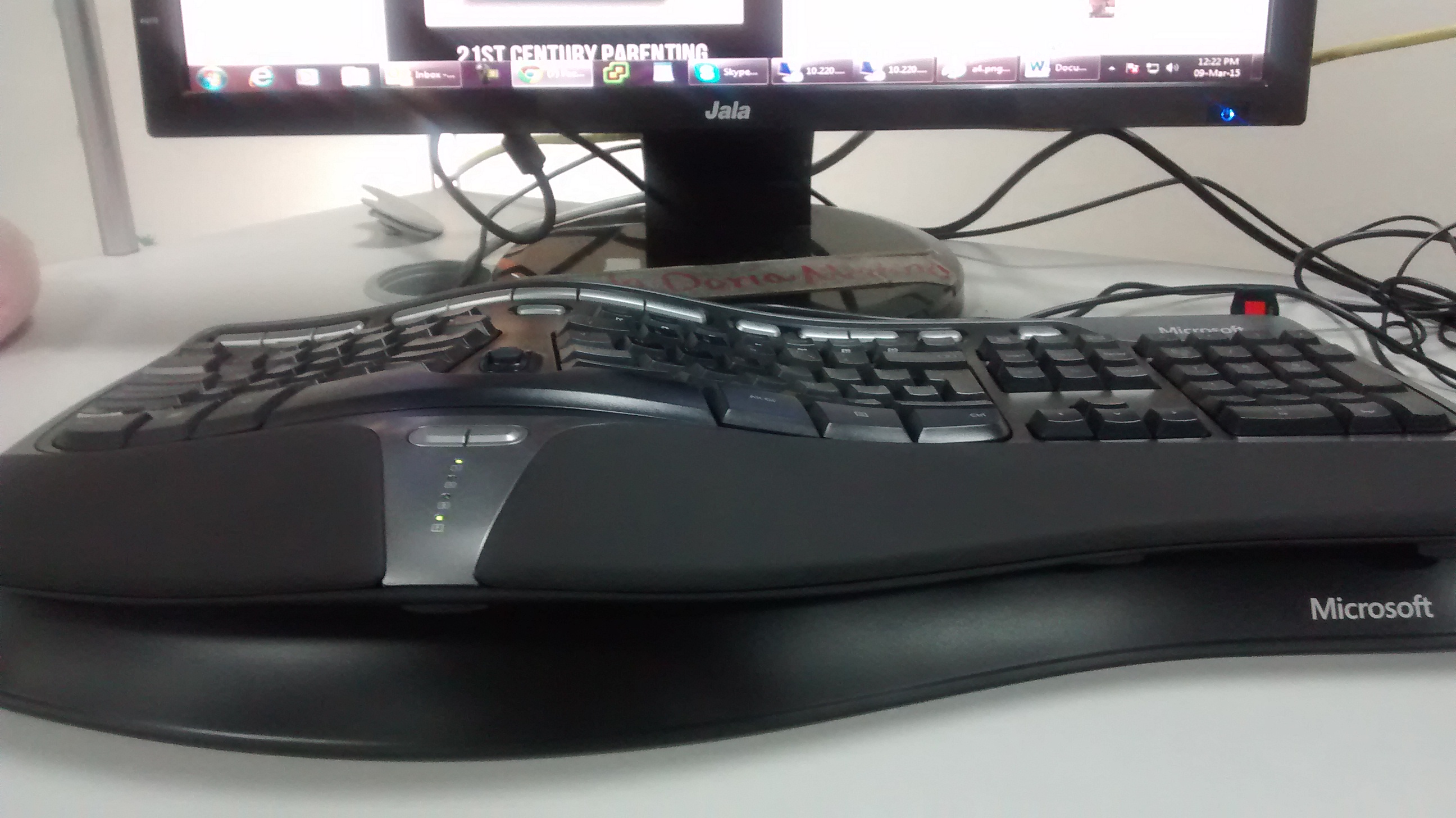
    Luckily, there are always ways, and I’m happy that I found them. I’ve reduced my manuscript edition workload to the use of pen and paper, right hand is the good one this time (lucky me!), and I’ll see if I can find somebody later who can do all the computer typing. Also, typing at work has improved thanks to a recently acquired Ergonomic keyboard which is magnificent!  And since I had to be careful with the type of exercise I chose (one where I don’t use hands), I bought myself an AirClimber (my first Teleshopping – equivalent to QVC – purchase ever!) and I love it!.

    IMG_20150309_122206315

    And although my hand may not agree with my writing duties and lifestyle, I still have found ways to overcome this situation. And you, have you ever found yourself in a similar situation? (it doesn’t have to involve ganglion cysts)