Category: self help

  • Embracing AI for editing, not writing: A writer’s approach

    AI has become a controversial topic among the community of writers.

    We all know that chatGPT and similar tools that can pull up professionally written content. Chances are that most people working desktop jobs have used this tool at some extent. But what happens with writers?

    If you tell chatGPT to write a piece of fiction portraying characters X and Y with a given topic, it will write one that could be quite passable. For many unscrupulous bogus writers, it will be enough to be published. Hence the uprise of AI-created books published on platforms like Amazon and similar. If you’ve read one of these books, chances are you deemed it rubbish.
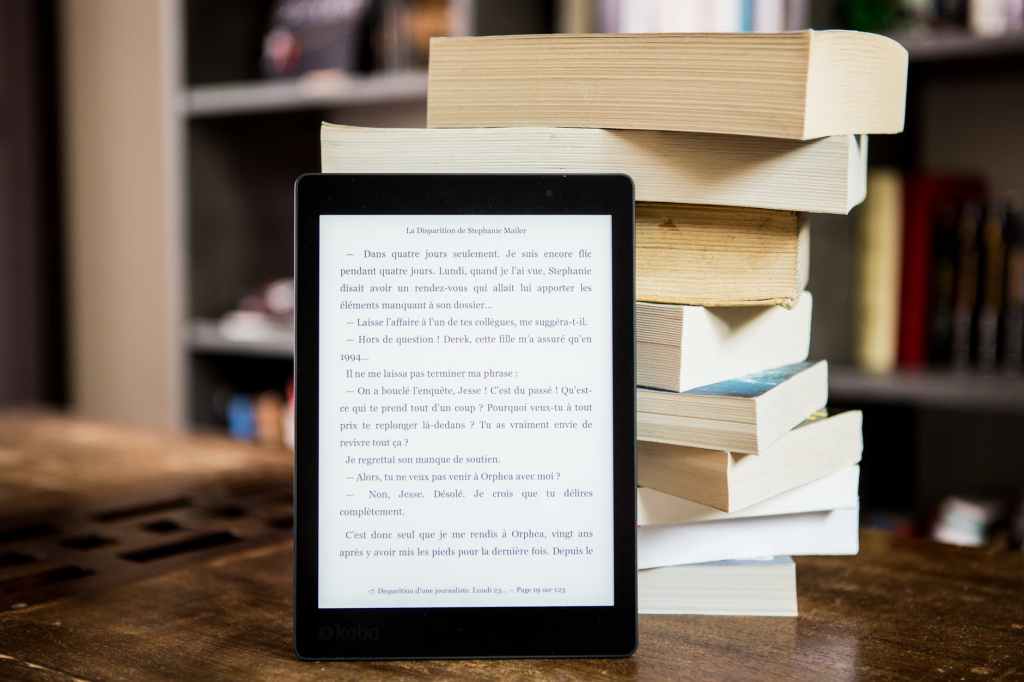
    image showing a kindle device
    Photo by Perfecto Capucine on Pexels.com

    My experience with reading AI fiction and AI non-fiction

    Personally, I haven’t read AI fiction, as I’m very careful with the books that I acquire through online platforms. But I’ve come across with one or two non-fiction books, likely purchased at an average of 0.99 cents, promising to be the holy grail to learn subject X. If these non-fiction books had been written by a real person, chances are that twenty pages of content could have been told in one page, the most. They are overly repetitive, mostly make no point, and/or are filled with irrelevant content. No wonder the community of writers looks at the use of AI with disdain.

    Using AI for editing

    But I don’t. I’m starting to use AI to help my writing. But wait, don’t leave the post now if you’re a fellow writer. Let me clarify: I don’t use it to write. I use it to overcome grammar and sentence structure issues. In other words, I don’t ask chatGPT to write something for me. I do the job—I write first, and when the round of review comes and I come across a sentence structure I’m not happy about, I ask chatGPT “suggest improvement of this text ….”.

    Image showing a woman writing on her laptop
    Photo by Vlada Karpovich on Pexels.com

    Do I replace my text with the AI suggestion? No, not at all. To be honest, I don’t use around 80% of the suggestions. ChatGPT is too repetitive and makes up information that is not relevant to my story at all. But in its suggestions, I find certain wordings and structures that are useful in around 20% of the times.

    Telling when a text is AI written

    If I were to ask chatGPT to do all the work and to write for me, only to review and adjust later to match my voice, it would be like rewriting it from scratch. I found out that whatever default style chatGPT uses, it has these characteristics:

    • It tells a lot instead of showing (tell vs. show)
    • It’s overly descriptive
    • It exaggerates and there’s too much wordiness.

    Image showing a person writing over a notebook with a cup of coffee.
    Photo by Lisa Fotios on Pexels.com

    How to use AI in the editing process

    If my text says:

    Camila frowned hard as she stared at the dog,

    And I tell the AI tool to improve it, chatGPT suggests:

    Camila's brows knitted tightly, her frown deepening as she fixed her gaze on the dog. Her lips pressed into a thin line, and her eyes narrowed, reflecting a mix of confusion and unease. Something about the dog's behavior—or perhaps its presence—clearly unsettled her, and she couldn’t look away.

    Text I copied from ChaGPT.

    Clearly it’s not a bad piece of text, and sometimes writers who struggle with description might find the AI suggestions tempting. But can you imagine this type of prose in every single paragraph? It would be the most annoying reading ever.

    Let’s analyze it deeply, sentence by sentence:

    Camila's brows knitted tightly, her frown deepening as she fixed her gaze on the dog.

    First sentence is good.

    Her lips pressed into a thin line, and her eyes narrowed, reflecting a mix of confusion and unease.  

    The portion that says “reflecting a mix of confusion and unease” is a “telling” prose. There’s no need for these extra words. The description of the lips and the eyes are enough to reflect that she was feeling confusion and unease.

    Something about the dog's behavior—or perhaps its presence—clearly unsettled her, and she couldn’t look away.

    It’s an acceptable sentence. But how can AI tell this is actually happening in my story? Maybe Camila wants to look away. Maybe the dog broke a lamp and the staring is more related to scolding the dog rather than that “unsettling dog’s behavior”. This is where AI makes things up.

    In summary, if I was looking to improve my sentence, I would probably take into account some words suggested in the first sentence—and that’s all. I would have discarded the rest. Trust me, there will be many instances where I will reject all of the AI’s suggestion.

    Image showing a person writing on a laptop.
    Photo by Burst on Pexels.com

    But is it worthy then to use AI?

    I think it is. When we, writers, are in the second or third rounds of revision, sometimes we get stuck with some paragraphs that don’t sound right, even though they are grammatically correct. AI suggestions can help us get out of that situation and improve our work.

    Do I use AI when working on the first draft of a manuscript? No—short answer.

    For me, the first manuscript draft is your essence as a writer. Here’s where you tell your world about your characters, your story, and you’re writing style. At this stage, you explore your imagination and creativity. If AI does this for you, then you’re not a writer, in my opinion.

    Conclusion

    I hope this blog post is helpful to those writers who are VERY reluctant to using AI. Of course, this is a personal decision, but as a writer who struggles in the rounds of revision, I have to be honest and admit that I use chatGPT to help me unlock potential uses of the English language. I don’t feel shameful about that because I know that 100% of the characters, the story, and the writing voice are mine.

    What do you think about this?
  • Resiliency at Covid-19 times

    I know this is a writing blog, but it is hard to be a writer without acknowledgment of what is going around us. These past days have been hard. It is no longer other people dying of Covid19 but people that you already know 🙁 and happening to closest people, the cousin of my closest friend, the uncle of another friend, a friend of my mom and so on 🙁

    Photo by Evelyn Chong on Pexels.com

    Never in my life, I’ve been trying to do all this meditation, self-help, and motivation routines. The truth is that without them, I would be going into a depressing mode most certainly. It is very hard to find the energy and the will to keep on going without thinking about all deaths and struggles that surround you. It is no longer happening to other people but to people around you 🙁 and you begin to understand the nature of this pandemic. We can’t escape it.

    I mostly exaggerate when washing hands, wearing masks, and all that stuff, but did I wash all the tiny corners of that package or that surface that probably was in contact with somebody that was sick? Are the people around me taking the same measures? If not, how much can I avoid it on my own? Will any of my beloved ones get sick? Will they survive? My Mom is at high risk. She is 70 years old, still going to her office from time to time, has high blood pressure and she is an all-life smoker. What will happen if she gets sick? These are the many questions that I do myself every single day. I’m on work vacation at the time of writing this post and had too many personal projects to work on, but keeping my spirit up during these days has been though. Life will never be the same, neither vacations.

  • Writing in a bad year

    2019 has definitely been a year to remember. Two dear aunts, sisters from my Mom, passed away. My beautiful dog, Dana, who was with me for more than 14 years, also passed away. There was a fire, caused by short circuit on the TV plug, that devoured my Mom’s room and almost killed her. My closest aunt had an accident with a huge wardrobe falling and splitting her head badly. My country went into political turmoil for almost 3 weeks, with almost a civil war in the making. Mobs of delinquents attacked people on the street, beating them to death, setting on fire everything they found, including houses. Three weeks I deeply wish nobody goes through anywhere in the world, days we lived in panic, enclosed in our homes or trying to battle attackers when there was still no police to defend us.

    Photo by Pixabay on Pexels.com

    The year is almost coming to an end and although there have been good times in this year, good trips in the middle of everything and other experiences, I cherish this year as the personal growth has been insurmountable.

    I’m heading at this moment to WordCamp Guayaquil where I will be speaking about “Wanting to be a blogger and finding time,” in other words about time organization. I would have never imagined a couple of years ago talking about time manage skills. Me, the person who used to procrastinate as nobody else and could never find time for anything. I wondered a couple of times if I’m the best person to talk about this, but I feel I’ve grown so much in the last years, specially in this year that I thought I would share my experience.

    Photo by Leo Cardelli on Pexels.com

    Writing and working full time has been a challenge. I must be honest I only commit an hour and perhaps an hour and a half, the most, to working on my current manuscript. I haven’t been the best at keeping this schedule every day. There are days when I don’t write, and even weeks. But I haven’t give up. It doesn’t matter how slowly I move forward. I’ve committed myself to keep doing it.

    At this point, my goal of finishing the review of my manuscript by the end of the year doesn’t look promising. Probably, I’ll end it by the end of January or even February of 2020. But it doesn’t matter, I’m still doing it, little by little, step by step. Besides, I don’t have an agent or a publishing contract that says I have to finish by a specific date. It is true I wish I could have it by the end of this year but nothing will happen if I don’t.

    Photo by Lisa Fotios on Pexels.com

    In a bad year, I could have just plainly written little. My attitude could have been different. Perhaps that would have been the case when I was younger. But my determination has gotten bigger this year. Without it, I would probably have never finished reviewing the first round. I would have never gotten great beta readers and the inspiration the keep writing. Somehow a bad year has make my desire to keep on writing stronger. It has kept me afloat amidst all issues, knowing that there is a greater goal out there for me and that I’m still moving towards it.

    Life is about going through problems and obstacles, otherwise it would be pretty boring and we would never grow. Writing on a bad year has actually been a positive experience and I wouldn’t change it for the world. Writing on a bad year has proved to be good.

    Photo by Bich Tran on Pexels.com
  • Editing methods

    After a general revision of my manuscript – where I wanted to make sure that the story, plot and characters made sense – I’ve started a new round of more in depth revision/editing of my writing. To be honest, I wasn’t actually looking to this stage. I still have memories of endless rounds of editing in a previous manuscript that didn’t end that well (that project is now on standby for the moment). I remember spending a lot of time on individual paragraphs, re-writing the sentences, changing words, sentence order, etc. and making the editing process so long that I began to hate it.

    Photo by Juan Pablo Arenas on Pexels.com

    With this new project, my approach has been very different from the beginning. I had learned lots of lessons from my previous project and I didn’t want to make the same errors on this one. Writing the first manuscript was fun. It took me a lot of time but the process was enjoyable. The story and characters acquired a life of their own which helped me sustain the story until the very end (and unexpectedly with a chance for a second part if some day I decide to do it). I focused first on making sure that the characters were strong and that the story made sense. Later I would worry about the writing. And now the time has come.

    Photo by Moose Photos on Pexels.com

    I began editing a couple of weeks ago and surprisingly it hasn’t been that bad. I’m not hating it and I still feel energized enough to continue this lengthy process. For this editing round, I’ve set up a list of what I really want to check in my writing:

    • Punctuation
    • Verbalization – that I’m using strong verbs and that I’m avoiding the “to be” verb whenever possible as I know it makes writing weak. Although, sometimes it makes more sense than any other verb.
    • Adverbs – Following the advice from many writing books, I’m trying to avoid them as much as possible.
    • “Excess” words – detecting those words that don’t add much to the writing, like “very”.
    • Passive voice – trying to get rid of this as much as possible as it also weakens the writing – although not always possible.
    • Order of sentences in a paragraph – Are they in the best order? Could I improve the order.
    • Connection with next paragraph – Does the paragraph ends well? Can I connect the paragraphs better, making it more interesting and prompting the reader to continue reading further?

    There are many other “factors” to consider when editing your own writing and I know I haven’t considered all of them. But I wanted to only take into account the ones that I consider the most important ones. I didn’t want to re-write all the words thinking of all possible grammatical issues/improvements and fall into a never ending process again.

    Aside from that, I’m using three tools to help me with the points above:

    http://www.hemingwayapp.com/ to help you detect passive voice, adverbs, long sentences, etc

    https://www.naturalreaders.com/online/ – this tool reads out loud your paragraphs. It’s very helpful as listening a voice read your text makes it easier to detect if the writing sounds good, if there are some weird structures, and if the sentences could be ordered better.

    Grammarly – I’m using the free browser version that detects misspellings and basic punctuation and grammatical structure. It sort of double-checks the same as the Hemingway App. There is a paid version but too expensive for me right now.

    Do you know of other free tools that might also help in this process?

    What else do you consider that it’s important to check when revising your writing?

    Photo by Negative Space on Pexels.com

  • Scheduling your priorities

    I didn’t want to write about this until I knew what I was doing. I still don’t, but I’m improving. For years, I’ve tried to build a good daily writing habit. There had been periods of time, months, when I’ve written almost every single weekday, and then months when I have written nothing. How can I achieve a good writing habit that is sustainable?

    I want to be able to write every single day or at least 85% (6 of 7 days) as a permanent habit. It doesn’t matter if I only spend 30 mins, 1 hour, or more, I just want this habit to be ingrained in me, in my daily tasks, like taking a shower. I could skip one day, like those rare circumstances when you skip a shower, but more than one day?

    black shower head switched on
    Photo by Pixabay on Pexels.com

    For the previous months, I’ve been doing a re-engineering of this process, wanting to make the most of my time: balance my work with writing, personal activities, hobbies, and getting a proper rest. I’ve been failing for years, but I feel that I’m taking a sustainable approach now. How? Simple: I schedule my life priorities first, and one of them is writing.

    I’ve scheduled writing for the past months for the early mornings, as the first thing I need to do when I wake up. It hasn’t been easy and I’ve completely missed the process during my vacation. But the key is to understand that this is a life priority; it should be scheduled and not added for “when you have time”. Because let’s face it, if you leave writing for when you’ve manage to organize the rest of your day, your work, your personal life, and everything else, you won’t find time for writing or you will be too tired for it.

    clear glass with red sand grainer
    Photo by Pixabay on Pexels.com

    I’ve heard that in order to make a habit, you have to repeat it twenty-one times. I don’t know if that is the magical number, but from personal experience, at least you need a whole month. My “habit making process” has been taking me several months so far. I still struggle with it, but I’ve noticed one change and it’s beginning to be forged in my mind, like taking a shower. I wake up thinking about writing and that is good enough to care for it and schedule it. I know I’m going slow –  and sometimes I can only give it thirty minutes per day – but I feel that at least half-an-hour every single day will get me somewhere as opposed to no single writing for the whole week.

    Any other tips I can give? To support this habit, I’ve started to meditate. I honestly suggest it. It recharges you, and it’s the only time that you actually have for yourself. If you’re not good at this or don’t know how to start, you can take a look at the Calm App.

    woman meditating on rock near body of water
    Photo by Nathan Cowley on Pexels.com

    Any other good tips for building a writing habit?

  • TED Talk: How boredom can lead to your most brilliant ideas

    Manoush Zomorodi talks about a developed app-experiment that challenges its users to be “Bored and Briliant”.

    As writers, we suffer from time to time from “writer’s block”. We find ourselves “procrastinating” and using/losing time only to check emails, social media and so on. Suddenly we find ourselves out of “ideas” or far from of a clear mind to write. The following talk might give you a different perspective:


    What do you think about this talk? Do you think you can find writing inspiration during your bored times?

  • Delivering Happiness

    Well, it took me some time to write this post. I was kind of busy preparing my exit at my current job and readying for my new job. I will start in November working as Happiness Engineer for Automattic (the company behind WordPress.com and many other web solutions that seek to make the web a better place). So of course, I’m thrilled. The title of the position is very accurate actually. Happiness engineers deliver customer support but also go beyond that; they make sure WordPress.com users (mostly) go through a smooth and happy experience as they build and manage their blogs or sites.

    automattic_wp

    Having the opportunity to help people with their sites’ issues and provide them advice, tips, and tools to make things better are exactly the tasks I enjoy the most. Anticipating their needs and contributing with their blogs’ journeys is fantastic. Of course, we can’t solve everything. And I really wish we could, but being there to support and empathize with them is what makes this a great job. We deliver a little bit of happiness in each of our tasks.

    So, how did I find this position? It was not that easy, and it was a long path. Basically, you need to prove you’re a good match for this company. And how do you do that? Well, Automattic looks for people who’re interested in learning every single day and growing each time more (I love that!). And what better way to know if you’re a good match for them than to “trying yourself”? Yes, you do that. You go through a paid trial so they can assess if you’re a good fit for the company’s culture or not. But this trial doesn’t only work for their assessment, you also get to taste the company’s culture and see if the role is made for you.

    What other characteristics are awesome about Automattic? The company is totally distributed. Meaning that Automatticians (people who work at Automattic) get to work from wherever they are in the world. Living and being from Bolivia, this is certainly a huge plus. (Although, I totally believe the future will be like this). They hire based on what you can bring into the company and not based on where you’re located or if it’s possible to relocate. And let’s be honest, as a passionate traveler, I’m excited about working remotely.

    giphy-4

    However, you can’t only assess a company based on the benefits and your position. You need to hunt for the “totally awesome” career factors. You need to hunt for a company that will push you to grow, learn endlessly, and contribute as much as possible. In the little time as a HE trial, I’ve learned more than what I did in all my career life. Period. I can only imagine how much I will be able to learn once I start working with them. My skills will grow exponentially 🙂 And although many companies push you towards continuous learning, some of them actually limit you without noticing (after all, they want you to make the job for which you were hired and not intervene too much with others’ work). At Automattic, I’m sure I won’t be limited. It doesn’t matter if you don’t have a technical background (like me), your opinion and your work is taken into account. You can even rotate and explore as many areas as you like. 🙂

    So why do I believe this is my dream job? For me working as HE will let me:

    • Help people every single day and at every single second
    • Grow and learn every single second
    • Have infinite possibilities to contribute
    • Have more flexibility to travel and get to know the world
    • Have really awesome perks (Did I mention you get to travel a couple of times a year to meet the team and the company, you get your home office set up – with the best laptop in the market, the chair of my dreams, a huge monitor, a great desk, endless WordPress swag – and so many other perks?)

    I’m super excited. I know the job is going to be challenging (which I look forward to), but at the same time I feel like I’ve received one of the greatest opportunities to have finally the life that I want. I’m also excited to continue writing my books. But the writing journey conditions will be a million times better with a great job supporting me and my family.

    giphy-5

  • 10 Things you should know when you first write a book

    When I started working on my first book, I had the following plan:

    • I would finish the draft in four of five months at most
    • I would make a thorough review of the first manuscript and in one single edition round I would correct everything that is wrong.
    • My beta readers will read it in a couple of weeks and I would rejoice in his/her wonderful comments
    • I would find a great Literary agent in a blink of an eye
    • I would have the book published in that same year
    • I would live from my writing and would travel the world.

    I was naïve. REALLY naive.


    download
    Enter a caption


    This is the second year I’m investing in my first book. I’m still editing it. So far I’ve come to understand the following:

    1. Doing the first draft is by far the easiest and quickest part of the process

    When I finished the first draft, I was so thrilled. I felt I have conquered the world and I could be called a writer. I was so proud of myself. I thought that finally I was making something good with my life, that I was looking towards the future, towards my goals, you get the point…The truth is that writing the first draft is the easiest part. You can even achieve it in one month (If you want to test the efficiency of NaNoWriMo). But rest assured the first draft will not be readable yet. Chances are it will still have lots of plot holes and huge amounts of rewrite to be done.

    images (1)

    2. Planning one round of revision is not realistic at all

    There will be many rounds of revision. It’s hard to rewrite scenes, plot holes, and work on character development while editing your grammar and punctuation at the same time. You’ll probably need another round, and perhaps a third one, etc. Additionally, after your beta readers come to you with feedback, chances are you’ll probably need to change and rewrite many sections of your book which will lead you to another round of sentence structure/grammar review, etc., again.

    images (2)

    3. Leaving your first manuscript to rest for a couple of weeks and even a month is not a bad idea

    I knew about this tip way before I finished my first manuscript. Nonetheless, I was in such a hurry of having everything done that as soon as I finished my first manuscript, I started to edit it on the very next day. I didn’t leave it to rest and breath. My head didn’t have time to clear enough to target my manuscript with a fresh point of view. The result was several pointless rounds of revision until I decided to finally give myself a break and leave the manuscript for a month. During this time, I wrote other short stories, I read more, etc. When I finally returned to my old good manuscript, my mind was fresh and I could detect more issues than in all those previous three rounds. I identified huge gaps where I could improve. If only I’ve done that before my first round of revision… I would’ve probably faced my manuscript with much better criteria from the first edition round.

    download

    4.  Your beta readers won’t give you feedback in a couple of weeks

    I had three good beta readers, but it took time to receive their feedback. You have to take into account that not all of them are available to read your manuscript as soon as you deliver it. Unless you’re paying for a beta reading service, most of these people will be doing you a favor. You’ll probably need to wait until they have time. Not all of them can read books in a couple of days; they might need more time. Not all of them have only your book to read; they might need to put it in their queue of “still to read books”.

    images (1)

    5. Good Beta Readers will say the truth and cause many changes in your book

    Let’s face it. This is your first book ever. You can’t expect to nail a best seller that soon. You’ll need a lot of time,experience, and good listening skills. You need to pay attention to your beta reader’s feedback. And I’m talking about good beta readers, not your mom, your husband, etc., but people who will be able to judge the manuscript and say what is in their minds without any fear of hurting your feelings. You have to acknowledge that as the author of your book, you know how the plot works, you know how characters look in your mind, but sometimes you fail to translate this knowledge into the written world. Chances are you’ll still need to change and rewrite after your beta reader’s feedback.

    download (6)

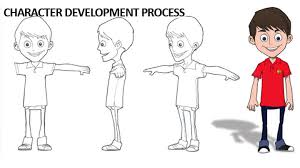
    6. Character development is not achieved at once

    If this is your first book, then you’ll probably struggle with nailing “character development”. Even if you outline characters before you start the book, they’ll probably develop and change as your plot changes. Their behaviors will change depending on how the direction of your books goes or how scenes are improved. Providing a three-dimensional character is harder than you think. It wasn’t until many revisions and feedback that I had enough tools to develop my characters as they should.

    images (3)

    7. Developing your voice doesn’t come so fast

    It doesn’t matter how many books about writing you read and how many writing courses you attend. Developing your voice only comes with practice. Sometimes, you want to obey all writing rules and make your sentences’ structure perfect, but then you find yourself with a boring flat manuscript. This doesn’t mean you don’t need to know the rules. To break the rules, you need to know them first. But you can’t expect to find your writing voice in the first round of writing. Perhaps you won’t even find it in your first book.

    images (4)

    8. Don’t hire any editing service until you’ve received plenty feedback

    I made the mistake of hiring an editing service (which was very good) before I got all the feedback. My third beta reader was able to send me his feedback after my manuscript was already edited by a professional editor. This feedback was very helpful and had lots of good advice plot-wise, which meant I had to do significant changes and rewrite many scenes and even chapters. The result, the professionally edited text was gone. It would’ve been certainly helpful to hire this service after all revisions and feedback.

    download (3)

    9. Consider your first book may not be publishable

    In my plans above, I clearly talk about getting a literary agent, publishing it, and having enough earnings to live from my writing. The reality is different. And the truth is your first book could not be published yet or could not be published at all. You need to accept this fact from the beginning. It’s a learning curve. My mind already has tons of topics to write other books; they even sound more interesting than the manuscript I’m working with right now. Perhaps book two or three will be published. Perhaps my first book will be revisited in a couple of years and later published. At this point, I only care about improving my writing.

    download (4)

    10. This is only your first experience

    Writing a first book is about gaining experience. It doesn’t matter how perfect your book idea is, how charming your characters are, or how beautifully you construct prose, the process is still tricky with the first book. You still need to learn how to handle feedback, how to detect plot holes, how to find your voice, how to make useful rounds of edition, etc. If you take this point of view, I guarantee you’ll find the experience more rewarding than the publishing result. You’ll be more excited about your next projects and you won’t suffer so much if the path of delivering your first book looks too hard. Best of all, you’ll encounter the true meaning of being a writer.

    images (5)

    Cheers!


  • That strange feeling at the end of they year

    As the holidays are about to arrive and people start getting ready for the long holiday vacations, 2016 also strikes in. And of course, new year’s resolutions can be a common topic around this time. Many people here at my work are counting the days for the holidays to start. I’m not. Although, a rest is always well received, I still don’t want 2015 to be over.  I feel like time is going too fast. I still want to make the most of what is left of 2015, even if it’s only a couple of days.

    images (11)

    I know that age and time are just numbers, but in certain ways, they always tick and remind me of my goals in life. This year was intensive, and I did many things during it. I really wanted to have my novel done in 2015. But I’m not there, and I will probably work on it for a couple of months more. In some way, I haven’t met this year’s resolutions and I can’t avoid feeling a little bit sad about this. Moreover, I’m finding it difficult to go back to my book. As you know from previous posts, I stopped writing for more than a month, and now, I find it hard to get back into the writing routine again. If it were me, I would try to finish the novel in these days. But I’m aware it’s not possible.

    Do you usually have this feeling when it’s nearing the end of the year?

    download (16)


  • What good is to travel?

    When I first started writing this blog (2 years already! can’t believe it), my main objective was to build a traveling blog. I’d been following a couple of travel blogs (Barcelona Blonde, Nomadic Matt, and others) that had been fueling my desire for traveling the world and writing about it. But Money and other personal issues made me put a halt to these intentions, settle in one place, and start blogging about something else. I regret nothing. Thanks to this change in plans, I started writing fiction and blogging about it. What a memorable experience it has been.

    But I still travel. I may not be able to sail the world, visit all its continents, and be “on the move” constantly, but I’ve managed to travel quite a bit (18 countries, 44 cities, until now). My travel bucket list ranks high in my life priorities. And since there are some continents that I’ve never been too yet (Asia, Africa, and Oceania – Australia! why are you so far?), my eagerness remains intact. But I can’t complain. If I die tomorrow, I’ve done my fair share of traveling. I couldn’t be most thankful.

    drinkmicro com

    Traveling is a life-enriching experience, unmatchable to any other. And when you write, there’s nothing better to broaden your horizons. And though, I don’t travel as much as I did before, I still try to save as much as possible to do one nice trip per year.

    But what exactly have I learned from traveling?

    • People are the same everywhere. They all struggle; they all do their best. Nobody anywhere is better than somebody elsewhere.
    • There’s nothing better than learning other languages. Even if you don’t master them. It feels nice to say “hello” and “thanks” in many languages. It doesn’t matter if those are the only words you learn. People appreciate when you make an effort to learn at least tiny bits to communicate with them. Keep in mind that they’re in no obligation to know your language.
    • Society restrictions are just that “society restrictions.” Those awful closed-minded standards by which your society apparently rules, end there, in that small circle of your town. When you travel, you realized that nothing of that matters, that you’re limited only by your own convictions.
    • Globalization is here to stay. You can be whatever you want wherever you are.

    What other lessons do you think can be learned from traveling?

    b5d0995e8f80ec3365e1a284eec48308