Category: writers

  • TED Talk: How boredom can lead to your most brilliant ideas

    Manoush Zomorodi talks about a developed app-experiment that challenges its users to be “Bored and Briliant”.

    As writers, we suffer from time to time from “writer’s block”. We find ourselves “procrastinating” and using/losing time only to check emails, social media and so on. Suddenly we find ourselves out of “ideas” or far from of a clear mind to write. The following talk might give you a different perspective:


    What do you think about this talk? Do you think you can find writing inspiration during your bored times?

  • Is it time to start the manuscript from scratch?

    It has been several months since I haven’t posted a blog post. And today was the day that I decided I would not go to bed until I finally did it. Work and travel are the excuses in general – and I won’t go to discuss them more since I want to jump into blogging pools as soon as possible without lamenting why I didn’t blog these months.

    My manuscript continues to be a manuscript. However, it seems it was for the best. After going through multiple reviews and editing rounds, I decided it needs a complete makeover. The story is nice, the theme topic is interesting, but it is not the book that I think it could be. I’ve struggled so much to keep the same characters and to bring to life all situations in the book, but I reached a point where I need to acknowledge that my characters might not strong enough, neither interesting enough and some situations feel awkward and forced into the plot. Maybe leaving the manuscript to rest for a long time was a good idea after all.

    download (2)

    At this point, I’m not completely sure how to target this. Should I work on revamping the book, adjusting situations, and changing the characters over the existing framework, or just start from scratch?

    maxresdefault (1)

    Starting from scratch sounds good, but if I were to start a new complete book, then why insist on this “theme topic”? I have a couple of other better theme topics to explore. However, I cannot simply give up almost two years invested on this manuscript. Somehow, deep inside, I still want to rescue it and rescue all the time invested in it.

    I guess I relate to this:

    Have you experienced something similar? Any Advice?

    start

  • TED Talk: Why you will fail to have a career?

    Loved this talk! For all of you who still hadn’t found out your passion or know what is your passion but are too afraid to pursuit, then this is the talk for you!

    Actually, this is the talk for all the people who want to have a goal in life and achieve it!

    Professor Larry Smiths presents, in quite a peculiar way, a talk that changes lives and inspires. He is a professor of economics at University of Waterloo. A well-known storyteller and advocate for youth leadership, he has also mentored many of his students on start-up business management and career development. The most notable start-up he advised in its infancy is Research in Motion (RIM), maker of the BlackBerry.

    Invest 15 minutes in this talk and it will be an investment for life!

    [ted id=1384]


  • The editor in me: Spam editing

    I usually never get spam emails. My email account filters them nicely to my spam folder. But today somehow the email below managed to get into my Inbox:

    From: Jon W. Rosborough <rrjon4433@gmail.com>
    To:
    Sent: Friday, 22 July 2016, 7:25
    Subject: YOUR URGENT RESPOND IS NEEDED‏‏

    Wilmington International Airport
    1740 Airport Blvd. Suite 12
    Wilmington, NC 28405

    Compliment,

    Sorry for the delay in sending this message, We were checking over some files and packages in the office and we discover an ATM CARD which was addressed on your name, (I think it is Contract/Inheritances funds) I believe you can remember a dealing that has to do with some cooperate body or individual about this said funds to be deliver to you through an (ATM CARD) but I do not have any idea why it was on hold at our Airport up-to-date.

    So we contacted the Authorities and they asked us to get in contact with Senator Richard Burr, to get an approval to figure out what was in the package, After checking over the ATM CARD, we discover a total sum of $5.5,000.000 ($5.5 Million USD) through the router figurative machine who check on balance through the number on a ATM CARD, so we report back to the Senator Richard Burr and we were asked to deliver the package to you from this office. (Senator Richard Burr, City Hall, Room 222 181 South Street Gastonia, NC 28052) We need you to reconfirm your full name and  Home address to see if it will show on the package we have here. And also if you want your ATM CARD to be delivered to you immediately, it will cost you just only $95.00 which is the charges for the delivery clearance certificate of your ATM card, meanwhile your ATM CARD is save with our securities service so please have that in mind. The information above is where the ATM CARD was stopped at Wilmington International Airport North Carolina.

    THIS MAIL IS NOT A SPAM OR SCAM MESSAGE, WE CAN DELIVER YOUR ATM CARD TODAY IF WE RECEIVED REPLY FROM YOU, I HAVE INCLUDED MY NAME AND MY SSN: 768 67 6797 FOR YOU TO KNOW THAT I AM FOR REAL AND NOT A SCAM IF YOU NEED TO VERIFY ME, SO STOP DEALING WITH ANY BODY IF YOU HAVE SOME IMPOSTERS YOU ARE DEALING WITH AND FOCUS ON GETTING YOUR ATM CARD HERE IN WILMINGTON INTERNATIONAL AIRPORT, YOU HAVE BEEN WARNED NOT TO DISCLOSE THIS DEAL TO NO ONE OR ELSE TERMINATION FROM THE HOUSE OF SENATE WILL PENETRATE ON YOUR FUNDS DUE TO THE FACT THAT YOU WERE TRYING TO CONTACT ANOTHER PERSON TO FIND OUT WHAT THIS IS, SO NO MISTAKE OF SUCH WILL BE TOLERATED.

    Mr. Jon W. Rosborough
    Director

    As I read the email, my eyes hurt noticing all punctuation, grammar, and general writing mistakes. Since it’s Friday and I was in the mood to do something funny:

    I answered the following (I doubt they’ll ever reply me):

    Hi,

    Thanks but this not my card. I picked up mine last month at Dulles International airport. My deal was bigger: it involved 10 million $us. But I wish you luck finding the real owner. However, you really need to polish your writing here. Below is a sample of my editing services. If you need to polish other emails like this one, send me as soon as possible to my paypal account the small amount of $us 250. I’ll be happy to assist you.

    Best regards,

    Lucy

    Wilmington International Airport
    1740 Airport Blvd. Suite 12
    Wilmington, NC 28405

    Compliment (what is the compliment? to address a formal email use the following words: “To whom it may concern”, “Dear xxx”, etc.)

    Sorry for the delay in sending this message, (wrong punctuation. Period) We were checking over some files and packages in the office and we discover (past tense “discovered”) an ATM CARD which was addressed on (wrong preposition, use “to”) your name, (I think it is Contract/Inheritances funds)_(missing period here) I believe you can remember a dealing (a “deal”) that has to do (“is related” to?) with some cooperate body  (there is no such things as “cooperate body”) or individual about this said funds to be deliver (passive voice, use: “delivered”) to you through an (ATM CARD) (no need of parentheses here) but I do not have any idea why it was on hold at our Airport up-to-date. (poor choice of words, perhaps “until now”?)

    So we contacted the Authorities (no need to capitalize) and they asked us to get in contact with Senator Richard Burr, (misplaced comma) to get an approval  to figure out (poor choice of words, perhaps to “find out”, “research”, etc.) what was in the package, (wrong punctuation here. You need a period) After checking over the ATM CARD, we discover (use past tense here, “discovered”) a total sum of $5.5,000.000 ($5.5 Million USD) through the router figurative machine (there is not such machine…) who (if this is a machine performing the operation, then you need to use “that”, not “who”) check (past tense: “checked”) on balance through the number on a (change it to the definite article “the”) ATM CARD, (poor writing here, this sentence is too long, you need to put a period a start another one) so we report (past tense: “reported”) back to the Senator Richard Burr and we were asked to deliver the package to you from this office. (Senator Richard Burr, City Hall, Room 222 181 South Street Gastonia, NC 28052) We need you to reconfirm your full name and Home (no need to capitalize here) address to see if it will show on the package we have here. And also (it’s poor writing to start sentences with conjunctions such as “and” followed by the connector “also”) if you want your ATM CARD to be delivered to you immediately, it will cost you just only (poor writing, avoid these words) $95.00 which is  (“are”, you are referring to the “charges” which is plural) the charges for the delivery clearance certificate of your ATM card, meanwhile your ATM CARD is save (passive voice: “saved”) with our securities service so please have that in mind. The information above is where the ATM CARD was stopped (“was stopped”? do you mean “detained”, “held”…) at Wilmington International Airport North Carolina.

    THIS MAIL IS NOT A SPAM OR SCAM MESSAGE, (wrong punctuation, you need to use a period) WE CAN DELIVER YOUR ATM CARD TODAY IF WE RECEIVED (you must continue the same structure here and use present “receive”) REPLY FROM YOU, (wrong punctuation, you need to use a period) I HAVE INCLUDED MY NAME AND MY SSN: 768 67 6797 FOR YOU TO KNOW THAT I AM FOR REAL AND NOT A SCAM IF YOU NEED TO VERIFY ME (poor writing, you need to rewrite the whole sentence and use a simple statement such as “…. my SSN to verify that I am not a scan.”), (Period here) SO (Stop using “so”, this is so colloquial,informal) STOP DEALING WITH ANY BODY (this is one word: “anybody”, by the way, you can’t address a person like this, it sounds like a threat and you’re losing credibility here)_ (missing punctuation here: Period) IF YOU HAVE SOME IMPOSTERS YOU ARE DEALING (you really need to check your sentence structure. It’s all over the place and there’s no coherence at all …) WITH AND FOCUS ON (is this a command, a threat? you need to polish your people skills here…) GETTING YOUR ATM CARD HERE IN WILMINGTON INTERNATIONAL AIRPORT, (wrong punctuation, you should use period to separate complete sentences) YOU HAVE BEEN WARNED NOT TO (wrong order of words “to not”) DISCLOSE THIS DEAL TO NO ONE OR ELSE TERMINATION FROM THE HOUSE OF SENATE WILL PENETRATE ON YOUR FUNDS DUE TO THE FACT THAT YOU WERE TRYING TO CONTACT ANOTHER PERSON TO FIND OUT WHAT THIS IS (terribly long sentence with no coherence at all), SO NO MISTAKE OF SUCH WILL BE TOLERATED.
    Mr. Jon W. Rosborough
    Director

    By the way, I’m not Lucy and I don’t intend to charge $us 250. I was just in the mood of laughing today 🙂

    download (7).jpg


  • The TED talk all women should see

    I try to start my workday with a TED talk. I wish I could say I do this daily, but sometimes I can’t. I usually do it when my work energy level is low or when I feel I need motivation to go with the work routine. Today I came across with “Why do ambitious women have flat heads?” by Dame Stephanie Shirley.  The title was enough to call my attention since sometimes when the talk’s title is too predictable, I might just pass it. But this one wasn’t and I’m glad I clicked it.

    Dame Stephanie Shirley had it rough. She was one of the Jewish kids saved by being sent to families in northern England during the Second World War . She grew up in an era where women’s only objective was to get married and have kids. There were scarce work opportunities for them. I work in the software industry. Women in the 60’s didn’t just pursuit that area at all. But one woman did it. And this terrific woman showed nothing is impossible. Yes, there was a programming market in that era, believe it or not. If you want to know exactly how it worked, then you have to check the video.

    Stephanie Shirley went through all the fights my generation didn’t have too. My generation won’t suffer that gender discrimination again. We have it easy. And what are we doing with our lives? We don’t aim high enough. We don’t dream big enough. We don’t do the fights for the next generations.

    I invite you to watch the following TED talk (only 13 minutes of your time but worth your life change).

    [ted id=2223]

  • Being good at metaphors

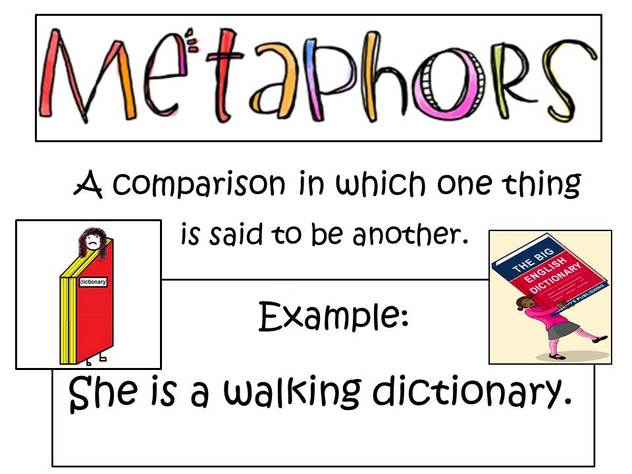
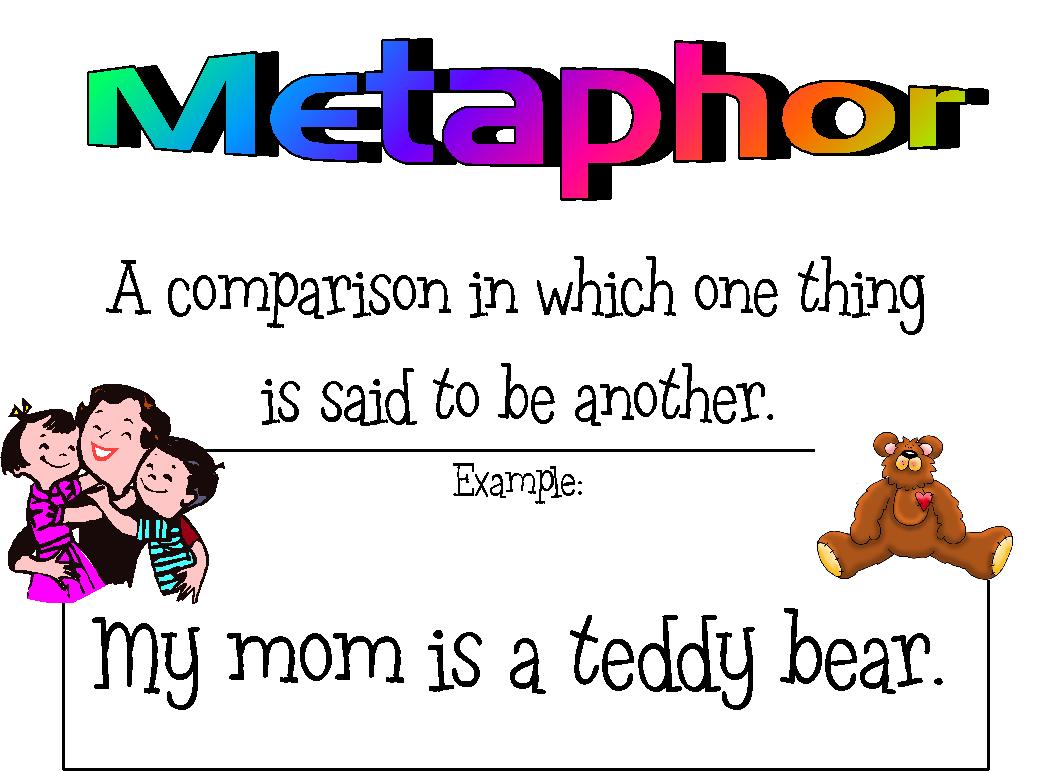
    According to Wikipedia, this is the definition of a metaphor:

    A metaphor is a figure of speech that identifies something as being the same as some unrelated thing for rhetorical effect, thus highlighting the similarities between the two. 

    There’s nothing more beautiful than reading good literature and finding genius metaphors and similes.  As a writer, I find myself wanting to produce my own ones. But reality hits and I realize I’m not good at them. I suck at them.

    met1

    Good metaphors are for the mind of extremely creative people. Imagination prevails in this realm.  And writers have no other choice than to develop this skill. Would that mean I’m not creative enough? or that I don’t have enough experience as a reader and writer to produce clever metaphors? Maybe, It all comes to how I interpret the world. I don’t tend to compare or establish similarities between situations. Would this mean that I’m not programmed to create metaphors? Regarding of the answer, skills can be improved. It’s all about a practice, experience, and finding your creative side. Writers are supposed to navigate towards those waters anyway, aren’t we?

    So what have I done to improve my chance of coming up with clever metaphors? Whenever I’m writing and I find myself describing situations or settings, I pause, close my eyes and try to imagine the situation in my head. What does it look like? Does the person or objects remind me of something? Is there another way to describe it in a more interesting way? Sometimes it works, sometimes it doesn’t. Sometimes I see the situation or setting for what it is and fail to produce a similarity that enables the figure of speech. But practice makes the master. I must persist.

    met2

    Interestingly enough, I found that our creative side comes easier whenever we find our writing voices. That is when we allow ourselves to show our feelings and inner paradigms through our characters. That’s when one gets to be more creative and hence more prone to bringing good metaphors. But our unique writing voice improves with time, practice, and nothing else. When I review my first drafts, I find almost no existing metaphors. In those first pages, my writing is not funny, is not filled with surprises, is not page turning, it is boring. But when I review the latter drafts, I tend to smile to myself more. Not because I’m nailing every sentence, paragraph, and chapter, but because I seem to like my writing each time better. I seem to enjoy my story even more. Metaphors and similes start to appear.

    I might not be “natural” at metaphors. But I got the tools to improve it. I only need practice and persistence. After all, everything in our lives is about endurance, isn’t it?

    And if you’re striving on  understanding metaphors, then you can check out this complete guide with very helpful examples from Grammarly.

    And you, do you have any good tips or methodologies for writing good metaphors?

    met3

  • When old habits are hard to abandon… I’m looking at you Procrastination!

    Procrastination has been affecting my life since I can remember. Fortunately, these last couple of years, I’ve been suffering less of it or else I would’ve never achieved a novel’s first draft (it should be treated as an illness!). But I haven’t gone over it yet. I might now put a daily effort on my writer goals, but it’s not enough yet.

    The one to blame, the Internet.

    I could use the computer and disconnect, but I depend heavily on thesaurus.com I could get a physical copy, but certainly working with the website allows me to easily navigate from word to word’s synonyms and definitions in a matter of seconds, without losing the inspiration or the sentence idea that troubles my mind at that point. I’ve tried using printed copies of dictionaries and thesaurus, but they’re not meant to be used on every single minute. And yes, I still use it a lot. Especially, since English is not my first language, many times I just want to make sure I got the correct definition and that the synonym I’m choosing to use is accurate.

    So if thesaurus.com wasn’t such a good tool and as dependent on internet connectivity as it is, I would probably disconnect from Wi-Fi. But if this website helps my writing, what is the real problem?

    My mind is used to multi-tasking. As a result, thoughts, ideas, and hyperactivity flood my brain almost 24/7 (If mental hyperactivity could be translated into physical hyperactivity… I would be the best athlete in the world… but that’s another topic). My mind doesn’t really switch off until I go to bed. And sometimes, I find trouble sleeping trying to unplug my mind from its endless ideas, worries, etc. So while writing, it’s normal for me to get distracted by other websites; afraid (maybe an excuse word) that I will forget later what I wanted to buy in Ebay, that I will miss what’s going on Facebook, and that there are still tips, blogs, and websites I should be looking at for my next trip (in 2 weeks – Tripadvisor, I’m looking at you!),  I open the browser and proceed to search, look, and verify other issues while in the middle of writing.

    The result: guilt invading me at around 10:00 pm when my eyes are starting to feel the burden of the day and I have to choose between:

    • Giving up and going to bed
    • Continue the writing until almost midnight or until my eyes are hyper red. The direct consequence: I cannot invest any more reading time in bed if I want to give my eyes a proper resting (after all, I spend the whole day in front of the computer)

    Maybe I’m too anxious for vacations these days, and I cannot move forward without taking out of my mind all the issues that should be arranged or known before traveling. Maybe after my holidays, my mind will be clear enough to continue working. But who am I kidding? There will always be a next trip, a next activity, or a next excuse. If I’m going to take the writing career for good, then I’d better eliminate the word Procrastination from my vocabulary. Any advice?


  • Guest Interview: Stuart J. Whitmore

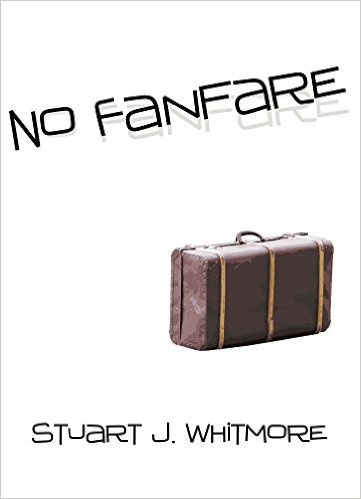
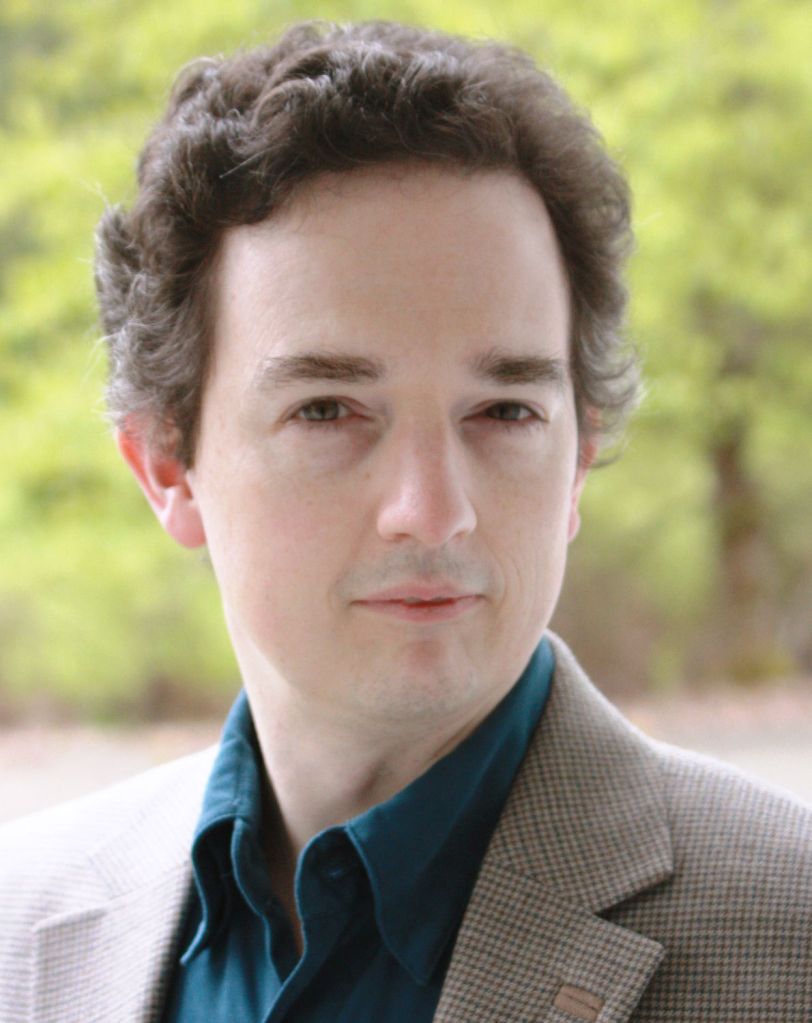
    There are few short stories that I wish had been turned into a novel; No Fanfare by Stuart J. Whitmore is one of those short stories that I wish had been longer. This fantastic well-told story  presents us a topic with so many questions that leaves readers wondering about the endless possibilities. But Stuart not only writes short stories, he’s also written novels and non-fiction. I was lucky enough to interview this talented author and I’m certain his answers will inspire many aspiring writers.

    – Tell us a bit about yourself. For instance, how did you start writing?

    My interest in writing was mostly sparked by winning first prize in a classroom writing contest when I was about eight years old. The prize was $2.00 in cash, which (adjusted for inflation) would be about $10 in today’s dollars. I’m not sure whether the prize or the teacher’s praise mattered more at the time, but I see that as the start of my writing. I wrote my first full-length novel (first draft) when I was 14-15 years old, and another when I was 16-17 years old. I put my writing on hold for awhile to pursue a non-writing career and start a family, but NaNoWriMo helped bring me back to it.
    IMG_0978XSi_acs1

    – How did you come up with the story idea for “No Fanfare”? Would you consider writing more about this topic and even turning it into a novel?

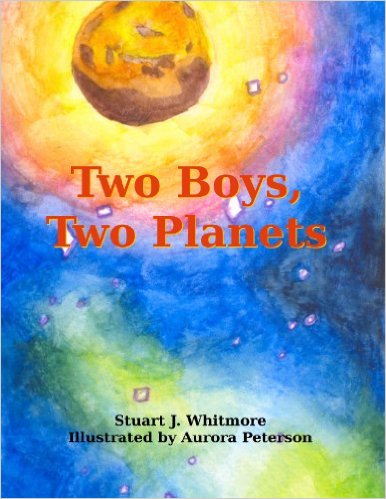
    I like to play around with “what if” questions and see what stories I can generate from various answers. Just this morning I wondered, “what if cats could smell memories?” I give full credit for that strange question to the strange behavior of our cat! While I don’t remember the specifics, I’m fairly sure No Fanfare started in a similar way. What if someone was sent on a secret mission to another planet, and then everybody forgot he was there? (Or, what if someone thought that had happened to them, even if it hadn’t?) I also have a long-term interest in Mars exploration and colonization, which previously inspired my children’s book (Two Boys, Two Planets).

    I haven’t given any thought to writing more to the story. It was always intended as a vignette focused on the initial “homecoming” experience. I tried to offer enough uncertainty that the reader might wonder what to believe. On the other hand, I realize that some readers prefer a more concrete resolution, so I might someday write a follow-up to No Fanfare.

    http://www.amazon.com/No-Fanfare-Stuart-J-Whitmore-ebook/dp/B014CI5QQ8/ref=la_B0058E4TDC_1_9?s=books&ie=UTF8&qid=1456841206&sr=1-9518kfTEkBsL._SX384_BO1,204,203,200_

    – What do you enjoy most, writing short stories or novels? Do you write short stories with the idea they’ll become short stories or do you usually decide this during the writing process?

    Short stories are fun to write, but I love writing long, complex novels. I love all of the world- and character-building that I can do with longer works. Usually when I write a short story I intend for it to be short, although sometimes I’ll start a story without a particular goal for how long it will turn out. With short stories I often want to get a reader to start imagining things about the story I’ve started, with the hope they’ll enjoy filling out their own ending, but sometimes I get in trouble for leaving things unanswered!

    – What is you ideal place for writing? Do you have a special process to get inspired or get in the writing mood?

    I’m very flexible about my writing. I’ve written on public transit, in doctor and dentist waiting rooms, on a bench in a busy shopping mall, as well as quietly at my desk at home. Some writers develop a process to get in the mood for writing, and I often tell myself I should try that, but I never seem to get around to it.

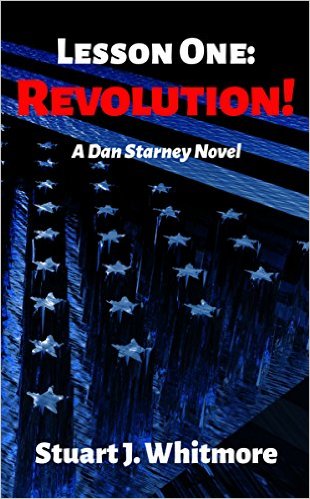
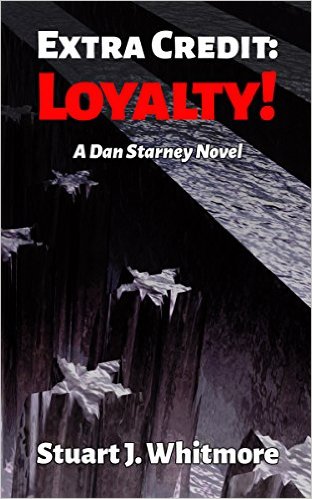
    – Besides the Dan Starney series, are you looking to work on another novel?

    With luck, I’ll be releasing several more novels this year, as well as some novellas. I have four fantasy novels that are shaping up nicely, plus I have a detailed outline (rare for me) for a novel in a different genre, and a concept for a novella series in yet another genre. This year I’m exploring the use of pen names to keep the different genre works separated, although my fantasy novels will still be under my own name. I also plan to write a third book in the Dan Starney series to wrap up that storyline, although I don’t have a timeframe for when that will be released.
    51wLdu1sU8L._SX308_BO1,204,203,200_51OrX-i3maL._SX310_BO1,204,203,200_

    – You also write non-fiction, what topics do you most enjoy writing about? What differences do you find between writing fiction and non-fiction?

    So far my non-fiction writings have been fairly short dabblings in topics, and I haven’t found one where I feel comfortable yet. I like to be able to share information and ideas with people, things that can be useful in the real world, which is the appeal for me in non-fiction. I finder greater joy in writing fiction, but that is perhaps because it is a lot like daydreaming for me, and I am an incorrigible dreamer.

    – What would you recommend aspiring writers? Any tips or writing recommendations?

    One of the biggest obstacles that I see in aspiring writers is getting past the “I’m going to” stage and actually doing. While I enjoy talking about writing as much as anyone, being a writer means actually doing the writing too. There are many ways for people to start writing, whether it is fiction or non-fiction, and I would encourage aspiring writers to seek out those opportunities — contests, anthologies, sites like Wattpad, etc. — and start producing words. This is especially useful if it is done in a way where complete strangers can read those writings. Reactions from people outside of family and close friends can help highlight what works and what doesn’t. To develop as a writer, it is important to learn about writing and read what others have written, but it is even more important to just write, write, write!

    For more information about Stuart J. Whitmore:

    Website: http://www.stuartwhitmoreauthor.com/
    Goodreads: https://www.goodreads.com/author/show/5623681.Stuart_J_Whitmore
    Google + https://plus.google.com/+StuartWhitmore
    Twitter: https://twitter.com/Crenel
    Facebook: https://www.facebook.com/StuartWhitmoreAuthor
    Instagram: https://www.instagram.com/stuart_whitmore_author/
    Snapchat: stuart_whitmore

  • Weirdness: Embracing it…

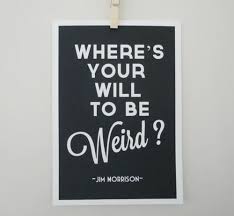
    I always describe myself as “weird”. People around me hear “bicho raro” an expression in Spanish that would mean something like “weird bug.” Some friends are fast to point out that I’m not weird but “unique”. I appreciate their good intetions, but I actually don’t feel bad about being weird. I love being weird. I embrace my weirdness.

    So what do I mean by being weird? I thought it would be to check up the exact definition of the word:

    http://dictionary.reference.com/browse/weird  says: involving or suggesting the supernatural; unearthly or uncanny. fantastic; bizarre.

    http://www.thefreedictionary.com/weird says: Strikingly odd or unusual, especially in an unsettling way; strange. Suggestive of the supernatural.

    But I like the definition of the Merriam-Webster: http://www.merriam-webster.com/dictionary/weird  :

    1. of, relating to, or caused by witchcraft or the supernatural :  magical

    2. 2:  of strange or extraordinary character:  odd, fantastic

    And I’m almost sure the latter is the best reputable source as well.

    When reading the first two definitions, one would see why people react to the word “weird” as a bad adjective. This word for them describes something  not very nice – an “unsettling” word. The expression “weirdo” is a commonly expression used to tag people in a despicable way. However, I insist on relying on the Merriam-Webster definition: “supernatural, extraordinary, fantastic, unusual… etc.” In this interpretation, I love the word; it describes how my usual perspective towards life is.

    I always like to believe I don’t fit social standards as normally other people do. I love going against the trends and against the expected behaviors. Even the way I dress, reflects in some way, who  I am as a person. And if people expect you to celebrate a holiday, I do exactly the opposite. But for me this weirdness is not about being stubborn or trying to make a point, it’s only about behaving according to my feelings and without regard to social expectations. For me being weird is nice. It’s about expressing myself in the most extraordinary fashion, living my life defying any social foolish conceptions. It would be nice for a change people wouldn’t chastise or try to fix weird people.

    images (2)


  • Knowing how NOT to write doesn’t mean knowing how to do it

    Although, I know a lot of what not to do when writing fiction, it doesn’t necessarily mean I know how to do it. As odd as it sounds, it happens.

    Realization came on me these days. I don’t know if this is a normal stage writers arrive to as they spend more time writing, but it’s a hard to accept that the path may be longer that expected. It falls in the area of “the more you know the less you understand…” But how can this be possible? Let me explain it with examples and detail:

    So far, I’ve learned these rules for good fiction writing: (mostly grammar and style rules)

    • Avoid using the “be” verb, try using stronger verbs.
    • Avoid using adverbs or at least decrease their usage as much as possible.
    • Avoid using redundant expressions: “the fact that”, “he is a person who”, etc.
    • Show don’t tell. A hard one to understand but finally sinking into my neurons.
    • Preferred using the simple tag “said” rather than “opined, implored, wailed, etc”. There are times when you don’t even need the tag, you could just use the action performed by the character.
    • Avoid when possible using passive voice, give more strength by using active voice.
    • Vary the length of sentences in a paragraph. Combine short ones with long ones.
    • Vary the type of sentences in a paragraph. Use variety and mix different forms of sentences.
    • Don’t mix POVs in a single scene. It’s confusing.
    • Find the voice of each character. Characters should be sound different from the other. They should be dimensional, not flat.
    • And so many others rules to follow…

    Keep Calm and Follow the rules

    I’ve been reading many books on how to write, how to improve writing, how to create compelled characters, good plots, how to nail punctuation, etc. And in spite of this information, I find my writing is not yet where I would like it to be. My paragraphs don’t read as beautifully as Harper Lee’s or Alice Munro’s. They’re structured well, but I still find them simple, and far from being mesmerizing. I realize this is perhaps due to my scarce experience or the fact that I still need to improve my vocabulary. I realize the above rules are not enough to know how to write.

    I understand these are the natural consequences of trying to find your own voice and that the only solution rests in getting more experience, reading more, and writing more. It gets harder, but that is the point in life, isn’t it? It would be boring if everything would be easy as pie.

    easy as pie

    And you, have you ever reached this realization?