Tag: books

  • Book Trailers for Writers

    When I self-published “The Last Families“, I immersed myself in this new world of book marketing. I have to be honest and tell you that I consulted a person about her marketing services, but I almost felt out of my chair when I heard the high fees. That’s when I knew it would all depend on my own efforts.

    I quickly turned to social media, now the most powerful tool for marketing anything, from products to books to even people. I’ve never been good with social media; in fact, I kind of despise it. But I had to come to terms with it.

    Promoting a book is hard. What are you supposed to say each time you post? Of course, you can come up with a thousand variations of promoting your book cover, as seen in some of my tweets and an abandoned Instagram account for The Last Families. But how else can you promote your book there?

    Photo by Vlada Karpovich on Pexels.com

    Just before publishing my book, I came across this service called “Book Trailers.” If you haven’t heard of it, book trailers are short promotional videos designed to create interest in a book. Similar to movie trailers, they provide a visual preview of the book’s content. They often include elements such as voiceovers, text overlays, music, and imagery to convey the story’s essence and entice viewers to read the book. Book trailers are used by authors and publishers as a marketing tool to reach a broader audience.

    Book trailers? Like movie trailers or teasers? That sounded fantastic. As writers, we always imagine our stories reaching the big screen and fantasize about how they will look. I thought having a book trailer for “The Last Families” would be fantastic. However, it was quite expensive, and I didn’t like the services that I saw online. Most of them were like PowerPoint presentations with random people and subtitles, using free stock media that didn’t accurately represent the book characters or world. Since it was too expensive and not like how I envisioned it, I decided to pass on the option.

    Now, as I try to establish myself in the freelancing world, creating courses, websites, and explainer videos, I couldn’t help wondering if I could create book trailers myself. Well, now there’s AI, and it’s here to stay. Since it’s advent, I’ve been nerding with tools like Midjourney and chatGPT to boost my creativity. AI tools have advanced significantly, and if you spend time mastering them, you can do fantastic stuff.

    So without further ado, this is the book trailer from “The Last Families”:

    This book trailer captured the scent of what I imagined, but more than anything, it conveyed the emotion and tone of my story.

    I also created two other book trailers from two classic novels. I hope Louisa May Alcott and Bram Stoker aren’t being pinged in their graves for having the nerve to create a book trailers for their books:

    Of course, there’s room for improvement. The animations aren’t perfect, and you probably noticed several areas that could be refined. But this is AI and it’s continuously improving.

    A professional video animator would charge hundreds or even thousands of dollars for a professionally animated video with all the precision that you need.

    But I’m a writer, and I understand that self-published authors have a limited budget for almost everything, from websites and social media promotion to book covers, trailers, and other marketing efforts. We can’t afford to pay so much when the success of our book is uncertain. Despite the writer’s talent, sometimes being self-published means being SELF-published, and it’s hard.

    I want to help other authors bring their stories to readers. Book trailers are a magnificent opportunity. While I’m not a professional designer, I have great expertise managing at least a dozen AI tools at professional level. I like to believe that I’m a good storyteller —all writers are. More than anything, I LOVE doing these trailers. You won’t find someone more passionate about bringing a book’s blurb into a short video portraying it.

    If you’re an author or know any authors, I’m offering this service through Fiverr at a very modest fee.

    I work with Fiverr as a platform for Orders and Delivers. By using this platform, you get a guaranteed service, reputable payment methods, delivery only after approval, and immediate access to public feedback. Fiverr ensures secure payments and holds funds until you are satisfied with the delivery.

  • I’m back

    I can’t believe it’s been almost two years since my last post. My day job was intensive, but other than that, I just felt I didn’t have anything interesting to say from a writer’s perspective. My first novel was published, and I entered a sort of writing hiatus. Then, last year, I started to write again. It felt good, but I still didn’t have anything compelling to share on my writing blog. Now, my circumstances have changed.

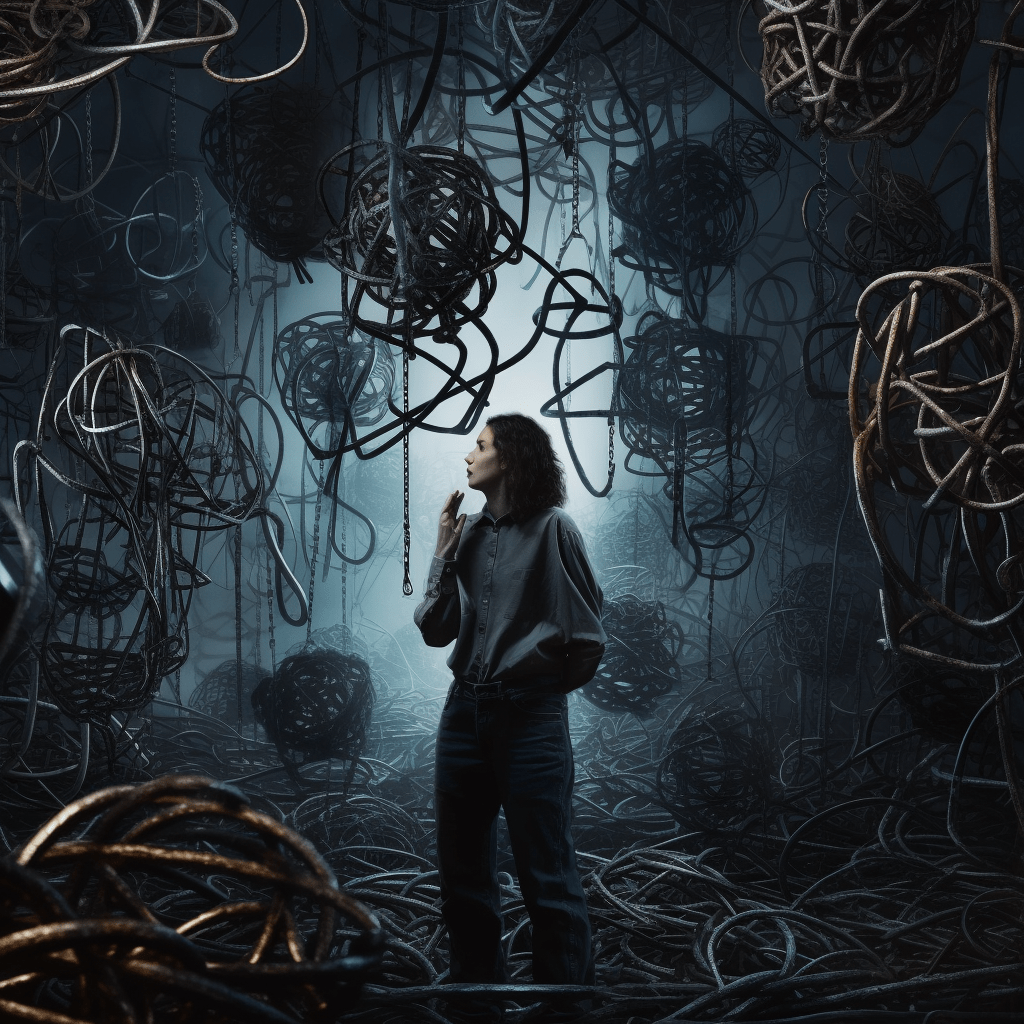
    AI image generated by Midjourney

    I’m in the process of transitioning from a very demanding job to finally having more time for my personal projects, one of which is writing. Last year, I started another fiction novel—a dystopian story. Different from The Last Families, I didn’t want this new novel to have multiple points of view and to be so complex. I wanted a simpler story, but a good one. I’ve already picked a name for this novel, although I’m very far from publishing it. I’m currently in the first round of beta readers and receiving so much good feedback. I’m in no hurry to publish this time. This novel is called “When the World Disappears,” and it is a dystopian story set in Bolivia, in a world following the aftermath of a pandemic (yes, I couldn’t help but get inspiration from Covid 😄 ). It has quite interesting twists. I will soon give more details.

    This writing cycle has been different. Although I’ve only published one book, I’ve learned a great deal from the process of writing and self-publishing The Last Families. These are some of the lessons:

    • Fantasy, and especially high fantasy, can be hard to achieve. If this is your genre, I recommend simplifying the characters and the plot because the world-building of high fantasy is very complex already. While some, like Tolkien, have achieved this art, he devoted most of his life to endless manuscripts that his son then had a hard time compiling. As someone without any descendants, I don’t have the luxury of relying on future generations for compilations. Next time I choose to write fantasy, I’ll aim for a simpler plot.
    AI image generated by Midjourney
    • Multiple points of view are hard—very hard. The only way to achieve them is to analyze each character deeply and be crazy enough (in a good manner) to jump from one character’s head to the other. One of the best pieces of feedback that I got from The Last Families was that I’ve managed to achieve good character development in spite of the multiple points of view, but it was so difficult that I’m not looking to revisit this approach in at least a decade.
    • Get beta readers very soon, and as many as possible. As a first-time writer, I felt very protective of my first novel and very insecure about my writing. Therefore, I delayed sharing it until I had meticulously reviewed it at least a dozen times, thus the long time it took to publish it. When I got a few beta readers—only two to be precise—I was desperate to have my novel out in the world, so I changed very little based on their feedback and continued with the publication process. Now, with my latest manuscript, I’m already in my fifth beta reader at an earlier stage. I’m now very open to change and feedback. With more beta readers, I’m also assembling a team of people who will be able to support me during the book launch.
    • Your plot doesn’t need an abundance of twists or complexity. This new novel is a shorter, nicer story with some surprising twists, but not so complex that I can’t describe it. When I pitched The Last Families to publishing agents, it was so hard to articulate a pitch letter. I couldn’t summarize the multiple points of view and the plot in 2-3 paragraphs. It was simply too hard. When the concept is so confusing, it’s hard to sell the idea. I didn’t like it when people asked me what my novel was about because it was too difficult to explain. Now with “When the World Disappears,”  I can easily describe it, and I feel it’s easier to sell it not only to agents but also to readers. It’s far simpler to promote a work when the purpose and vision are clear.
    AI image generated by Midjourney

    These are just a handful of the lessons I learned with The Last Families. I don’t regret the process in this book, though. I still love my first fantasy book, and I’m planning to get a second edition and a Spanish translation later this year. But I’m determined to approach things differently this time, and I’m overly excited.

    What do you think about these lessons?

  • Scheduling your priorities

    I didn’t want to write about this until I knew what I was doing. I still don’t, but I’m improving. For years, I’ve tried to build a good daily writing habit. There had been periods of time, months, when I’ve written almost every single weekday, and then months when I have written nothing. How can I achieve a good writing habit that is sustainable?

    I want to be able to write every single day or at least 85% (6 of 7 days) as a permanent habit. It doesn’t matter if I only spend 30 mins, 1 hour, or more, I just want this habit to be ingrained in me, in my daily tasks, like taking a shower. I could skip one day, like those rare circumstances when you skip a shower, but more than one day?

    black shower head switched on
    Photo by Pixabay on Pexels.com

    For the previous months, I’ve been doing a re-engineering of this process, wanting to make the most of my time: balance my work with writing, personal activities, hobbies, and getting a proper rest. I’ve been failing for years, but I feel that I’m taking a sustainable approach now. How? Simple: I schedule my life priorities first, and one of them is writing.

    I’ve scheduled writing for the past months for the early mornings, as the first thing I need to do when I wake up. It hasn’t been easy and I’ve completely missed the process during my vacation. But the key is to understand that this is a life priority; it should be scheduled and not added for “when you have time”. Because let’s face it, if you leave writing for when you’ve manage to organize the rest of your day, your work, your personal life, and everything else, you won’t find time for writing or you will be too tired for it.

    clear glass with red sand grainer
    Photo by Pixabay on Pexels.com

    I’ve heard that in order to make a habit, you have to repeat it twenty-one times. I don’t know if that is the magical number, but from personal experience, at least you need a whole month. My “habit making process” has been taking me several months so far. I still struggle with it, but I’ve noticed one change and it’s beginning to be forged in my mind, like taking a shower. I wake up thinking about writing and that is good enough to care for it and schedule it. I know I’m going slow –  and sometimes I can only give it thirty minutes per day – but I feel that at least half-an-hour every single day will get me somewhere as opposed to no single writing for the whole week.

    Any other tips I can give? To support this habit, I’ve started to meditate. I honestly suggest it. It recharges you, and it’s the only time that you actually have for yourself. If you’re not good at this or don’t know how to start, you can take a look at the Calm App.

    woman meditating on rock near body of water
    Photo by Nathan Cowley on Pexels.com

    Any other good tips for building a writing habit?