Tag: inspiration

  • The myths of daydreaming

    Looking back: The Daydreaming years

    On 2013, more than ten years ago, I wrote a post titled Why daydreaming with open eyes is actually good… Looking back, it serves as a good example of how people can change over the time. This change isn’t about core values, which should remain steady in a person, but rather about one’s approach to life.

    Back then in this post, I fully embraced the time that I spent daydreaming. I remember it very vividly when I used to daydream constantly. At that time, I had a job with a lot free time. My daily commute gave me plenty of moments to reflect. I had time to lie back, relax and just daydream.

    I imagined endless possibilities: what if I had chosen a different career? What if I had been born in a richer family? What if I had the looks of a model? What if I had been born in a different country? What if I had had blue eyes? Then came the future what ifs: If I win the lottery, I would by this and that. If I traveled around the world, I would visit these places. If I had kids, I’d raised them like this. If I become a famous writer, I would do this and that. You get the idea.

    An image depicting a woman sitting in a swing thinking, daydreaming

    I think most of us have gone through a phase like this at some point in our lives. I might indulge in daydreaming occasionally, but now it’s rare. I no longer see it as a good thing. I don’t need to reimagine the what ifs of the past because I understand I can’t change that past anymore. I don’t spend time imagining the what ifs of the future because I know that the only way to make those happen is to through action.

    The Shift: From dreaming to Doing

    I’ve changed a lot. I was a daydreamer but also a big procrastinator. Looking back, I would even call myself a lazy person back then. Those were the years in my life when I dreamed a lot but accomplished little. Now, I stay highly active. I no longer procrastinate and dedicate my time to multiple projects.

    I organize a local WordPress community and participate in a Toastmaster club where I give speeches. I run four blogs and I’m currently taking at least two courses on Coursera. At any given time, I’m learning at least one new software. I manage two YouTube channels where I produce and create my own content, I’m studying German. Beyond that, I have a goal of reading at least three books per month and I try to dedicate some time to learning how to draw and paint.

    scrabble blocks that say If not now, when

    Most importantly, I have one finished manuscript that I’m currently seeking for representation and I’m working on the translation of a previous one. It sounds like too many activities going on, but I feel happy because they lead me to where I want to be. I know I’m working on most of my goals.

    A new Mindset: Action over Daydreaming

    Do I have time to daydream? Barely. Do I think it is good? Not so much. Rather than aimless daydreaming, I think it is best to visualize your goals and dedicate time to do all the steps and tasks that you need to achieve them.

    People change. They do a lot. A decade ago, I often felt sad and unmotivated. Now, I have a completely approach to life. People can improve and it’s not related to the people and circumstances that surround you. It comes from maturity and the drive to improve.



  • Reviewing, plotting and just writing

    Plotter or pantser

    When I started writing, I found the question about being a “plotter or a pantser”. Plotter would be the person that plans the story before they write and a pantser would be the person that only lets the inspiration guide and build the story as they write. Initially, I was sure I would fit the plotter role, I wanted to set up everything correctly before starting to write. It didn’t work that well. As soon as I started to write, characters acquired life and different scenarios/events invaded my mind. I remember thinking then that I was definitely a pantser and welcomed the idea of getting inspired as I wrote. I ended my first manuscript of my first project, ditching the plotting and welcoming the pantsing.

    The end result was not the best. After some rounds of feedback and self-revision, I found out that the story had many holes in it. The story was weak and it wasn’t working as I wanted. I started to re-shape the story, changing chapters, deleting scenes, adding new plot twists, etc. But after several rounds, I still was unhappy with it. Now that I look back, there wasn’t a time when I totally felt confident with how the plot evolved.

    people coffee meeting team
    Photo by Startup Stock Photos on Pexels.com

    Editing while writing

    Then comes editing. When I started to write, without any previous experience, I reviewed/edited my reading after a couple of paragraphs or even after a single paragraph – trying to get the perfect grammar and writing. That didn’t last. This method certainly cut my inspiration and it would take me ages to finish a single chapter. Then my first NaNoWriMo came and I thought that this was the opportunity I needed to be able to end my first manuscript. And I sort of did it. I didn’t finish it, but I learn how to sit and write without giving a look to previous paragraphs. Editing would come later.

    The result wasn’t the best either. There was terrible writing everywhere – not acceptable for requesting feedback. I had to go through a couple of rounds of editing before it was presentable. Those two/three rounds took me a lot of time, probably more than a month. And I really hated them.

    adult books business coffee
    Photo by Burst on Pexels.com

    What I found out this time

    It was trial an error. I still did a couple of mistakes when I started to write my second project. I initially tried to start as a pantser – my objective to write until the manuscript ended and already dreading the rounds of revision in advance. But I already got a feeling that the result would be a plot filled with holes and a writing so embarrassing that would only lead me to endless rounds of revisions. I stopped after a couple of chapters. Why would I need to be either a plotter or a pantser? Why I had to decide between editing while writing or editing everything at the end?

    analysis blackboard board bubble
    Photo by Pixabay on Pexels.com

    I took a break after a couple of chapters. Then I started reviewing everything I had written. I wrote a little bit more – with a better mindset of the story in mind and continued writing. Then I reviewed my last written words, changed them into a more decent writing and continued. The result:

    I write a couple of chapters. I go back to read them and do a general revision of the writing itself. I analyze the plot a little bit before continuing. I do a little bit of planning for the next chapters and continue. It’s a mix of all methods above. And I found that it works for me. There are no longer surprises, fears, or even apathy to future rounds of editing. There is no structured planned plot that cuts my inspiration but I also don’t write with no horizon in mind.

    I edit my writing as I go. I don’t do it immediately, I let it sit for a couple of chapters so that it doesn’t cut the flow or the feeling of writing freely.  I go back to review the writing of previous chapters to make sure that I have a decent writing over there, knowing that at the end it won’t be a terrible manuscript, that it will be readable and that might only need few editing before requesting feedback. I like my own method. And I’m not suggesting it to other people. I’m only saying that each writer has to find its own way to do things…

    woman wearing grey long sleeved top photography
    Photo by Artem Bali on Pexels.com

  • Book review: On Writing Well: The Classic Guide to Writing Nonfiction by William Zinsser

    I usually wouldn’t have selected this book if it weren’t for a reading club at my work. We wanted to improve our writing as part of improving our communication skills –  most of it is written. But why wouldn’t I pick this book if one of my main passions is writing? Because the book is directed towards nonfiction writing and when thinking of myself as a writer, I believe I’m mostly labeled as a fiction writer. But communication at work is written so it made sense to check how my writing was in the non-fictional world.

    woman using gray laptop computer on her lap
    Photo by rawpixel.com on Pexels.com

    What was different from this book?

    The author, William Zinsser, explains with examples (the only way to learn) how to find your own voice. He gives a huge importance in finding your true self, your true voice. He encourages you to find the passion and enjoyment in your daily writing tasks and to never forget your own principles and the ones of the story you want to talk about.

    But how is the sound of our writing voices?

    Your writing voice should be as you are, not how you talk, but how you perceive things in your head. Zinsser gives the following advice:

    “Don’t flight such a current if it feels right. Trust your material if it’s taking you into terrain you didn’t intend to enter but where the vibrations are good…”

    pen writing notes studying
    Photo by Tookapic on Pexels.com

    The importance of finding the right words

    The right words don’t necessarily mean the complex sounding ones. “Just because they’re writing fluently doesn’t mean they’re writing well,” Zinsser mentions. How many times we read a book with lots of interesting new words, and we find ourselves wishing we had more vocabulary. But sometimes we don’t need this, we only need to find the right words, the ones specific enough to show what we mean. There is no need for complexity, rather for specificity.

    When we write fictional books, we tend to overthink the writing process too much. As we write, we’re trying to sound good and to ensure our text looks not simple – not amateurish. We want others to notice we have a great vocabulary and in this effort, we sometimes lose our own voice. I have tried many times to edit my manuscripts in an effort to make the text sound smarter – not simple – but using words that weren’t true to my own rhythm and voice.

    woman writing on a notebook beside teacup and tablet computer
    Photo by Tirachard Kumtanom on Pexels.com

    And how about simplicity and clarity?

    Sometimes we take too much effort in describing a scene or a character that we lose our sense of direction. “Clutter is the disease of the American writing. We are a society strangling in unnecessary words…” Zinsser mentions.  And although this quote refers to American writing, it still applies to all the writing world and even to all languages. How many times I have found the same issue in my mother tongue Spanish.

    Part of this clarity is to question ourselves: Is our story,  the narrative, the description of scenes, and especially dialogue making sense?

    Enjoying the process

    We spent too much time thinking about the finished work. We tend to visualize or think too much about when the manuscript will be ready, when the book is going to be in a readable stage, and when a possible publishing time could come. We imagine the end line too often and we don’t find ourselves enjoying the process. We are writers, the process of writing should be “our thing” not going after editors and publishers. Let us enjoy the process for the time that is needed.

    As Zinsser mentions: “The writer, his eye on the finish line, never gave enough thought to how to run the race,” and “You won’t write well until you understand that writing is an evolving process, not a finished product.”

    pexels-photo-1043512.jpeg

    How much are we willing to defend our work and to dare to be ourselves?

    No matter how much editing we do ourselves, our manuscripts will suffer one day with other editors. We have to make sure that our writing and our voice are still there.  “What you write is yours and nobody else’s”

    I’ve struggled with this issue a lot. I want readers to recognize my voice. But sometimes, I’m so lost in having a decent product, in having precise sentences and paragraphs, good words, believable characters, believable setups, etc, that I lose my voice in it. Whatever comes out of our manuscript, it has to be ours, it has to show our own personality. As Zinsser puts it, “Writing well means believing in your writing and believing in yourself, taking risks, daring to be different, pushing yourself to excel”.  This mindset is key, how many times we suppress our thoughts and expressions while we write; an inner voice saying “no, that sounds ridiculous, people won’t understand it.” But we have to understand that there is a difference between readers not able to follow a story structure and not be able to follow the author’s sense of wit and voice. We shouldn’t worry about the latter, we should just go with our guts.

    We tend to forget so much of these tips. We’re scared what readers of our manuscript will say, how copywriters will find the text and how editors will see it. We’ve been told rules such as not repeating words, but sometimes they are needed for a reason, sometimes the repetition is there to provide emphasis and to give it a specific rhythm (like the double sometimes in this sentence). Many times when we change our words just to obey rules, we change the effect we are trying to give to our voice, to our characters, and to our story.

    notebook macbook pro designer technology
    Photo by Negative Space on Pexels.com

    What other advice was also very helpful about this book?

    Zinsser treats comedy as a good resource for writing, as a good way to show your personality. This doesn’t mean that you have to tell jokes, but it’s related to the wit with how you tell things. In most cases, this might be the best way to show the true you.

    In summary, I really enjoyed the book. Even if I don’t intend to write a non-fiction book, it still had plenty of useful advice, useful not only for non-fictional writers but also for fictional writers, so I definitely recommend it. You can get the book here. 

  • No rules for the writing process

    I struggled a lot with my first project. I read many books on the writing process and even attended some courses on it. I tried to be as systematic as possible and write by the rules.  I learned valuable lessons and this helped me get through the process and finish my manuscript. However, I didn’t like the end result.

    For this new second project, I started a couple of months ago, I tried to let it go and just be a pantser instead of a plotter. However as nice as it sounds to be a pantser, I also knew from my first experience, that there needed to be some infrastructure in the plot. Endless inspiration doesn’t take you to a perfect plot. And there are characters, my weakest point. The very reason why I let my first project remain dormant for the time being is that I ended not liking my characters at all. They needed and still need more development if I ever go back to that first project.

    images (1)

    In this second project, I had started writing as a pantser, letting the words and scenes come to my mind as I wrote, but then I reached a point (a couple of days ago) where I didn’t know where I was heading and if characters were being developed as I wanted. So I did something I avoided since I started writing. I stopped after more or less 35000 words and went back to the first page to review it slowly. I know the manuscript is not even in the middle and I have no clue yet where the story is heading yet, but I felt the need to go over what I have written so far to make sure the 35000 words made sense and that the characters didn’t suck. If you’ve gone through writing advice, classes, etc, you will hear that they don’t recommend this approach that much, that editing while still writing might not be the best. But I found out that it actually helps me. I’m in time to detect current plot failures and find opportunities for character development. Who knows, with this initial review, the plot might get a twist and a new rewrite. At this point, I wouldn’t mind the re-writing. I’m not that far in the story. Rewriting 35000 words doesn’t feel as bad as rewriting more than 100 000.

    download (3)

    This approach seems to work so far. Maybe it’s already suggested somewhere or maybe some other writers do something similar. I feel that it might the “thing” that works for me. I believe the purpose of getting experience with the writing process is to find your own path and your own method. My objective is that my first manuscript feels good. It doesn’t matter if I need to do a heavy editing after it. I just want to be able to feel that I’m telling a good story.


  • When writing is only about writing

    To be honest, I’d been stuck with my manuscript for months already. Recently, I wrote how I planned to practically start over from scratch. At the end, I decided to take a similar approach, go over it but not with editing eyes (I’ve edited those sentences so many times that I didn’t know if I was actually improving them or making them worse) but read it critically, plotwise, characterwise. I felt that my biggest weakness was character development, I felt them flat. That is why I choose a very good advice from my blog friend Glynis in “Productive or Busy” (who also took it from her friend Shari) about writing separately several character pages (not necessarily related to the plot but their life story in general) to get a feeling of the characters. I loved the idea and started doing this on my current manuscript.

    As soon as I started just writing, I got those chills you have when inspiration hits you and you just start typing endlessly, feeling the flow of the words. I love this state. I know I don’t do my best writing from the grammatical/structure point of view, the writing is rather awful, but I get to release all the feelings and everything I feel should be put to paper.

    download (16)

    After this cool experience, I had to go for a fanfiction story. I know being a geek has led me to write fanfiction stories before. This is a weird path for writing since fanfiction involves writing about characters that have already been created, but it is still writing and I had to do it. It felt so liberating that I thought that I was finally rediscovering my writing spirit again. The fan fiction story only awoke my inner writing muse. This was a one time short story and it is already finished, and I don’t plan to revisit the world of fanfiction for a while, however this process has stirred the desire that I’ve been having for some time to start a new story, for leaving my manuscript resting for a while, and just start telling this new story that has been doing circles in my head.

    download (17)

    I realized that I might not be the first one. I’m pretty sure several writers have jumped to a different work and left others to rest for a while.  So I’ve started writing a new manuscript for a week already. I’ve been doing it daily (which wasn’t happening with my other writing) and I feel excited about it, ideas are flowing to my mind and I feel happy. I still plan to revisit my previous manuscript’s character pages since that aside process was been going well, but I feel like this new writing has strengthened and invigorated my new writing spirit.

    And you, has it ever happened to you that you started writing other projects without finishing others? Do you think it is a good idea?

    eq54w9myfn6xfd28p92g

  • TED Talk: How boredom can lead to your most brilliant ideas

    Manoush Zomorodi talks about a developed app-experiment that challenges its users to be “Bored and Briliant”.

    As writers, we suffer from time to time from “writer’s block”. We find ourselves “procrastinating” and using/losing time only to check emails, social media and so on. Suddenly we find ourselves out of “ideas” or far from of a clear mind to write. The following talk might give you a different perspective:


    What do you think about this talk? Do you think you can find writing inspiration during your bored times?

  • Is it time to start the manuscript from scratch?

    It has been several months since I haven’t posted a blog post. And today was the day that I decided I would not go to bed until I finally did it. Work and travel are the excuses in general – and I won’t go to discuss them more since I want to jump into blogging pools as soon as possible without lamenting why I didn’t blog these months.

    My manuscript continues to be a manuscript. However, it seems it was for the best. After going through multiple reviews and editing rounds, I decided it needs a complete makeover. The story is nice, the theme topic is interesting, but it is not the book that I think it could be. I’ve struggled so much to keep the same characters and to bring to life all situations in the book, but I reached a point where I need to acknowledge that my characters might not strong enough, neither interesting enough and some situations feel awkward and forced into the plot. Maybe leaving the manuscript to rest for a long time was a good idea after all.

    download (2)

    At this point, I’m not completely sure how to target this. Should I work on revamping the book, adjusting situations, and changing the characters over the existing framework, or just start from scratch?

    maxresdefault (1)

    Starting from scratch sounds good, but if I were to start a new complete book, then why insist on this “theme topic”? I have a couple of other better theme topics to explore. However, I cannot simply give up almost two years invested on this manuscript. Somehow, deep inside, I still want to rescue it and rescue all the time invested in it.

    I guess I relate to this:

    Have you experienced something similar? Any Advice?

    start

  • Celebrating Christmas in the middle of the Heat

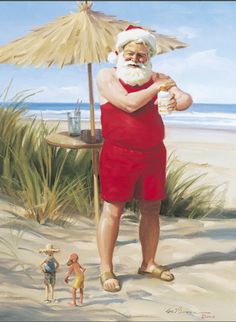
    When people think of Christmas, they usually imagine a Snowy postcard image, with Reindeers, snowmen, and people wearing winter clothes. Even if you look for Christmas clothes, you’ll find they are always sweaters – like the infamous ugly Christmas sweater -, scarfs, beanies, etc. It is not as you can find tank tops or flip flops with Christmassy designs.

    post1.jpg

    As you already know, there is a South hemisphere that will have a very sunny and in-the-middle of summer Christmas. This geolocalization does not ruin Christmas for us. We still pretend to put fake snow around our trees and Christmas decorations. There are still polyethylene foam snowmen decorating the main squares and parks of the city.

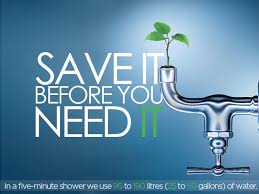
    However, this Holiday Season has been different in Cochabamba, Bolivia. The city where I live. We’ve experienced one of the worst droughts ever. And water shortage has been the biggest concern of our lives. I haven’t met a person who doesn’t literally pray and wish for rain. It has indeed rained a couple of times this month, but it has not been enough. Valleys and rivers are drying. Wild animals and crops are dying as a consequence. The local government is trying to pull off a couple of solutions, but nobody knows if these projects (dams and tunnels built to bring water from other places) will be sustainable solutions in the long term. We need the rain. Global warming is a fact, and we’re experimenting the consequences.

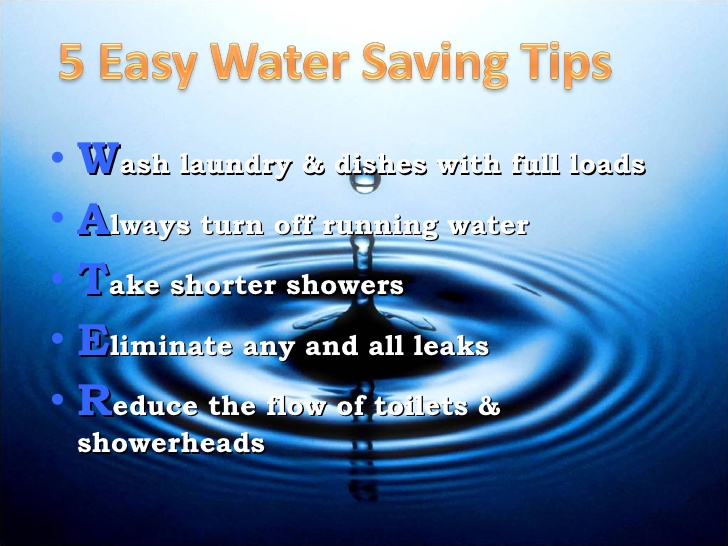
    For Cochabambinos – people from my city – appreciating this resource has become part of our lives. We’ve learned the lesson. We try to save as much as we can and spend as less as possible. I take showers as fast as possible. I don’t let water be wasted. I only wash the necessary clothes and only when needed.  Most Cochabambinos cannot bear seeing people wasting water: like car washers that don’t recycle water or other unneeded uses of water.

    post3

    I had relatives visiting a couple of weeks:  my aunt and my uncle, both from Santa Cruz, a city in Bolivia that has no problems with water. Although, they are aware of the shortage of water in this city, their behavior towards water is different from ours. You don’t wash a dish in several minutes, you do it fast. If you buy fruit, you don’t clean them one by one, you save water from the tap by washing them all at once. Of course, it is not their fault, but my aunt and uncle will be far from understanding the meaning of saving water, unless they move over here.

    post4

    Unfortunately, you learn to appreciate a natural resource only when there is a lack or shortage of it. When probably it is too late. And similar to my aunt and uncle who only live a city away from mine, other people in the world won’t be able to understand this problem until they experiment it. Whoever that does not pay attention to Climate change is really lost.

    This is Christmas. It is nice. But if it were raining, it would be the best Christmas ever for me.


  • Delivering Happiness

    Well, it took me some time to write this post. I was kind of busy preparing my exit at my current job and readying for my new job. I will start in November working as Happiness Engineer for Automattic (the company behind WordPress.com and many other web solutions that seek to make the web a better place). So of course, I’m thrilled. The title of the position is very accurate actually. Happiness engineers deliver customer support but also go beyond that; they make sure WordPress.com users (mostly) go through a smooth and happy experience as they build and manage their blogs or sites.

    automattic_wp

    Having the opportunity to help people with their sites’ issues and provide them advice, tips, and tools to make things better are exactly the tasks I enjoy the most. Anticipating their needs and contributing with their blogs’ journeys is fantastic. Of course, we can’t solve everything. And I really wish we could, but being there to support and empathize with them is what makes this a great job. We deliver a little bit of happiness in each of our tasks.

    So, how did I find this position? It was not that easy, and it was a long path. Basically, you need to prove you’re a good match for this company. And how do you do that? Well, Automattic looks for people who’re interested in learning every single day and growing each time more (I love that!). And what better way to know if you’re a good match for them than to “trying yourself”? Yes, you do that. You go through a paid trial so they can assess if you’re a good fit for the company’s culture or not. But this trial doesn’t only work for their assessment, you also get to taste the company’s culture and see if the role is made for you.

    What other characteristics are awesome about Automattic? The company is totally distributed. Meaning that Automatticians (people who work at Automattic) get to work from wherever they are in the world. Living and being from Bolivia, this is certainly a huge plus. (Although, I totally believe the future will be like this). They hire based on what you can bring into the company and not based on where you’re located or if it’s possible to relocate. And let’s be honest, as a passionate traveler, I’m excited about working remotely.

    giphy-4

    However, you can’t only assess a company based on the benefits and your position. You need to hunt for the “totally awesome” career factors. You need to hunt for a company that will push you to grow, learn endlessly, and contribute as much as possible. In the little time as a HE trial, I’ve learned more than what I did in all my career life. Period. I can only imagine how much I will be able to learn once I start working with them. My skills will grow exponentially 🙂 And although many companies push you towards continuous learning, some of them actually limit you without noticing (after all, they want you to make the job for which you were hired and not intervene too much with others’ work). At Automattic, I’m sure I won’t be limited. It doesn’t matter if you don’t have a technical background (like me), your opinion and your work is taken into account. You can even rotate and explore as many areas as you like. 🙂

    So why do I believe this is my dream job? For me working as HE will let me:

    • Help people every single day and at every single second
    • Grow and learn every single second
    • Have infinite possibilities to contribute
    • Have more flexibility to travel and get to know the world
    • Have really awesome perks (Did I mention you get to travel a couple of times a year to meet the team and the company, you get your home office set up – with the best laptop in the market, the chair of my dreams, a huge monitor, a great desk, endless WordPress swag – and so many other perks?)

    I’m super excited. I know the job is going to be challenging (which I look forward to), but at the same time I feel like I’ve received one of the greatest opportunities to have finally the life that I want. I’m also excited to continue writing my books. But the writing journey conditions will be a million times better with a great job supporting me and my family.

    giphy-5

  • Guest post: Blogger interview

    A Wrestlingwriter has posted a guest blogger interview with wonderful questions of what drives me into writing. Check out my answers, and don´t forget to check our her wonderful and inspiring blog http://awrestlingwriter.wordpress.com/

    via Guest post: Blogger interview.