Tag: novel

  • I’m back

    I can’t believe it’s been almost two years since my last post. My day job was intensive, but other than that, I just felt I didn’t have anything interesting to say from a writer’s perspective. My first novel was published, and I entered a sort of writing hiatus. Then, last year, I started to write again. It felt good, but I still didn’t have anything compelling to share on my writing blog. Now, my circumstances have changed.

    AI image generated by Midjourney

    I’m in the process of transitioning from a very demanding job to finally having more time for my personal projects, one of which is writing. Last year, I started another fiction novel—a dystopian story. Different from The Last Families, I didn’t want this new novel to have multiple points of view and to be so complex. I wanted a simpler story, but a good one. I’ve already picked a name for this novel, although I’m very far from publishing it. I’m currently in the first round of beta readers and receiving so much good feedback. I’m in no hurry to publish this time. This novel is called “When the World Disappears,” and it is a dystopian story set in Bolivia, in a world following the aftermath of a pandemic (yes, I couldn’t help but get inspiration from Covid 😄 ). It has quite interesting twists. I will soon give more details.

    This writing cycle has been different. Although I’ve only published one book, I’ve learned a great deal from the process of writing and self-publishing The Last Families. These are some of the lessons:

    • Fantasy, and especially high fantasy, can be hard to achieve. If this is your genre, I recommend simplifying the characters and the plot because the world-building of high fantasy is very complex already. While some, like Tolkien, have achieved this art, he devoted most of his life to endless manuscripts that his son then had a hard time compiling. As someone without any descendants, I don’t have the luxury of relying on future generations for compilations. Next time I choose to write fantasy, I’ll aim for a simpler plot.
    AI image generated by Midjourney
    • Multiple points of view are hard—very hard. The only way to achieve them is to analyze each character deeply and be crazy enough (in a good manner) to jump from one character’s head to the other. One of the best pieces of feedback that I got from The Last Families was that I’ve managed to achieve good character development in spite of the multiple points of view, but it was so difficult that I’m not looking to revisit this approach in at least a decade.
    • Get beta readers very soon, and as many as possible. As a first-time writer, I felt very protective of my first novel and very insecure about my writing. Therefore, I delayed sharing it until I had meticulously reviewed it at least a dozen times, thus the long time it took to publish it. When I got a few beta readers—only two to be precise—I was desperate to have my novel out in the world, so I changed very little based on their feedback and continued with the publication process. Now, with my latest manuscript, I’m already in my fifth beta reader at an earlier stage. I’m now very open to change and feedback. With more beta readers, I’m also assembling a team of people who will be able to support me during the book launch.
    • Your plot doesn’t need an abundance of twists or complexity. This new novel is a shorter, nicer story with some surprising twists, but not so complex that I can’t describe it. When I pitched The Last Families to publishing agents, it was so hard to articulate a pitch letter. I couldn’t summarize the multiple points of view and the plot in 2-3 paragraphs. It was simply too hard. When the concept is so confusing, it’s hard to sell the idea. I didn’t like it when people asked me what my novel was about because it was too difficult to explain. Now with “When the World Disappears,”  I can easily describe it, and I feel it’s easier to sell it not only to agents but also to readers. It’s far simpler to promote a work when the purpose and vision are clear.
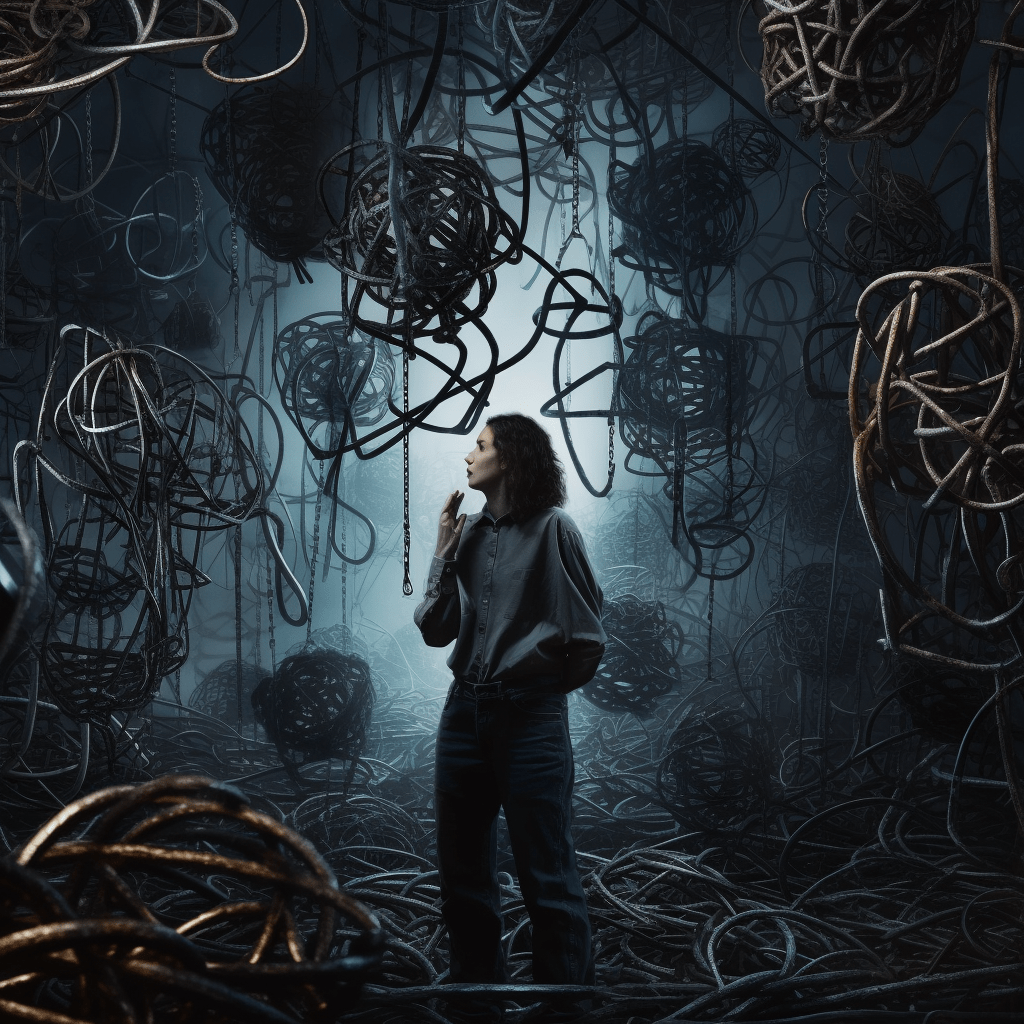
    AI image generated by Midjourney

    These are just a handful of the lessons I learned with The Last Families. I don’t regret the process in this book, though. I still love my first fantasy book, and I’m planning to get a second edition and a Spanish translation later this year. But I’m determined to approach things differently this time, and I’m overly excited.

    What do you think about these lessons?

  • Reviewing, plotting and just writing

    Plotter or pantser

    When I started writing, I found the question about being a “plotter or a pantser”. Plotter would be the person that plans the story before they write and a pantser would be the person that only lets the inspiration guide and build the story as they write. Initially, I was sure I would fit the plotter role, I wanted to set up everything correctly before starting to write. It didn’t work that well. As soon as I started to write, characters acquired life and different scenarios/events invaded my mind. I remember thinking then that I was definitely a pantser and welcomed the idea of getting inspired as I wrote. I ended my first manuscript of my first project, ditching the plotting and welcoming the pantsing.

    The end result was not the best. After some rounds of feedback and self-revision, I found out that the story had many holes in it. The story was weak and it wasn’t working as I wanted. I started to re-shape the story, changing chapters, deleting scenes, adding new plot twists, etc. But after several rounds, I still was unhappy with it. Now that I look back, there wasn’t a time when I totally felt confident with how the plot evolved.

    people coffee meeting team
    Photo by Startup Stock Photos on Pexels.com

    Editing while writing

    Then comes editing. When I started to write, without any previous experience, I reviewed/edited my reading after a couple of paragraphs or even after a single paragraph – trying to get the perfect grammar and writing. That didn’t last. This method certainly cut my inspiration and it would take me ages to finish a single chapter. Then my first NaNoWriMo came and I thought that this was the opportunity I needed to be able to end my first manuscript. And I sort of did it. I didn’t finish it, but I learn how to sit and write without giving a look to previous paragraphs. Editing would come later.

    The result wasn’t the best either. There was terrible writing everywhere – not acceptable for requesting feedback. I had to go through a couple of rounds of editing before it was presentable. Those two/three rounds took me a lot of time, probably more than a month. And I really hated them.

    adult books business coffee
    Photo by Burst on Pexels.com

    What I found out this time

    It was trial an error. I still did a couple of mistakes when I started to write my second project. I initially tried to start as a pantser – my objective to write until the manuscript ended and already dreading the rounds of revision in advance. But I already got a feeling that the result would be a plot filled with holes and a writing so embarrassing that would only lead me to endless rounds of revisions. I stopped after a couple of chapters. Why would I need to be either a plotter or a pantser? Why I had to decide between editing while writing or editing everything at the end?

    analysis blackboard board bubble
    Photo by Pixabay on Pexels.com

    I took a break after a couple of chapters. Then I started reviewing everything I had written. I wrote a little bit more – with a better mindset of the story in mind and continued writing. Then I reviewed my last written words, changed them into a more decent writing and continued. The result:

    I write a couple of chapters. I go back to read them and do a general revision of the writing itself. I analyze the plot a little bit before continuing. I do a little bit of planning for the next chapters and continue. It’s a mix of all methods above. And I found that it works for me. There are no longer surprises, fears, or even apathy to future rounds of editing. There is no structured planned plot that cuts my inspiration but I also don’t write with no horizon in mind.

    I edit my writing as I go. I don’t do it immediately, I let it sit for a couple of chapters so that it doesn’t cut the flow or the feeling of writing freely.  I go back to review the writing of previous chapters to make sure that I have a decent writing over there, knowing that at the end it won’t be a terrible manuscript, that it will be readable and that might only need few editing before requesting feedback. I like my own method. And I’m not suggesting it to other people. I’m only saying that each writer has to find its own way to do things…

    woman wearing grey long sleeved top photography
    Photo by Artem Bali on Pexels.com

  • Book review: On Writing Well: The Classic Guide to Writing Nonfiction by William Zinsser

    I usually wouldn’t have selected this book if it weren’t for a reading club at my work. We wanted to improve our writing as part of improving our communication skills –  most of it is written. But why wouldn’t I pick this book if one of my main passions is writing? Because the book is directed towards nonfiction writing and when thinking of myself as a writer, I believe I’m mostly labeled as a fiction writer. But communication at work is written so it made sense to check how my writing was in the non-fictional world.

    woman using gray laptop computer on her lap
    Photo by rawpixel.com on Pexels.com

    What was different from this book?

    The author, William Zinsser, explains with examples (the only way to learn) how to find your own voice. He gives a huge importance in finding your true self, your true voice. He encourages you to find the passion and enjoyment in your daily writing tasks and to never forget your own principles and the ones of the story you want to talk about.

    But how is the sound of our writing voices?

    Your writing voice should be as you are, not how you talk, but how you perceive things in your head. Zinsser gives the following advice:

    “Don’t flight such a current if it feels right. Trust your material if it’s taking you into terrain you didn’t intend to enter but where the vibrations are good…”

    pen writing notes studying
    Photo by Tookapic on Pexels.com

    The importance of finding the right words

    The right words don’t necessarily mean the complex sounding ones. “Just because they’re writing fluently doesn’t mean they’re writing well,” Zinsser mentions. How many times we read a book with lots of interesting new words, and we find ourselves wishing we had more vocabulary. But sometimes we don’t need this, we only need to find the right words, the ones specific enough to show what we mean. There is no need for complexity, rather for specificity.

    When we write fictional books, we tend to overthink the writing process too much. As we write, we’re trying to sound good and to ensure our text looks not simple – not amateurish. We want others to notice we have a great vocabulary and in this effort, we sometimes lose our own voice. I have tried many times to edit my manuscripts in an effort to make the text sound smarter – not simple – but using words that weren’t true to my own rhythm and voice.

    woman writing on a notebook beside teacup and tablet computer
    Photo by Tirachard Kumtanom on Pexels.com

    And how about simplicity and clarity?

    Sometimes we take too much effort in describing a scene or a character that we lose our sense of direction. “Clutter is the disease of the American writing. We are a society strangling in unnecessary words…” Zinsser mentions.  And although this quote refers to American writing, it still applies to all the writing world and even to all languages. How many times I have found the same issue in my mother tongue Spanish.

    Part of this clarity is to question ourselves: Is our story,  the narrative, the description of scenes, and especially dialogue making sense?

    Enjoying the process

    We spent too much time thinking about the finished work. We tend to visualize or think too much about when the manuscript will be ready, when the book is going to be in a readable stage, and when a possible publishing time could come. We imagine the end line too often and we don’t find ourselves enjoying the process. We are writers, the process of writing should be “our thing” not going after editors and publishers. Let us enjoy the process for the time that is needed.

    As Zinsser mentions: “The writer, his eye on the finish line, never gave enough thought to how to run the race,” and “You won’t write well until you understand that writing is an evolving process, not a finished product.”

    pexels-photo-1043512.jpeg

    How much are we willing to defend our work and to dare to be ourselves?

    No matter how much editing we do ourselves, our manuscripts will suffer one day with other editors. We have to make sure that our writing and our voice are still there.  “What you write is yours and nobody else’s”

    I’ve struggled with this issue a lot. I want readers to recognize my voice. But sometimes, I’m so lost in having a decent product, in having precise sentences and paragraphs, good words, believable characters, believable setups, etc, that I lose my voice in it. Whatever comes out of our manuscript, it has to be ours, it has to show our own personality. As Zinsser puts it, “Writing well means believing in your writing and believing in yourself, taking risks, daring to be different, pushing yourself to excel”.  This mindset is key, how many times we suppress our thoughts and expressions while we write; an inner voice saying “no, that sounds ridiculous, people won’t understand it.” But we have to understand that there is a difference between readers not able to follow a story structure and not be able to follow the author’s sense of wit and voice. We shouldn’t worry about the latter, we should just go with our guts.

    We tend to forget so much of these tips. We’re scared what readers of our manuscript will say, how copywriters will find the text and how editors will see it. We’ve been told rules such as not repeating words, but sometimes they are needed for a reason, sometimes the repetition is there to provide emphasis and to give it a specific rhythm (like the double sometimes in this sentence). Many times when we change our words just to obey rules, we change the effect we are trying to give to our voice, to our characters, and to our story.

    notebook macbook pro designer technology
    Photo by Negative Space on Pexels.com

    What other advice was also very helpful about this book?

    Zinsser treats comedy as a good resource for writing, as a good way to show your personality. This doesn’t mean that you have to tell jokes, but it’s related to the wit with how you tell things. In most cases, this might be the best way to show the true you.

    In summary, I really enjoyed the book. Even if I don’t intend to write a non-fiction book, it still had plenty of useful advice, useful not only for non-fictional writers but also for fictional writers, so I definitely recommend it. You can get the book here. 

  • Scheduling your priorities

    I didn’t want to write about this until I knew what I was doing. I still don’t, but I’m improving. For years, I’ve tried to build a good daily writing habit. There had been periods of time, months, when I’ve written almost every single weekday, and then months when I have written nothing. How can I achieve a good writing habit that is sustainable?

    I want to be able to write every single day or at least 85% (6 of 7 days) as a permanent habit. It doesn’t matter if I only spend 30 mins, 1 hour, or more, I just want this habit to be ingrained in me, in my daily tasks, like taking a shower. I could skip one day, like those rare circumstances when you skip a shower, but more than one day?

    black shower head switched on
    Photo by Pixabay on Pexels.com

    For the previous months, I’ve been doing a re-engineering of this process, wanting to make the most of my time: balance my work with writing, personal activities, hobbies, and getting a proper rest. I’ve been failing for years, but I feel that I’m taking a sustainable approach now. How? Simple: I schedule my life priorities first, and one of them is writing.

    I’ve scheduled writing for the past months for the early mornings, as the first thing I need to do when I wake up. It hasn’t been easy and I’ve completely missed the process during my vacation. But the key is to understand that this is a life priority; it should be scheduled and not added for “when you have time”. Because let’s face it, if you leave writing for when you’ve manage to organize the rest of your day, your work, your personal life, and everything else, you won’t find time for writing or you will be too tired for it.

    clear glass with red sand grainer
    Photo by Pixabay on Pexels.com

    I’ve heard that in order to make a habit, you have to repeat it twenty-one times. I don’t know if that is the magical number, but from personal experience, at least you need a whole month. My “habit making process” has been taking me several months so far. I still struggle with it, but I’ve noticed one change and it’s beginning to be forged in my mind, like taking a shower. I wake up thinking about writing and that is good enough to care for it and schedule it. I know I’m going slow –  and sometimes I can only give it thirty minutes per day – but I feel that at least half-an-hour every single day will get me somewhere as opposed to no single writing for the whole week.

    Any other tips I can give? To support this habit, I’ve started to meditate. I honestly suggest it. It recharges you, and it’s the only time that you actually have for yourself. If you’re not good at this or don’t know how to start, you can take a look at the Calm App.

    woman meditating on rock near body of water
    Photo by Nathan Cowley on Pexels.com

    Any other good tips for building a writing habit?

  • No rules for the writing process

    I struggled a lot with my first project. I read many books on the writing process and even attended some courses on it. I tried to be as systematic as possible and write by the rules.  I learned valuable lessons and this helped me get through the process and finish my manuscript. However, I didn’t like the end result.

    For this new second project, I started a couple of months ago, I tried to let it go and just be a pantser instead of a plotter. However as nice as it sounds to be a pantser, I also knew from my first experience, that there needed to be some infrastructure in the plot. Endless inspiration doesn’t take you to a perfect plot. And there are characters, my weakest point. The very reason why I let my first project remain dormant for the time being is that I ended not liking my characters at all. They needed and still need more development if I ever go back to that first project.

    images (1)

    In this second project, I had started writing as a pantser, letting the words and scenes come to my mind as I wrote, but then I reached a point (a couple of days ago) where I didn’t know where I was heading and if characters were being developed as I wanted. So I did something I avoided since I started writing. I stopped after more or less 35000 words and went back to the first page to review it slowly. I know the manuscript is not even in the middle and I have no clue yet where the story is heading yet, but I felt the need to go over what I have written so far to make sure the 35000 words made sense and that the characters didn’t suck. If you’ve gone through writing advice, classes, etc, you will hear that they don’t recommend this approach that much, that editing while still writing might not be the best. But I found out that it actually helps me. I’m in time to detect current plot failures and find opportunities for character development. Who knows, with this initial review, the plot might get a twist and a new rewrite. At this point, I wouldn’t mind the re-writing. I’m not that far in the story. Rewriting 35000 words doesn’t feel as bad as rewriting more than 100 000.

    download (3)

    This approach seems to work so far. Maybe it’s already suggested somewhere or maybe some other writers do something similar. I feel that it might the “thing” that works for me. I believe the purpose of getting experience with the writing process is to find your own path and your own method. My objective is that my first manuscript feels good. It doesn’t matter if I need to do a heavy editing after it. I just want to be able to feel that I’m telling a good story.


  • When writing is only about writing

    To be honest, I’d been stuck with my manuscript for months already. Recently, I wrote how I planned to practically start over from scratch. At the end, I decided to take a similar approach, go over it but not with editing eyes (I’ve edited those sentences so many times that I didn’t know if I was actually improving them or making them worse) but read it critically, plotwise, characterwise. I felt that my biggest weakness was character development, I felt them flat. That is why I choose a very good advice from my blog friend Glynis in “Productive or Busy” (who also took it from her friend Shari) about writing separately several character pages (not necessarily related to the plot but their life story in general) to get a feeling of the characters. I loved the idea and started doing this on my current manuscript.

    As soon as I started just writing, I got those chills you have when inspiration hits you and you just start typing endlessly, feeling the flow of the words. I love this state. I know I don’t do my best writing from the grammatical/structure point of view, the writing is rather awful, but I get to release all the feelings and everything I feel should be put to paper.

    download (16)

    After this cool experience, I had to go for a fanfiction story. I know being a geek has led me to write fanfiction stories before. This is a weird path for writing since fanfiction involves writing about characters that have already been created, but it is still writing and I had to do it. It felt so liberating that I thought that I was finally rediscovering my writing spirit again. The fan fiction story only awoke my inner writing muse. This was a one time short story and it is already finished, and I don’t plan to revisit the world of fanfiction for a while, however this process has stirred the desire that I’ve been having for some time to start a new story, for leaving my manuscript resting for a while, and just start telling this new story that has been doing circles in my head.

    download (17)

    I realized that I might not be the first one. I’m pretty sure several writers have jumped to a different work and left others to rest for a while.  So I’ve started writing a new manuscript for a week already. I’ve been doing it daily (which wasn’t happening with my other writing) and I feel excited about it, ideas are flowing to my mind and I feel happy. I still plan to revisit my previous manuscript’s character pages since that aside process was been going well, but I feel like this new writing has strengthened and invigorated my new writing spirit.

    And you, has it ever happened to you that you started writing other projects without finishing others? Do you think it is a good idea?

    eq54w9myfn6xfd28p92g

  • Is it time to start the manuscript from scratch?

    It has been several months since I haven’t posted a blog post. And today was the day that I decided I would not go to bed until I finally did it. Work and travel are the excuses in general – and I won’t go to discuss them more since I want to jump into blogging pools as soon as possible without lamenting why I didn’t blog these months.

    My manuscript continues to be a manuscript. However, it seems it was for the best. After going through multiple reviews and editing rounds, I decided it needs a complete makeover. The story is nice, the theme topic is interesting, but it is not the book that I think it could be. I’ve struggled so much to keep the same characters and to bring to life all situations in the book, but I reached a point where I need to acknowledge that my characters might not strong enough, neither interesting enough and some situations feel awkward and forced into the plot. Maybe leaving the manuscript to rest for a long time was a good idea after all.

    download (2)

    At this point, I’m not completely sure how to target this. Should I work on revamping the book, adjusting situations, and changing the characters over the existing framework, or just start from scratch?

    maxresdefault (1)

    Starting from scratch sounds good, but if I were to start a new complete book, then why insist on this “theme topic”? I have a couple of other better theme topics to explore. However, I cannot simply give up almost two years invested on this manuscript. Somehow, deep inside, I still want to rescue it and rescue all the time invested in it.

    I guess I relate to this:

    Have you experienced something similar? Any Advice?

    start

  • Guest Post: Scarlett Van Dijk – A Writing Journey: Past, Present, and Future –

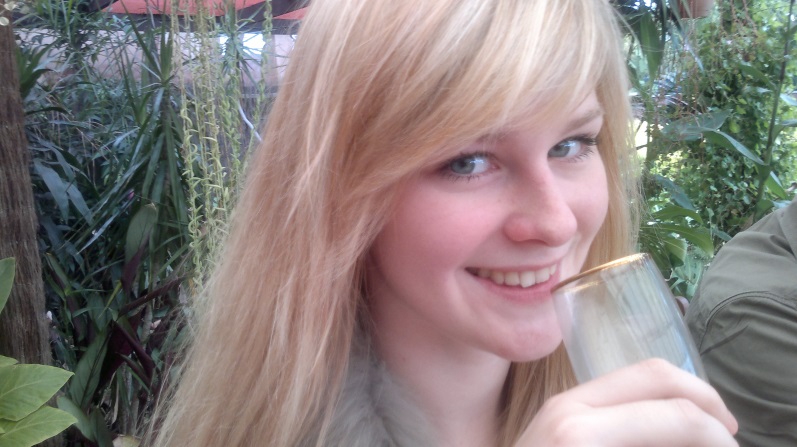
    Hello everyone. Carla Doria kindly asked me to hop over to her blog and let you know a little about myself and my writing. So, to start off, my name is Scarlett Van Dijk and I am a young Australian writer who writes mostly novels but also dabbles in short stories and poetry. I like to dance, train in martial arts, read, go to the movies, and play some multiplayer online games occasionally. My novel genre is Young Adult (YA) Fantasy with my first novel, ‘Sky Stone’, published and on sale at Amazon. I am currently working on the sequel to ‘Sky Stone’, which will be called ‘Guardian Core’.

    scarlett van dijk

    How Did You Start Writing?

    I started writing novels at the age of fourteen, beginning the journey that would become ‘Sky Stone’ at the age of fifteen. Writing, especially during these early years, gave me a release. Every teen knows the hardships of dealing with school politics and writing allowed me to escape to live in my own world.

    (more…)