Tag: writers

  • Choosing a Print on Demand service (Second Part)

    In the first part of my post, I started recounting about the Print-On-Demand services that I researched to self-publish my first fantasy novel “The Last Families”. I found many roadblocks on KDP, IngramSpark, and BookBaby. It was time to consider others.


    Photo by Ketut Subiyanto on Pexels.com

    Draft2Digital was my next option. I’ve already been getting newsletters from them and they had good reviews online. I thought this service was meant to be the one. Like BookBaby, Draft2Digital uses PayPal and Payoneer to send payments to authors. PayPal is still an issue for me, since this payment gateway doesn’t completely work in Bolivia (you can’t connect it to a bank account), but you can still receive payments in your PayPal account and use them as available credits for other future online payments. Payoneer, on the other hand, is a better solution for me. I can actually cash out that money with it. Given this payment advantage, I was already excited with Draft2Digital and I thought I had found the one. I’m not sure how I didn’t notice that it was only for ebooks. Print-on- Demand was still on beta and not quite available yet to all their customers. Well, time to go to the next one.

    LuLu or Blurb. Those two were the final ones on my list.

    Weird enough, there weren’t many reviews on Blurb. I had found some comments online that they didn’t get any cut on profits, but other sources said they did. Of course, I planned writing their support to clarify about the profit issue, but in the meantime I had been exploring their platform a bit more. They asked you to download a software on your computer to work with your manuscript and convert it to a printable file. That was the first barrier. I never got their software to work on my computer, and yes, I’m computer savvy. I wrote to their support service and followed the steps they provided but nop, the software didn’t work. I was still giving them a chance and trying to make the software work when I decided to look at their website shop. All these Print-on-Demand services offer you to sell your book on their web shops, besides the big distribution partners (Amazon, Barnes & Noble, etc.) But Blurb is mainly focused on books with visuals/photos- I’ve heard their software does wonders for books with photos for example. Unfortunately, their website shop is not the place where I want my Fantasy novel to be listed. They do list fiction, but it is not their focus and I don’t see any advantage of being listed with them. I doubt any bookshop or small library will look into Blurb’s website for fiction. It is sad, but true at this point. A couple of days later, I found the final barrier when I dug more into their shipping policies, they ship to North America and the EU, but not Bolivia. Sorry, bye Blurb.

    Photo by cottonbro on Pexels.com

    That made me pass to Lulu. And although they pay with PayPal, not Payoneer, it was the option that didn’t present any other harsh barriers. They get 20% of profits. I had to say okay. They ship worldwide. Their website bookshop is not that bad. Their platform is quite easy to follow. They distribute to Amazon and the others. And although, I might only see earnings in the form of PayPal Credits, I guess that is acceptable for the moment. They get you a free ISBN, so that is always good. Therefore, Lulu is the chosen one for the moment. (You don’t have to stick with one of these services, you can always cancel a service with them and work with another in the future).

    I’m also happy to say that I have a second alternative for issues with shipping to Bolivia, using Aeropost. I know since the book is in English, the main book’s market is abroad and not my country, but I still want to have the option to get them to Bolivia. I still want to order around a half-dozen books for friends and family over here. Amazon has been sending things to Bolivia with DHL. And it is the biggest mistake ever. I even called Amazon support about this. I’m not going to go in detail in this post, but aside from what you are charged for Shipping & Handling when you buy at Amazon’s website, you pay a lot of money here to DHL (more than what you paid for the order) for their “additional handling”. DHL Bolivia has these “minimum amounts” they charge for handling your package, even if the product was worth only U$5. Short story, Aeropost is a service for countries like Bolivia and others in Latin America. They give you an address in the US and you ship your orders there. Then they consolidate the packages and charge you for shipping and handling to Bolivia. It is not cheap but their fee is lower compared to the one from DHL. To give you a specific example, DHL charges a minimum of U$45 for handling, aside from custom taxes, for any item that is worth at least $1, in addition to the U$35 you paid for “shipping and handling” in Amazon’s website. It really doesn’t make any sense to me. It is too expensive. You are paying over U$95 (with taxes) to buy a U$10 book. Aeropost charges you shipping (U$17), customs taxes, and $5 for handling. In total, it is less than a third part of DHL’s fees in Bolivia. Unfortunately, those are some issues of living in a third-world country.
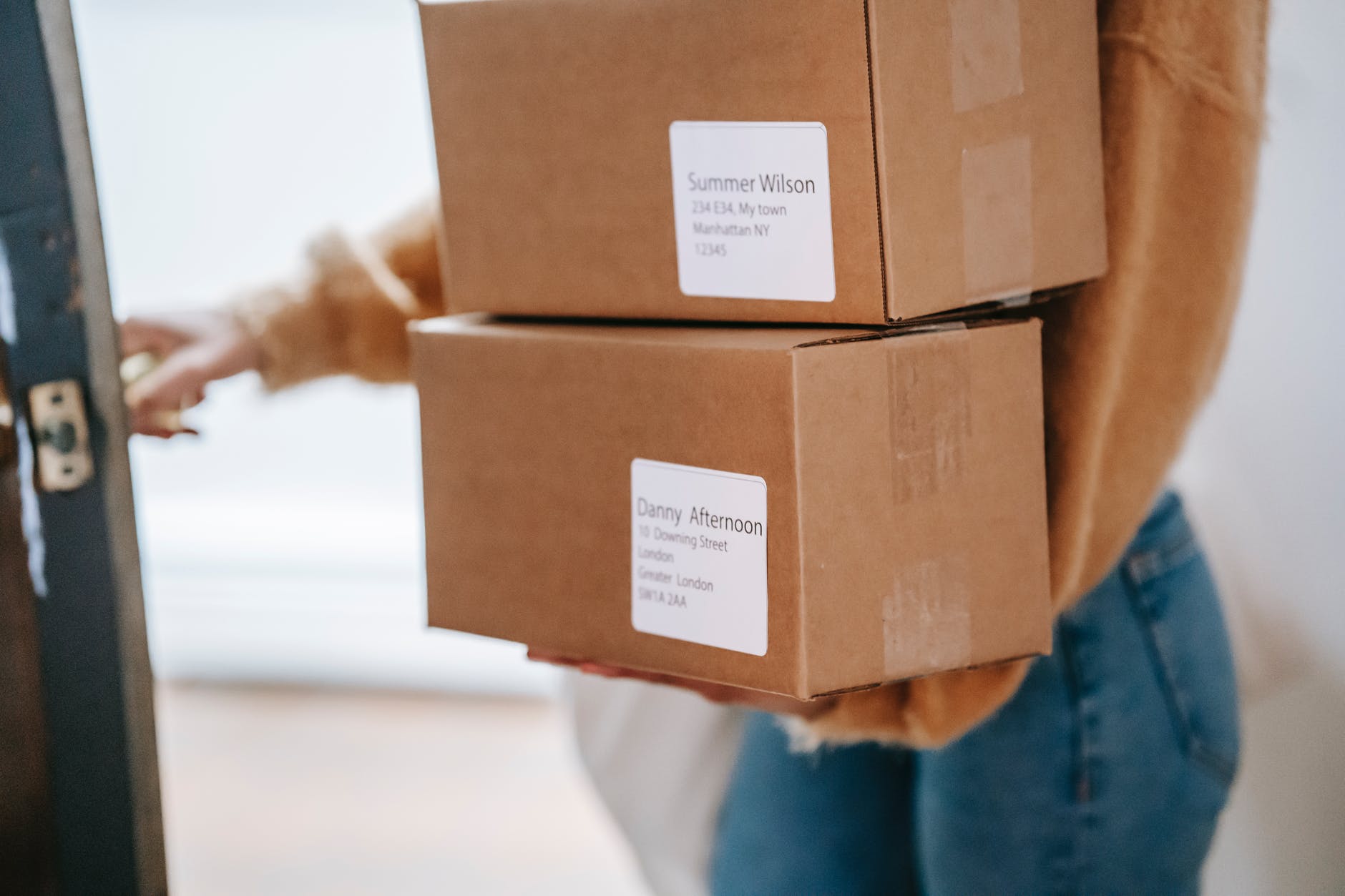
    Photo by Liza Summer on Pexels.com

    I know this post had a little bit of everything. And most of you might not have these issues at all. But it is still good to know what happens with other authors out there. My biggest hope is that this post reaches international authors who might be living in countries where these things are common and that my experience helps you a bit. At least to encourage to keep going on.

    My book cover should be ready soon. That is another story for another post. Once it is done, I’ll order my first Lulu copy for approval. So excited about this 🙂

  • Choosing a Print on Demand service

    In this path to self-publishing my first fantasy novel “The Last Families”, I’ve encountered many blocks. There are many services out there to Print-on-Demand, but they are mostly suitable for authors in the US and Canada. I live in Bolivia and that makes things a bit complicated. I don’t think I’m the only author facing these issues so probably this post is going to be helpful to authors in other countries that are not part of North America or the EU (which also has some advantages).

    I started with Amazon’s KDP. Of course being on Amazon is important and I’m planning two formats: a printed paperback and ebook. As soon as I started considering self-publishing, KDP entered my radar. I read all Amazon’s terms and agreements and fount out soon that I would be surrendering to them around 70% profits. Half of that is related to taxes since my country doesn’t have any agreement with the US regarding those. I’m still reviewing all this information to see what options and alternatives I have. Although I didn’t choose KDP for other reasons, soon explained, I still want to sell on Amazon. Therefore, I guess I still have to have this tax thing figured it out.

    Photo by Sagar Soneji on Pexels.com

    The main reason why I didn’t chose KDP is because they pay by check. And yes, this is the only alternative they offer for international authors. I have many issues with that. First, if a check is sent by regular mail to Bolivia, then there are at least 80% chances that it won’t get here. The Mail in Bolivia is a disaster, and at this point, I’m not even sure if it is working with the pandemic. Before Covid, it sort of worked, but it took around four or more months for your correspondence to get to you. Small envelops, postcards, don’t always arrive, they simply get lost. At this moment, I believe the Mail company is heading towards bankruptcy, and as far as I know, mail hasn’t gotten here since 2019. But even if the Mail company started to work and the check managed to get here, there is another issue. I called my bank and asked how much is the fee to cash an international check. They provided the following example: If your check is U$100, the bank has a minimum of U$35 fee for international checks and 15% on the total, so U$50 will be deducted for a U$100 check (which is also the minimum that Amazon pays). That is half of the earnings. No way, I’m going this route.

    Photo by Blue Bird on Pexels.com

    Then I had a quick passage through IngramSpark and quickly found a roadblock when I filled my account and billing details and got a message that more or less said, “Your country doesn’t support digital signatures so we are not able to provide our services at this point.” It was time to move to the next one.

    The next in my list was BookBaby. I always thought it looked quite decent. They distribute to Amazon and other major channels and besides, their online shop, BookShop, is really a good place to have your title listed, even small libraries and bookshops check their site to order some books. From a previous research, I already knew that I needed to buy an upfront plan to publish with them. It seemed to be around U$349 in a quick search. Their main advantage was that they wouldn’t take any profits on books sold on their site or to distributors. After considering this, I decided that it was worth making the investment. However, it was never meant to be only U$349. I navigated all ways on their platform and even called their support service to make sure I was doing things right. I turns out that I needed an initial order of 25 books. There was no way to get a lower quantity, and with shipping to Bolivia, and adding other things like ISBN (which they charge $39), I was soon close to U$1000 before checkout. Nop, discarded.

    And since this story is a bit long, and to avoid getting you bored, I’m going to continue in a next post where I still consider a couple of options more before I get to the final one. See you in a next post in a few days.


  • The querying process: trust your instincts

    As I submerge myself in this world of querying agents and receiving rejections, I started to take it as part of the common writing process. I no longer feel bad for the rejections coming from literary agent’s, in fact, I think they are making me stronger and more resilient.

    Photo by Stas Knop on Pexels.com

    In the meantime, I’ve also started to experiment with different query letters, manuscript summaries, and even decided to change my first chapter. I feel happy on the latter. I was never happy with having a prologue. For some reason, I thought my story really needed that prologue. However, once I decided to challenge this idea, I put my hands on re-writing the first chapter, integrating in it the prologue. It worked so well that I couldn’t believe it! I regretted sending queries to agents that had to go through my prologue (when they requested the first chapters or pages in the query letter). But well…sigh… one learns from these mistakes. It is not like I’m an expert or a published author.

    I also took on revamping my query letter and summary – for those that request it. From the beginning, I knew they weren’t the best possible and I attributed this to my story being so complex that I couldn’t describe it in a couple of paragraphs, but I later discovered they were totally improvable and I twitched them a bit until I felt prouder of them.

    Photo by Lisa Fotios on Pexels.com

    I’m still going through my list of agents I want to query to. I’m not doing them all at once, neither one by one. But if the rejection trend is here to stay, then I’ll start pondering about self-publishing, which is not that bad according to what I heard. My only worry is that traditional publishing helps you get inside bookshops which is what I always wanted. It is not that I don’t trust the digital channels, and don’t see the potential in it, but there is a sweet spot in my heart where I want to see my book in a shelf in a bookshop. Who knows how things turn around. I’ve witnessed quite amazing events happening in my life.

    Photo by Janko Ferlic on Pexels.com

    In the meantime, if anybody is out there in the process of querying, writing query letters, preparing summaries, trust your instincts and make sure you are really proud of them.

  • I started to kill my darlings and it feels so liberating…

    I started to kill my darlings and it feels so liberating…

    For those who have been following my blog, you know I’ve been writing my first novel during these months, and now I’m totally trying to finish my first manuscript by the hand of NaNoWriMo (National Novel Writing Month). But being my first time experience as a writer, I’ve discovered so many writing tips during these months, that I would lie if I say I knew all of them existed, like the infamous darlings for example.

    But could you imagine if I were oblivious to these writer’s tips, notes, methods, etc.? For a first time novelist, the most possible outcome would be a dreadful first draft.  Of course, I’m perfectly aware that my fist draft will not be the best, neither the second, or not even the first novel; it could take me years (hopefully not decades) to learn to write properly; but I believe that with practice and huge receptivity for criticism (read my previous post), I can actually improve a lot.

    lilliemcferrin blogspot com

    Image source: lilliemcferrin.blogspot.com

    But enough of rambling about all this writing learning-curve-process, I wanted to talk you about my darlings, yes you read well, my darlings, and I’m not talking about my beloved ones, or my several stacked virtual boyfriends (who happen to exist  in a quantity equivalent to zero), but I’m talking about William Faulkner’ famous darlings.  For those who are not into writing, a quick definition will help you not close this blog post immediately.

    What is a darling in writing? A darling, according to the Urban Dictionary, is a literary advice that refers to the dangers of an author using personal favorite elements. In other words, I interpret the darlings as those phrases that look so cute or so wording abundant and excessive vocabulary that although, they make writers feel proud, they can actually cause readers to roll their eyes.

    www rubescloset com

    Image source: www.rubescloset.com

    I’ve been struggling with darlings for months, in my excuse to find my unique voice (which for some reasons started to come with darlings) until recently, when I realized that I only needed to stop worrying about them. That all I needed was to start writing a story with truthful characters and strong emotions, and that was it.

    Darlings have started to disappear, and whenever I read my first chapters (which of course I will have to revisit later when I finish my first draft), I will be ready to push my magic Delete button on the keyboard, and kill all the darlings mercilessly, for they are only barriers that stop us telling a truthful story (no need of decoration).

    And you have you ever heard about these darlings? If you haven’t, well now you know that writers are not crazy murderers whenever they talk about killing their darlings.

    And if you’ve heard about them, how do you cope with them? Do they usually chase you in your writing?

    P.S. I tried to google images related to “kill your darlings” but it seems that there’s a movie with Harry Potter in it (I mean the actor).

    blog2

  • So what is it with young-adult fiction novels? I’m no teenager yet I can’t seem to drop Divergent from my hands….

    Yes, when you hear about young-adult fiction novels, images of Twilight and other similar stories come to my mind. I know they are supposed to be directed to an audience of teenagers and young adults in general (say around 20 the most?), I don´t know.

    However, I went eagerly to watch all the Twilight series and the same with the Hunger Games. I remembered going to the premier of one of the Twilight movies in my city (I think it was the last part) and being impressed by fifteen year old’s sighing when they either saw R. Pattinson or T. Lautner (well, let´s assume it, it was justified, but me in my early 30s was very far from being in their type of public, yet I was enjoying it very much).

    But apart from the movies and all the fuzz that comes with the actors, etc. I really didn´t picture myself buying the books for these movies.  I didn´t know very much about Stephanie Meyer and Suzanne Collins, except that they were the authors responsible for these stories (Twilight and The Hunger Games respectively).

    But the story with Veronica Roth (author of Divergent) was different. You see I was making a list of the books I may want to shop while I was in the UK for holidays. I knew I had to the take this opportunity to buy me some nice books written in English since they are very difficult to get them in my country.  I don´t know how I came across with Divergent and the story of its author, I think she was only 22 or something like that when she first wrote Divergent. I read an interview about her online. It was supposed to be the next big thing, the next Hunger Games, but what came to my attention was that the author was so young to be so extremely accomplished. I decided to put the book in my list, just in case.

    Image


    Image source: www.business2community.com

    Well, due to my endless activities in my trip, I only got the chance to look for books while I was at London Gatwick airport. I didn´t have my list with me in that particular moment, but the moment I stepped in WHSmith, the best sellers and the most popular books came to my encounter, and guess what? the most visible one was Divergent. The edition I ended buying already had the cover with the Hollywood actors on it and already said “now a major motion picture”.

    Since I had no idea when the movie was going to be released (I hadn´t been able to watch TV or any internet site while travelling), I thought I was going to have plenty of time to read it before the movie came out. But when I got home, the first thing I saw on TV was the trailer of its release in 5 days.

    I read a lot, but I´m not that fast when it comes to finishing books. I usually take between 3 weeks or even a month to finish a book with an average of 500 pages. Of course, I only read one hour per day, approximately and even less, and not every day, usually I forget about the book I´m reading in the weekends.

    Image


    Image source: en.wikipedia.org

    Friends were already telling me about their plans to go to see the movie next week (that is tomorrow). I was thinking that I would have liked to have read it first before going to see the movie. I decided to give it a try and see how much I could move forward with the book before I went to the movies, guess what? I´m about to finish it, surely this night I will finish it. Just on time.

    I can´t seem to drop the book, I have been reading past midnight and even more these days. I dream and wake up thinking about the characters and the story. It´s unbelievable. I have read plenty of page-turner books, but this one can´t take my mind of it. The narration in itself is simple, and the plot once you get to understand is very easy to follow, so what is it then? An author so young capable of doing this? It´s actually very motivating for any person who wants to be writer.

    The truth is simple, she knows how NOT to get people bored and she knows how to engage people to keep reading. I couldn´t seem to find a part in the book where I could put a halt and say “well that´s it for tonight, let´s continue tomorrow”. You couldn´t, it was like a crime to close the book when it was getting more and more interesting. For such an age, extraordinary, my sincere reverences to her…