Blog

  • Being good at metaphors

    According to Wikipedia, this is the definition of a metaphor:

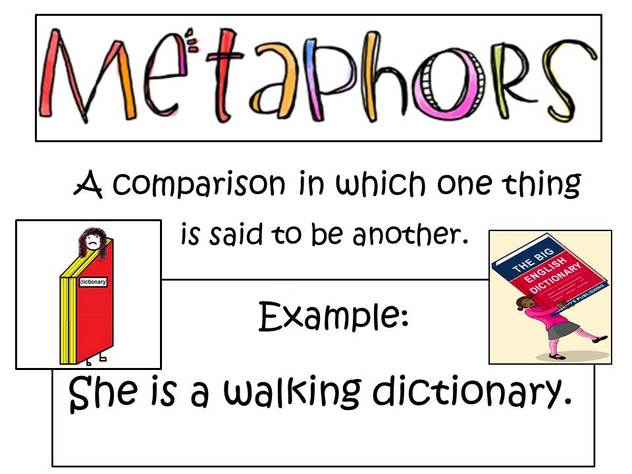
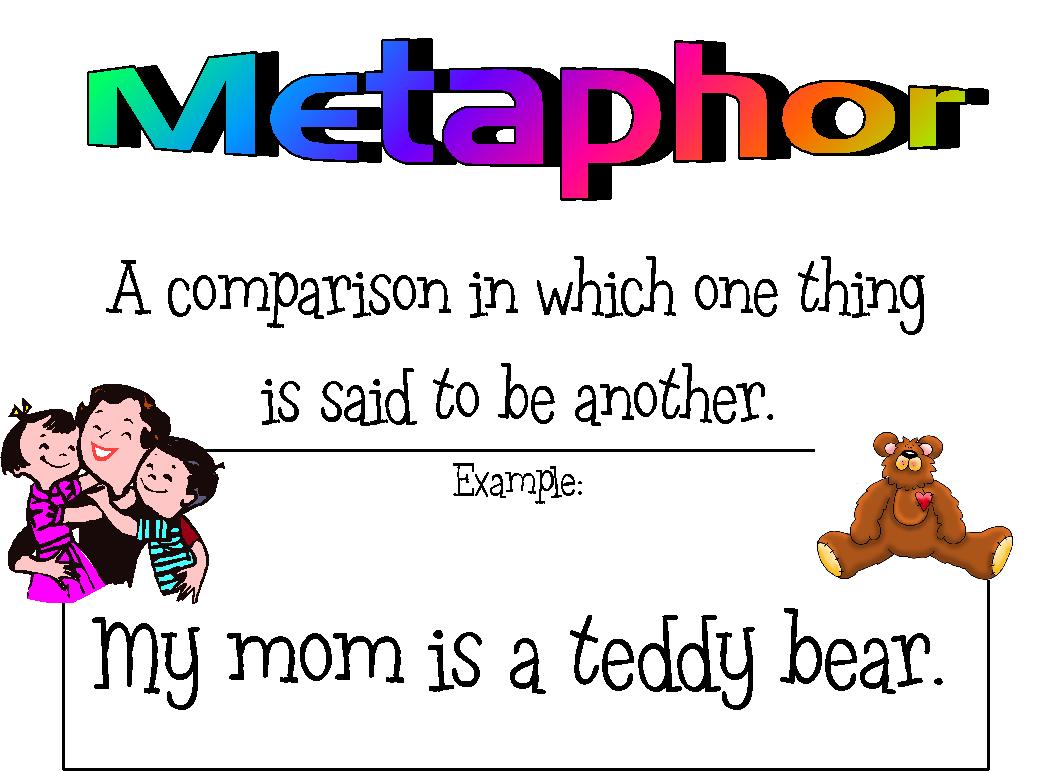
    A metaphor is a figure of speech that identifies something as being the same as some unrelated thing for rhetorical effect, thus highlighting the similarities between the two. 

    There’s nothing more beautiful than reading good literature and finding genius metaphors and similes.  As a writer, I find myself wanting to produce my own ones. But reality hits and I realize I’m not good at them. I suck at them.

    met1

    Good metaphors are for the mind of extremely creative people. Imagination prevails in this realm.  And writers have no other choice than to develop this skill. Would that mean I’m not creative enough? or that I don’t have enough experience as a reader and writer to produce clever metaphors? Maybe, It all comes to how I interpret the world. I don’t tend to compare or establish similarities between situations. Would this mean that I’m not programmed to create metaphors? Regarding of the answer, skills can be improved. It’s all about a practice, experience, and finding your creative side. Writers are supposed to navigate towards those waters anyway, aren’t we?

    So what have I done to improve my chance of coming up with clever metaphors? Whenever I’m writing and I find myself describing situations or settings, I pause, close my eyes and try to imagine the situation in my head. What does it look like? Does the person or objects remind me of something? Is there another way to describe it in a more interesting way? Sometimes it works, sometimes it doesn’t. Sometimes I see the situation or setting for what it is and fail to produce a similarity that enables the figure of speech. But practice makes the master. I must persist.

    met2

    Interestingly enough, I found that our creative side comes easier whenever we find our writing voices. That is when we allow ourselves to show our feelings and inner paradigms through our characters. That’s when one gets to be more creative and hence more prone to bringing good metaphors. But our unique writing voice improves with time, practice, and nothing else. When I review my first drafts, I find almost no existing metaphors. In those first pages, my writing is not funny, is not filled with surprises, is not page turning, it is boring. But when I review the latter drafts, I tend to smile to myself more. Not because I’m nailing every sentence, paragraph, and chapter, but because I seem to like my writing each time better. I seem to enjoy my story even more. Metaphors and similes start to appear.

    I might not be “natural” at metaphors. But I got the tools to improve it. I only need practice and persistence. After all, everything in our lives is about endurance, isn’t it?

    And if you’re striving on  understanding metaphors, then you can check out this complete guide with very helpful examples from Grammarly.

    And you, do you have any good tips or methodologies for writing good metaphors?

    met3

  • Getting rid of the multi-tasking habits

    Last post When old habits are hard to abandon… I’m looking at you procrastination was eye opening. For some reason, I always believed that being “multi-tasker” was engraved in my system. I even felt proud of it. I could face many tasks at work or while writing without any problems. I even used as one of my qualities (whenever I needed to talk about myself, my strengths,etc… case point: CVs). This happened until many days ago, when for some miracle, I landed on the Coursera course: Learning how to learn: Powerful mental tools to help you master tough subjects. If you ever have time to check this free online course (which you could also pay if you want a certification), then do it. The course suggestion came to my email inbox the same day I wrote about my procrastination/multi-tasker post. And surprise, surprise: It turns out being multi-tasker is not as good I as thought it was. In fact, it’s not good at all.

    multi1

    I’m not going to go into specifics in the course. Besides, I still have a couple of lessons that I still need to go through in this course. But so far, it’s been one of the best courses I’ve taken through this platform. Going straight to the point: multi-tasking only burns you out, it stresses you, it makes you slower, it lowers the quality of your work, and tires you faster. But it can be changed. And since I’ve started this new plan to reprogram my brain from its default multi-tasking mode or even close to some sort of attention deficit disorder, my capacity to focus and concentrate has grown exponentially. My writing tasks are back on track again and with good perspectives!

    multi2

    There are tons of courses, methodologies, articles online about this topic. Many great sources of information. If you’re looking to get rid of procrastination, improve the quality of time you spent on your important tasks (writing, I’m looking at you), then I suggest you get rid of any multi-tasking habits. I’m looking forward to polishing these skills, and maybe in some weeks time, to be able to say I finally left procrastination in the past.

  • When old habits are hard to abandon… I’m looking at you Procrastination!

    Procrastination has been affecting my life since I can remember. Fortunately, these last couple of years, I’ve been suffering less of it or else I would’ve never achieved a novel’s first draft (it should be treated as an illness!). But I haven’t gone over it yet. I might now put a daily effort on my writer goals, but it’s not enough yet.

    The one to blame, the Internet.

    I could use the computer and disconnect, but I depend heavily on thesaurus.com I could get a physical copy, but certainly working with the website allows me to easily navigate from word to word’s synonyms and definitions in a matter of seconds, without losing the inspiration or the sentence idea that troubles my mind at that point. I’ve tried using printed copies of dictionaries and thesaurus, but they’re not meant to be used on every single minute. And yes, I still use it a lot. Especially, since English is not my first language, many times I just want to make sure I got the correct definition and that the synonym I’m choosing to use is accurate.

    So if thesaurus.com wasn’t such a good tool and as dependent on internet connectivity as it is, I would probably disconnect from Wi-Fi. But if this website helps my writing, what is the real problem?

    My mind is used to multi-tasking. As a result, thoughts, ideas, and hyperactivity flood my brain almost 24/7 (If mental hyperactivity could be translated into physical hyperactivity… I would be the best athlete in the world… but that’s another topic). My mind doesn’t really switch off until I go to bed. And sometimes, I find trouble sleeping trying to unplug my mind from its endless ideas, worries, etc. So while writing, it’s normal for me to get distracted by other websites; afraid (maybe an excuse word) that I will forget later what I wanted to buy in Ebay, that I will miss what’s going on Facebook, and that there are still tips, blogs, and websites I should be looking at for my next trip (in 2 weeks – Tripadvisor, I’m looking at you!),  I open the browser and proceed to search, look, and verify other issues while in the middle of writing.

    The result: guilt invading me at around 10:00 pm when my eyes are starting to feel the burden of the day and I have to choose between:

    • Giving up and going to bed
    • Continue the writing until almost midnight or until my eyes are hyper red. The direct consequence: I cannot invest any more reading time in bed if I want to give my eyes a proper resting (after all, I spend the whole day in front of the computer)

    Maybe I’m too anxious for vacations these days, and I cannot move forward without taking out of my mind all the issues that should be arranged or known before traveling. Maybe after my holidays, my mind will be clear enough to continue working. But who am I kidding? There will always be a next trip, a next activity, or a next excuse. If I’m going to take the writing career for good, then I’d better eliminate the word Procrastination from my vocabulary. Any advice?


  • IA: Initiate Blog Tour stop

    Initiate_Banner

    Welcome to my first participation in a Blog Tour, so far I’ve been enjoying it very much.  I was lucky enough to be today’s tour stop for “IA: Initiate” by John Darryl Winston. The Blog Tour is running this week (March 21-25) and you can find the participating bloggers and schedule here.

    You can find “IA: Initiate” at Amazon. 
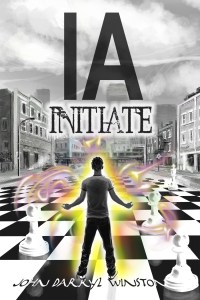
    Initiate

    IA: Initiate is origin story and a hero’s journey that follows thirteen-year-old orphan Naz Andersen and his nine-year-old sister, Meri. They live in a present day alternate Detroit/Chicago-like city known as the Exclave where they are surrounded by poverty, gang violence threatens every corner, and drug dealers rule the streets. Naz thinks he is ordinary except that he hears voices, has nightmares, and walks in his sleep.

    The most important thing in the world to Naz is protecting Meri and getting her out of the Exclave and into the prestigious International Academy. But Naz has a secret, one that he is oblivious to, and only Meri knows. When Naz becomes the target of a notorious street gang he begins to discover the voices in his head, the nightmares, and sleepwalking are actually telekinesis and telepathy at play, a gift from his father of whom he has no memory.

    Interview with the Author

    John Darryl Winston was kind enough to answer some of my questions. Enjoy the responses of this very talented author:
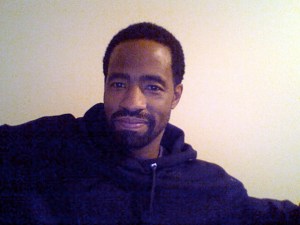
    P1

    Tell us a bit about yourself. For instance, how did you start writing?

    Writing can mean so many different things, but I’ll try to put them all in a nutshell as one. I started creating stories and telling them to people (parents, siblings, and friends) as far back as I can remember, but never wrote anything down. I hated reading and writing in general. Once I realized writing things down came with telling stories, I decided I wanted to write screenplays, as film is my first true love. When I became a parent and teacher I started writing stage plays for my kids and students. But I only started writing in the novel form about 4 or 5 years ago.

    How did you come up with the idea for “IA Initiate”?

    There are several things that I can point to that led me to the IA series. First there was “Superman the Movie” with Christopher Reeve. I was never into Superman before that. It was the origin part that sucked me in. Then it was “Batman Begins,” again the origin part. I began to toy with an origin story of my own with the premise, how believable it could be, thinking again about the tagline to the Christopher Reeve movie “You’ll believe a man can fly.” I wanted to write an origin story that brought the imagination into play but felt truly possible. Hence my tagline, read it and believe.

    What do you like most about your character Naz? Is there some trait in him that you identify with?

    What I like most about Naz is he’s so flawed, and I’m never quite sure what he will do next. He wants to do the right thing, but like us, he’s not always sure what the right thing is. So we get to go along with him on his journey and ask ourselves, what if?

    Do you think the Exclave anticipates what may come in our future?

    I think the Exclave like Gotham or Metropolis is the here and now, more or less. I had one publisher who was reading my manuscript call into question the authenticity of the Exclave setting. He felt that a middle school in such a downtrodden place would never have a basketball team much less a chess club. Of course he’s probably never been to Marcus Garvey Academy in Detroit. Welcome to my world.

    What is your ideal place for writing?

    My ideal place to write is some place unfamiliar that’s not too quiet and not too loud, a place where I can sit back and silently observe, or not, life in motion. I’m a people-watcher and much of my inspiration comes from that pastime.

    Do you have a special process to get inspired or get in the writing mood?

    I don’t have a goto process but there are some things I’ve done in the past and may or may not try in the future. I like to take extremely hot baths in complete darkness with a tape recorder running and talk to my characters. Sometimes when I’m exercising the muse approaches me. Then there’s the old glass of wine or two to get the juices flowing, but I avoid that when I can, afraid of developing a vice or bad habit. And then there’s trusty meditation.

    What are your next projects? 

    Three projects: The first is “IA: Union,” the final book in the IA trilogy which has me frustrated right now. The second is a sci-fi called “Ultima Humana,” about the last human along time from now on a planet not too far away, lol. The third is a sci-fi called “Patriarch” about a scientist who has found a way to endow his son with supernatural powers in a natural way. Sound familiar?

    What would you recommend aspiring writers?

    I would recommend aspiring writers to read, Read, and READ some more: books by great authors, not-so-great authors, and everyone in between. Read in and out of the genre you intend to write, and read critically and analytically, always having a highlighter around to mark that book up until it’s unrecognizable.

    Any tips or writing recommendations?

    Get some craft books. “On Writing” by Stephen King and “The Elements of Style” by Strunk and White is a good place to start. Develop a thick skin and find people you can trust to be critical of your writing. That’s all for now.

    More about the author…

    John Darryl Winston is a recording artist, turned educator, turned author. He dates his love of storytelling back to reading the bible with his father and sisters and later when he first saw Superman The Movie as an 11th grader in his high school auditorium. He got the idea for his debut series while piloted a Boys’ Read program as a Detroit Public School teacher. He is the founder of the Adopt an Author program, which has as its mission to create an atmosphere where boys and girls learn to love reading and writing.

    He has written songs with and for Grammy winner David Foster and record mogul Clive Davis. He has been a recording artist on Arista and Polygram records, and has written and/or produced songs for Gerald Levert, Jordan Hill, Gerald Alston, and many others.

    He’s a graduate of the Recording Institute of Detroit, The Motion Picture Institute of Michigan, and Wayne State University. He has his MA in Creative Writing from Wilkes University and will be graduating, June 2016 with his MFA in Creative Writing from Wilkes. He lives in Detroit with daughter, Marquette and plans to buy an African Grey Parrot when he conquers his irrational fear of birds and name him or her Tony or Toni.

    You can find more information about John at:

    Website / Facebook / Twitter

    My Review

    Those who know me are aware I’m a slow reader. Few books grab me well enough to finish in a couple of days, the norm is usually a couple of weeks, but “IA: Initiate” was one of those exceptions. I finished the book in a couple of days because it had the flow and pace that allowed me to devour the book without noticing.

    Naz, a thirteen-year-old boy, lives in the Exclave along with his nine-year-old sister, both are orphans and live in a foster home. Sleepwalking might not be the only problem Naz is facing, he lives in a dangerous part of the city, and he can’t remember much of his early past. But he’s convinced of one sole objective: to protect his little sister from anything and to take her away from the decadent Exclave.

    As the story develops, we learn Naz’s untrusty and insecure nature might be a result of his past and of the deaths of his parents. The story develops in parallels between fragments of Nobel Prize winner Dr. Cornelius Andersen and his achievements in the fields of neuroscience. Usually, when novels display two parallel stories at the same time in different time settings, one tends to distract from the other without intertwining properly. This was not the case. The author manages to increase the mystery and flow of the story as he narrates both of them. As we get to know the past of Naz and his sister, we also start to realize the implications of their world, the Exclave, and some possible explanations for Naz’s behavior.

    I enjoyed reading the book. The characters were compelling, likable, and complex enough to want to know more about them. The story offers so many possibilities that I felt it was natural to have a series of books derived from this first part. I’m certainly eager to continue with the next books. Winston is very talented, and in his writing not only, I was able to understand the Exclave and the rest of their world around it; but  also I delved into the story with eagerness to know as much as possible from the potential turn of events.

    Giveaway

    John is offering e-copies of “IA: Initiate” to the 5 winners of the following Rafflecopter. Click here to enter it.
  • Landscapes and City of Cochabamba

    A good friend of mine has been doing a great job taking pictures of my city Cochabamba (Bolivia). For any of you who want to take a peek of where I live 🙂

  • Guest Interview: Stuart J. Whitmore

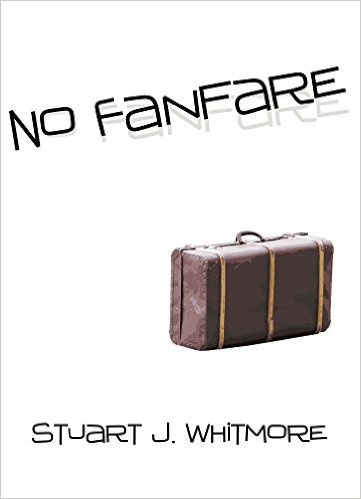
    There are few short stories that I wish had been turned into a novel; No Fanfare by Stuart J. Whitmore is one of those short stories that I wish had been longer. This fantastic well-told story  presents us a topic with so many questions that leaves readers wondering about the endless possibilities. But Stuart not only writes short stories, he’s also written novels and non-fiction. I was lucky enough to interview this talented author and I’m certain his answers will inspire many aspiring writers.

    – Tell us a bit about yourself. For instance, how did you start writing?

    My interest in writing was mostly sparked by winning first prize in a classroom writing contest when I was about eight years old. The prize was $2.00 in cash, which (adjusted for inflation) would be about $10 in today’s dollars. I’m not sure whether the prize or the teacher’s praise mattered more at the time, but I see that as the start of my writing. I wrote my first full-length novel (first draft) when I was 14-15 years old, and another when I was 16-17 years old. I put my writing on hold for awhile to pursue a non-writing career and start a family, but NaNoWriMo helped bring me back to it.

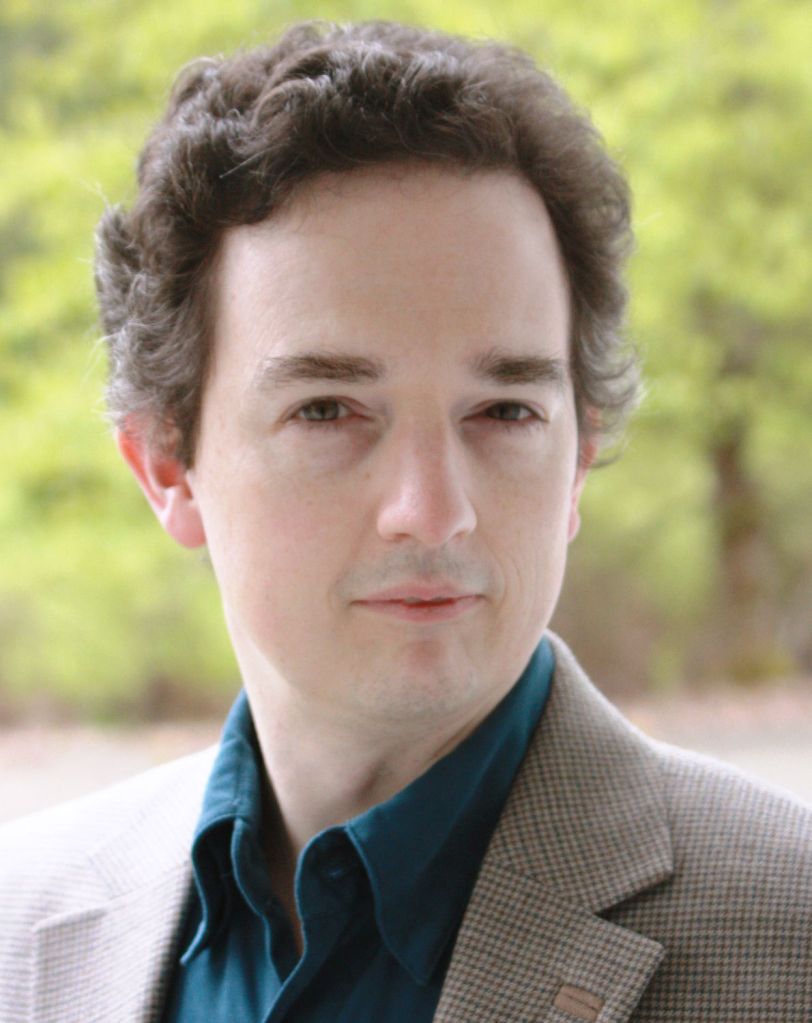
    IMG_0978XSi_acs1

    – How did you come up with the story idea for “No Fanfare”? Would you consider writing more about this topic and even turning it into a novel?

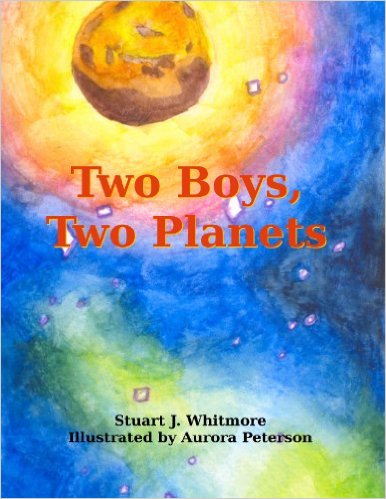
    I like to play around with “what if” questions and see what stories I can generate from various answers. Just this morning I wondered, “what if cats could smell memories?” I give full credit for that strange question to the strange behavior of our cat! While I don’t remember the specifics, I’m fairly sure No Fanfare started in a similar way. What if someone was sent on a secret mission to another planet, and then everybody forgot he was there? (Or, what if someone thought that had happened to them, even if it hadn’t?) I also have a long-term interest in Mars exploration and colonization, which previously inspired my children’s book (Two Boys, Two Planets).

    I haven’t given any thought to writing more to the story. It was always intended as a vignette focused on the initial “homecoming” experience. I tried to offer enough uncertainty that the reader might wonder what to believe. On the other hand, I realize that some readers prefer a more concrete resolution, so I might someday write a follow-up to No Fanfare.

    http://www.amazon.com/No-Fanfare-Stuart-J-Whitmore-ebook/dp/B014CI5QQ8/ref=la_B0058E4TDC_1_9?s=books&ie=UTF8&qid=1456841206&sr=1-9518kfTEkBsL._SX384_BO1,204,203,200_

    – What do you enjoy most, writing short stories or novels? Do you write short stories with the idea they’ll become short stories or do you usually decide this during the writing process?

    Short stories are fun to write, but I love writing long, complex novels. I love all of the world- and character-building that I can do with longer works. Usually when I write a short story I intend for it to be short, although sometimes I’ll start a story without a particular goal for how long it will turn out. With short stories I often want to get a reader to start imagining things about the story I’ve started, with the hope they’ll enjoy filling out their own ending, but sometimes I get in trouble for leaving things unanswered!

    – What is you ideal place for writing? Do you have a special process to get inspired or get in the writing mood?

    I’m very flexible about my writing. I’ve written on public transit, in doctor and dentist waiting rooms, on a bench in a busy shopping mall, as well as quietly at my desk at home. Some writers develop a process to get in the mood for writing, and I often tell myself I should try that, but I never seem to get around to it.

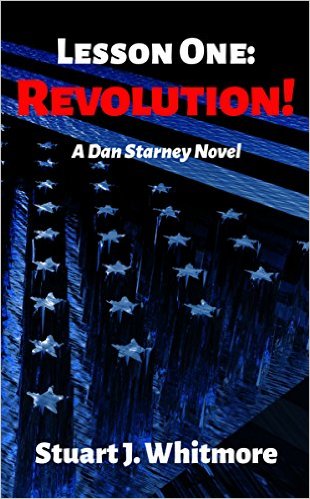
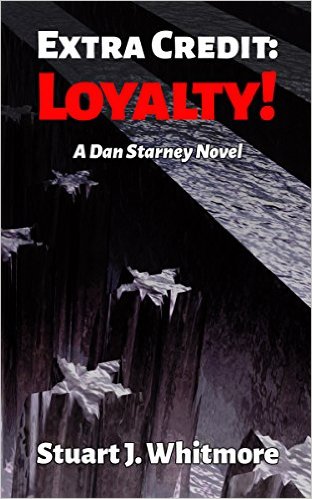
    – Besides the Dan Starney series, are you looking to work on another novel?

    With luck, I’ll be releasing several more novels this year, as well as some novellas. I have four fantasy novels that are shaping up nicely, plus I have a detailed outline (rare for me) for a novel in a different genre, and a concept for a novella series in yet another genre. This year I’m exploring the use of pen names to keep the different genre works separated, although my fantasy novels will still be under my own name. I also plan to write a third book in the Dan Starney series to wrap up that storyline, although I don’t have a timeframe for when that will be released.

    51wLdu1sU8L._SX308_BO1,204,203,200_51OrX-i3maL._SX310_BO1,204,203,200_

    – You also write non-fiction, what topics do you most enjoy writing about? What differences do you find between writing fiction and non-fiction?

    So far my non-fiction writings have been fairly short dabblings in topics, and I haven’t found one where I feel comfortable yet. I like to be able to share information and ideas with people, things that can be useful in the real world, which is the appeal for me in non-fiction. I finder greater joy in writing fiction, but that is perhaps because it is a lot like daydreaming for me, and I am an incorrigible dreamer.

    – What would you recommend aspiring writers? Any tips or writing recommendations?

    One of the biggest obstacles that I see in aspiring writers is getting past the “I’m going to” stage and actually doing. While I enjoy talking about writing as much as anyone, being a writer means actually doing the writing too. There are many ways for people to start writing, whether it is fiction or non-fiction, and I would encourage aspiring writers to seek out those opportunities — contests, anthologies, sites like Wattpad, etc. — and start producing words. This is especially useful if it is done in a way where complete strangers can read those writings. Reactions from people outside of family and close friends can help highlight what works and what doesn’t. To develop as a writer, it is important to learn about writing and read what others have written, but it is even more important to just write, write, write!

    For more information about Stuart J. Whitmore:

    Website: http://www.stuartwhitmoreauthor.com/
    Goodreads: https://www.goodreads.com/author/show/5623681.Stuart_J_Whitmore
    Google + https://plus.google.com/+StuartWhitmore
    Twitter: https://twitter.com/Crenel
    Facebook: https://www.facebook.com/StuartWhitmoreAuthor
    Instagram: https://www.instagram.com/stuart_whitmore_author/
    Snapchat: stuart_whitmore

  • Weirdness: Embracing it…

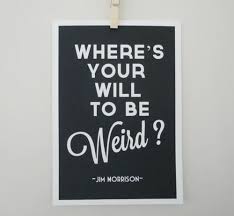
    I always describe myself as “weird”. People around me hear “bicho raro” an expression in Spanish that would mean something like “weird bug.” Some friends are fast to point out that I’m not weird but “unique”. I appreciate their good intetions, but I actually don’t feel bad about being weird. I love being weird. I embrace my weirdness.

    So what do I mean by being weird? I thought it would be to check up the exact definition of the word:

    http://dictionary.reference.com/browse/weird  says: involving or suggesting the supernatural; unearthly or uncanny. fantastic; bizarre.

    http://www.thefreedictionary.com/weird says: Strikingly odd or unusual, especially in an unsettling way; strange. Suggestive of the supernatural.

    But I like the definition of the Merriam-Webster: http://www.merriam-webster.com/dictionary/weird  :

    1. of, relating to, or caused by witchcraft or the supernatural :  magical

    2. 2:  of strange or extraordinary character:  odd, fantastic

    And I’m almost sure the latter is the best reputable source as well.

    When reading the first two definitions, one would see why people react to the word “weird” as a bad adjective. This word for them describes something  not very nice – an “unsettling” word. The expression “weirdo” is a commonly expression used to tag people in a despicable way. However, I insist on relying on the Merriam-Webster definition: “supernatural, extraordinary, fantastic, unusual… etc.” In this interpretation, I love the word; it describes how my usual perspective towards life is.

    I always like to believe I don’t fit social standards as normally other people do. I love going against the trends and against the expected behaviors. Even the way I dress, reflects in some way, who  I am as a person. And if people expect you to celebrate a holiday, I do exactly the opposite. But for me this weirdness is not about being stubborn or trying to make a point, it’s only about behaving according to my feelings and without regard to social expectations. For me being weird is nice. It’s about expressing myself in the most extraordinary fashion, living my life defying any social foolish conceptions. It would be nice for a change people wouldn’t chastise or try to fix weird people.

    images (2)


  • Writers do bend the rules!

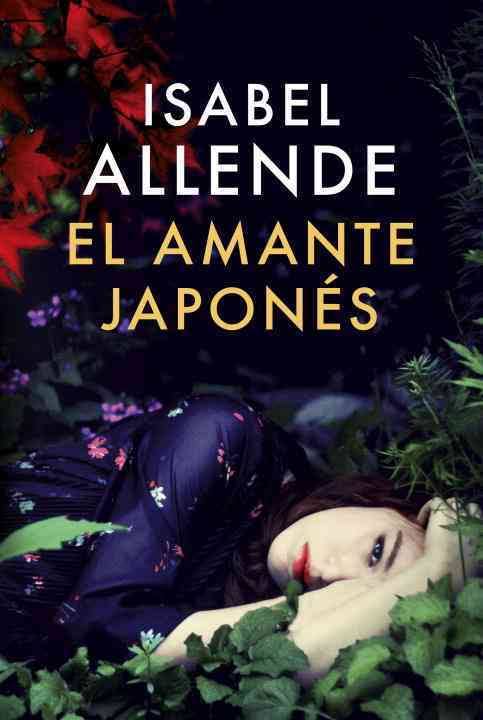
    I haven’t read Isabel Allende in a while. It’s my favorite Spanish speaking author. I remembered how I used to devour her books when I was a teenager. Her stories were so profound, her characters so alive. I haven’t read all of her books, and this reminds I might not be a proper author fan/follower. But I’ve always been into exploring new authors.

    download (6)

    Since she’s a Spanish speaking author, I read her books in their original language: Spanish. No translations. However, in my effort to improve my writing in English, I haven’t read books in Spanish for a while, probably for the last three years. It’s been hard to remain truthful to this objective. I could easily get Spanish translations from John Grisham, Stephen King, and other famous ones in the bookstores of my city, but my encounters with horrible translations have pushed me to insist in improving my English when possible. Now, I usually shop for books online or buy them whenever I travel. The effort has paid off. I used to read books in English with dictionaries searches every two minutes. Now, I don’t need need them anymore.

    download (7)

    Anyway, I was excited to read Allende again. The book I picked up was one of her latest ones: “El Amante Japonés” or “The Japanese Lover.”  I really enjoyed the book but it was a writing/learning experience more than anything. Unfortunately, I no longer remember enough to testify for other Allende’s books. But in this book, I found a couple of  writing style observations along the way that made me question the writing rules I’ve been learning lately. My reading perspective has changed significantly over these two years of reading books about writing, listening to webinars about writing, attending to writing online courses and even going to a writing conference in English. I would have never imagined these writing rules I’ve been following at heart could be non-existent in the authors I loved the most. It was an utter surprise.

    images

    But what exactly were these rules I found non existent in “The Japanese Lover”? In fiction, I’ve been taught to write scenes from a single point of view. If you want to use other character’s points of view, then it’s better to do it in another scene or even in another chapter. In “The Japanese Lover”, Isabel Allende mixes multiple points of view from one paragraph to the other. One paragraph you are inside one of the main character’s head and the next one you are in another, in a blink of an eye. At the beginning, I found this quite off-putting. I was mad that one of my favorite authors was writing like that. I began to question, Was it always like that in her previous books? (I still need to check this out of curiosity) Was this something it didn’t bother to me before? Was it because I didn’t know of these rules many years ago? But I learned a lesson quick. The rule about not mixing points of view exists because we don’t want to confuse readers. But we must never misjudge readers’ reading capabilities. After a couple of lines, it was easy to realize which character were being described. And after the first chapters I didn’t find this annoying anymore. Sometimes as writers, we struggle too much in trying to ensure our readers won’t get confused. We write with such detail (succumbing to exaggerated description and slow flow) to ensure readers follow the plot line easily that we sometimes forget our readers are perfectly able to grab implicit details without the need of us describing them word by word.

    download (8)

    After overcoming my own self blocking rule in the fist chapters of “The Japanese lover” and forgetting about any other writing rules, I began to submerge into the story. I found out that Isable Allende is still one of my favorite authors. It didn’t matter she changed POVs every second; I read her book hugely entertained and finished it in a couple of days. Of course, the book is not perfect, there are other issues that bothered me at some level, such as the excess of themes in one single book and the highly dramatic backgrounds in each character – too much to be believable at some point. But the book had alive characters. That is something you cannot always achieve by following the rules.

    As a result and as part of my writing improvement process. I’ve learned that bending the rules is not always bad. I still prefer to keep one POV for each scene, but now I feel myself free to break some rules and allow my writing to become alive.


  • Brandon’s Code To Being A Good Writer

    Brandon’s code of writing is magnificent. I wanted to share it here in my blog.

  • Knowing how NOT to write doesn’t mean knowing how to do it

    Although, I know a lot of what not to do when writing fiction, it doesn’t necessarily mean I know how to do it. As odd as it sounds, it happens.

    Realization came on me these days. I don’t know if this is a normal stage writers arrive to as they spend more time writing, but it’s a hard to accept that the path may be longer that expected. It falls in the area of “the more you know the less you understand…” But how can this be possible? Let me explain it with examples and detail:

    So far, I’ve learned these rules for good fiction writing: (mostly grammar and style rules)

    • Avoid using the “be” verb, try using stronger verbs.
    • Avoid using adverbs or at least decrease their usage as much as possible.
    • Avoid using redundant expressions: “the fact that”, “he is a person who”, etc.
    • Show don’t tell. A hard one to understand but finally sinking into my neurons.
    • Preferred using the simple tag “said” rather than “opined, implored, wailed, etc”. There are times when you don’t even need the tag, you could just use the action performed by the character.
    • Avoid when possible using passive voice, give more strength by using active voice.
    • Vary the length of sentences in a paragraph. Combine short ones with long ones.
    • Vary the type of sentences in a paragraph. Use variety and mix different forms of sentences.
    • Don’t mix POVs in a single scene. It’s confusing.
    • Find the voice of each character. Characters should be sound different from the other. They should be dimensional, not flat.
    • And so many others rules to follow…

    Keep Calm and Follow the rules

    I’ve been reading many books on how to write, how to improve writing, how to create compelled characters, good plots, how to nail punctuation, etc. And in spite of this information, I find my writing is not yet where I would like it to be. My paragraphs don’t read as beautifully as Harper Lee’s or Alice Munro’s. They’re structured well, but I still find them simple, and far from being mesmerizing. I realize this is perhaps due to my scarce experience or the fact that I still need to improve my vocabulary. I realize the above rules are not enough to know how to write.

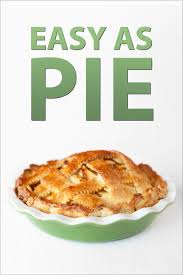
    I understand these are the natural consequences of trying to find your own voice and that the only solution rests in getting more experience, reading more, and writing more. It gets harder, but that is the point in life, isn’t it? It would be boring if everything would be easy as pie.

    easy as pie

    And you, have you ever reached this realization?